


Glacial Lake Outburst Flood Threatens Pemberton Area; Residents Urged to Avoid Gates Lake
POLICY WIRE — Pemberton, British Columbia — The tranquil appearance of Gates Lake and its surrounding creeks near Pemberton, British Columbia, has given way to ...

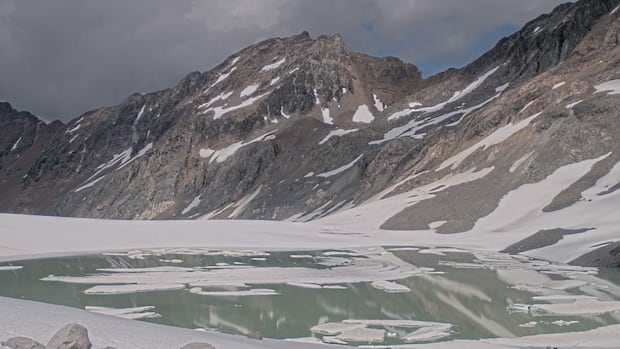
POLICY WIRE — Pemberton, British Columbia — The tranquil appearance of Gates Lake and its surrounding creeks near Pemberton, British Columbia, has given way to an urgent warning: dangerous flood waters, believed to originate from a recent glacial lake outburst, are expected to reach their peak velocity and volume late on Wednesday. Residents — and visitors alike are being explicitly cautioned to avoid these areas, according to expert assessments.
(Reporting based on Canadian Press and local authority advisories) This latest incident underscores the escalating natural hazards posed by retreating glaciers in vulnerable mountain regions, a phenomenon increasingly observed across the globe, though specific details of the Pemberton event remain sparse. The immediate focus for authorities is public safety — and managing the potentially dangerous conditions downstream.
A glacial lake outburst flood, or GLOF, typically occurs when a natural dam holding back a glacial lake — often composed of ice or moraine (accumulated glacial debris) — fails suddenly. These events can unleash enormous volumes of water and sediment, creating devastating flash floods that can rapidly alter landscapes and endanger communities in their path. While the precise mechanics of the event near Pemberton were not immediately detailed by the sources, the urgency of the advisory suggests a significant release of water that warrants public vigilance.
The advisory specifically highlights Gates Lake — and nearby creeks as zones of immediate concern. The term ‘dangerous conditions’ implies not only high water levels and fast currents but also the potential for debris — trees, rocks, and sediment — carried by the surge. Such conditions can undermine riverbanks, damage infrastructure, and pose an immediate threat to anyone near the water’s edge. Experts often point out that these floods can be particularly unpredictable in mountainous terrain, where gradients are steep and riverbeds narrow, concentrating destructive forces.
Local authorities, acting on the assessments of hydrological and geological experts, issued the directive for people to maintain distance. Such precautions are standard procedure in the face of imminent flooding, particularly from a source as potent and sudden as a GLOF. The ‘Wednesday’ timeline indicates a window for response, emphasizing that the danger is not a slow, accumulating rise, but a time-sensitive event, with maximum impact anticipated in the late hours of the day.
Historically, British Columbia has experienced its share of these powerful natural events. The province, with its vast mountainous regions — and numerous glaciers, is naturally susceptible to GLOFs. Each event serves as a reminder of the dynamic interplay between climate, geology, — and human settlement. While the general phenomenon is understood, the exact timing and magnitude of any particular outburst remain challenging to forecast precisely, necessitating prompt public warnings when a failure occurs.
What This Means
The incident near Pemberton, while localized in its immediate impact, serves as a sharp reminder of the broader challenges posed by a warming climate. As glaciers worldwide recede, they can form or expand glacial lakes, increasing the potential for these sudden and destructive floods. The region around Pemberton, like many others globally, faces ongoing assessments of such risks. Proactive monitoring of glacial lakes and their natural dams becomes increasingly critical, requiring advanced satellite imagery, ground-based sensors, and hydrological modeling to predict potential failures. The short notice period for this particular event — a peak expected ‘late in the day on Wednesday’ — highlights the rapid response necessary in such emergencies. For communities downstream, understanding — and preparing for such infrequent but high-impact events is paramount. This includes maintaining clear evacuation routes, public education, and infrastructure resilient to sudden water surges. While immediate danger stems from the floodwaters themselves, the longer-term implications for local ecosystems and human activity warrant continued attention as the landscape reshapes under climatic pressure. This event prompts a broader question: How effectively are vulnerable communities balancing development with the inherent, and changing, geological risks of their environment?