


Beijing’s Iron Heart Beats On: Can Factories Alone Sustain China’s Economic Dream?
POLICY WIRE — Washington D.C., U.S. — Forget, for a moment, the bustling shopping malls or the ever-present digital payment apps. China’s economy isn’t running on consumer...

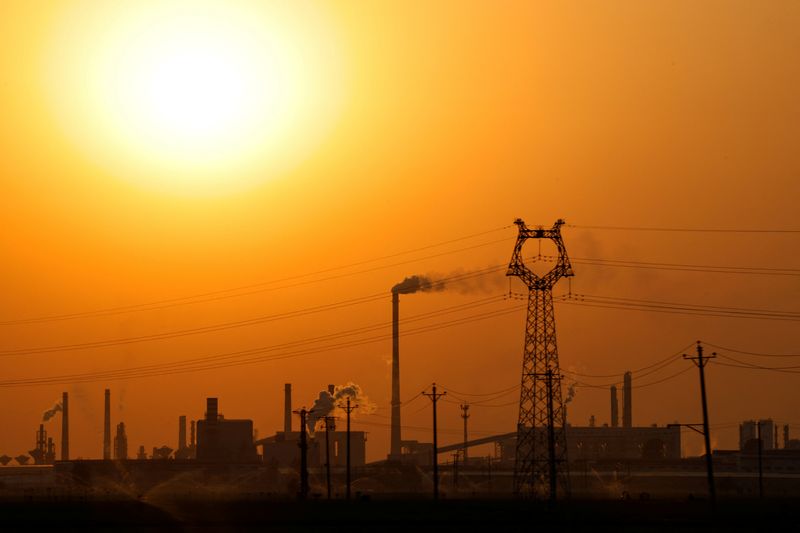
POLICY WIRE — Washington D.C., U.S. — Forget, for a moment, the bustling shopping malls or the ever-present digital payment apps. China’s economy isn’t running on consumer glee; it’s running on raw, unglamorous factory floors. A recent batch of data, quiet but potent, suggests Beijing is clinging tightly to its manufacturing might, steering clear (for now) of a more consumption-led future that economists often suggest as a better path. It’s a classic play from their playbook—when domestic demand falters, lean harder on exports, push the production engine to its limits. But how long can that old engine keep chugging?
It’s an approach that feels less like innovation and more like a determined regression, an old-school industrial heave-ho in a world begging for services. In fact, industrial profits across China’s major enterprises climbed a surprising 17.2% year-on-year for the first two months of 2024, according to the National Bureau of Statistics (NBS). That’s not small change. That’s a hefty chunk of cash generated, predominantly by the sprawling manufacturing base that has, for decades, defined the nation’s economic rise. [QUOTE_PLACEHOLDER]
They’ve got a lot of weight to throw around, certainly. Think about it: everything from the cheapest plastic toys to advanced electronics often traces its origins back to a Chinese assembly line. This export-driven machine isn’t just churning out goods; it’s pulling the entire economy forward. It’s got to, because households inside the country are still hesitant, still saving, not really splurging the way you’d want them to. And it’s not just hesitancy; there are structural problems with real estate, local government debt, you name it. The state wants a certain kind of stability, a control over growth, and relying on production provides just that, in its own way. But it doesn’t really solve the deeper issues, does it?
So, the leadership pushes on. Subsidies, policies aimed at industrial upgrades, a whole host of incentives are designed to keep those gears turning. And you know, for many global south nations, especially in South Asia, China’s manufacturing prowess presents a complex reality. On one hand, it’s a source of affordable goods, investment (often through initiatives like the Belt and Road), and a competitive benchmark. On the other, it represents a gargantuan challenge to their own fledgling industries, which often struggle to compete on scale or price. You can see it in Pakistan, for instance, where local manufacturing sectors often find themselves dwarfed by the sheer volume and efficiency of Chinese imports, impacting local employment and domestic industrial growth strategies.
It’s not that Pakistan wants to completely cut off trade; that’s simply not feasible, or even smart. The world is interconnected. But there’s an inherent friction there, a constant balancing act between leveraging Chinese industrial output for domestic needs and nurturing home-grown capacity. For Islamabad, seeing China lean even harder into manufacturing means a renewed competitive pressure on everything from textiles to electronics, which they’re trying to build up themselves. They’re dealing with their own political fictions and economic realities, after all, and global competition certainly doesn’t make things easier.
📄 POLICY WIRE WHITEPAPER PUBLISHED: PAKISTAN'S NATIONAL SECURITY POLICY PRIORITIES
👉 READ BY CLICKING HEREThe resilience in industrial profits isn’t necessarily a signal of widespread economic health, more a testament to strategic prioritization. Beijing clearly believes its salvation, for now, lies in being the world’s factory, keeping export lines buzzing even as its own people aren’t buying with quite the same enthusiasm. It’s a tightrope walk. You’ve got global trade tensions on one side, fragile domestic consumption on the other. But they’ve always been good at these kinds of high-wire acts.
But can this model really last forever? What happens when other countries decide they want their own factories humming just as loudly, or when global demand dips irrevocably? The push-pull between internal stability and external competition is an ongoing narrative, an unspoken question that looms over every upbeat economic report coming out of Beijing. And you can bet that analysts worldwide are watching closely, because how China manages this dictates so much more than just its own GDP. It sets global precedents.
What This Means
This unwavering commitment to industrial output and export dominance, despite persistent calls for rebalancing towards domestic consumption, carries several significant implications. Economically, it risks creating an even greater global supply overhang, potentially triggering retaliatory protectionist measures from nations feeling the squeeze of cheap Chinese goods. It’s like a country that always opts for an ‘always draft’ strategy in sports; it’s sustainable only until you need veterans. Politically, it signals a deeper mistrust within the leadership that relying on its own population for robust growth is a dangerous gamble, preferring the more controlled, state-backed levers of industry. This continued reliance means Beijing’s industrial policies will remain a primary driver of global manufacturing competition and price dynamics. Smaller, developing economies, particularly those in South Asia with burgeoning industrial ambitions, will face intensified pressure. Their nascent sectors will need to innovate rapidly or risk being further marginalized by China’s economic leviathan. It also postpones, rather than resolves, the core structural issues within China’s economy, setting up a potentially larger reckoning down the line when external markets inevitably shift or contract.