


The Spartan Mirage: Unseen Economic Lessons in the Warriors’ Decade-Long Draft Strategy
POLICY WIRE — Oakland, USA — When you’re building a behemoth, whether it’s an economic powerhouse or a dynasty on the hardwood, the unsung failures often outnumber the glittering...

POLICY WIRE — Oakland, USA — When you’re building a behemoth, whether it’s an economic powerhouse or a dynasty on the hardwood, the unsung failures often outnumber the glittering triumphs. The public, naturally, fixes its gaze on the champions, but behind every Draymond Green and his ‘4 titles’ are multiple gambles that evaporated into thin air. It’s a sobering truth for any enterprise, a cold calculation inherent in the pursuit of greatness. Organizations, much like nations, often make long-term bets on raw potential, — and most don’t pan out.
Consider the particular strategic alliance — or perhaps, a historical affinity — the Golden State Warriors have fostered with Michigan State University. It’s a relationship that, for decades, yielded very little of note. One might look at the ledger — and ask: was it even worth it? They’ve famously put their teams together [QUOTE_PLACEHOLDER], leveraging a scouting apparatus designed to identify tomorrow’s stars. Indeed, ‘More than anything else, the most talented players to represent the Warriors have arrived in Golden State either by being selected directly in the annual draft or through trades executed on that same night.’
But the road to success is paved with plenty of good intentions and, frequently, disappointment. Back in 1958, for instance, a gentleman named Larry Hedden was selected in the 10th round. Seasons played with Warriors: ‘didn’t make the team.’ Then came Lee Lafayette in 1969, a 4th-round pick. Result? He ‘didn’t make the team’ either. This wasn’t just an occasional misfire; it became a pattern. Darryl Johnson, plucked in the 3rd round in ’87, suffered the same fate. Anthony Miller in ’94, a 2nd-round selection, also ‘didn’t make the team.’ For over thirty years, the Warriors’ investment in Spartan talent amounted to a series of phantom assets, quietly absorbed into the historical archives without much fuss.
It’s an object lesson in venture capital, isn’t it? Pouring resources, year after year, into what looks promising, only to watch it fizzle. Many nations, particularly those grappling with emerging economies, face similar dilemmas. They invest in sectors or human capital, sometimes guided by external advice or internal biases, and a majority of those investments don’t generate the hoped-for returns. But they keep trying. They’ve to.
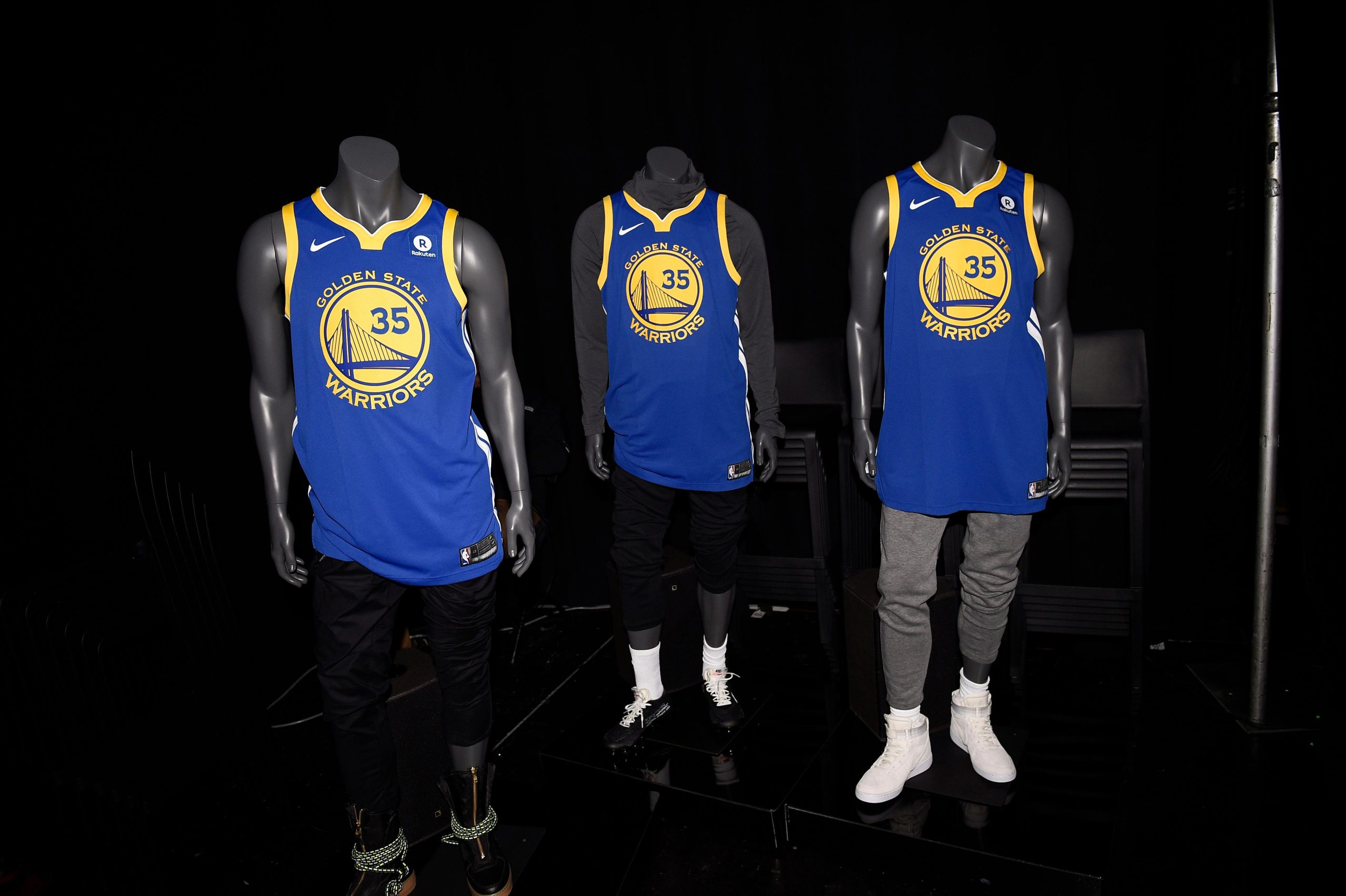
And then, suddenly, a breakthrough. Jason Richardson, drafted 5th overall in 2001, actually played ‘6’ seasons with the Warriors. Not a dynastic figure, perhaps, but certainly a tangible return. A true anomaly for his era of Spartan alumni in Golden State. But it was the quiet, understated selection of Draymond Green—a second-rounder, 35th overall in 2012—that utterly reshaped the franchise. His impact wasn’t just on the stat sheet; it was seismic, structural. This was a long-shot that hit, defying the historical odds almost single-handedly. According to Basketball Reference, Green went on to play ’14’ seasons with the Warriors, securing ‘4 titles.’ That’s not just a home run; it’s a grand slam after three decades of foul tips and strikeouts.
But here’s the rub: for every Draymond Green, how many promising athletes, perhaps even equally talented, fall by the wayside? The system’s success, both in professional sports and in broader geopolitical strategies, often hinges on finding that single, improbable outlier. Consider the complex dynamics of investment in a region like South Asia, or specifically, Pakistan. Decades of development aid, strategic partnerships, and even security assistance have sometimes yielded disproportionately modest returns, much like those early, unproductive draft picks. And then, a single policy shift, an unexpected leader, or a global economic realignment can suddenly alter the landscape, making previous gambles look prescient, or spectacularly foolish. It’s about understanding which investments to double down on, and which to cut bait from, a hard truth for any national or organizational calculus. The search for talent, whether in sports or statecraft, is never simple; it’s always fraught with more misses than hits, even as one hopes for that transformative find.
Because ultimately, ‘the Golden State Warriors have taken many of their top stars through the draft, but have also landed a number of notable players over the years as well.’ That breadth of approach, reaching from ‘tiny colleges to blue blood programs,’ mirrors the diplomatic efforts and economic outreach efforts seen globally. No single pipeline is ever enough. And the quiet failures, those players who ‘didn’t make the team,’ are just as instructive as the marquee successes. They offer a harsh reminder that even the most celebrated institutions must constantly adapt, refine their scouting (or foreign policy) algorithms, and prepare for widespread non-conversion.
What This Means
This historical pattern of Warrior-Spartan draftees presents a striking analogy for broader economic development and geopolitical strategy. The disproportionate impact of one or two truly transformative figures — Draymond Green in this instance — suggests that organizations and nations shouldn’t merely focus on quantity of inputs, but rather on the strategic intelligence behind their investments. The vast majority of resource allocation, be it talent acquisition or foreign aid, often yields little beyond baseline operations or even outright failure. It’s the few, high-impact hits that justify the entire enterprise, driving monumental returns that eclipse decades of missed opportunities. This dynamic compels states to pursue diversification, exploring partnerships and talent pools—from emerging markets to established allies—while continuously refining their evaluative frameworks. For a developing nation or a region like South Asia, this underscores the political imperative of nurturing truly exceptional individuals and innovative projects that, once scaled, can redefine national trajectory, much like a singular talent reshapes an NBA franchise. Without that calculated risk and patient long-term view, even the most resource-rich entities risk stagnation, trapped in a cycle of marginal gains or, worse, consistent, quiet loss. The ‘cold logic of cap economics’ isn’t confined to sports; it’s a global reality for anyone serious about lasting impact. The trick, then, is discerning the next Draymond from the next Larry Hedden – a challenge that vexes strategists from basketball courts to backroom policy tables worldwide. For further analysis on these sorts of tough, quantitative decisions, consider this piece on the Nets’ $6.25M Maneuver Reveals Cold Logic of Cap Economics.