

The Perennial Theatrics: How Political Fictions Shape Perception, from Washington to Karachi
POLICY WIRE — Washington D.C., United States — The American political stage, it seems, remains eternally locked in a performance where perception often outmuscles documented fact. It’s a recurring...

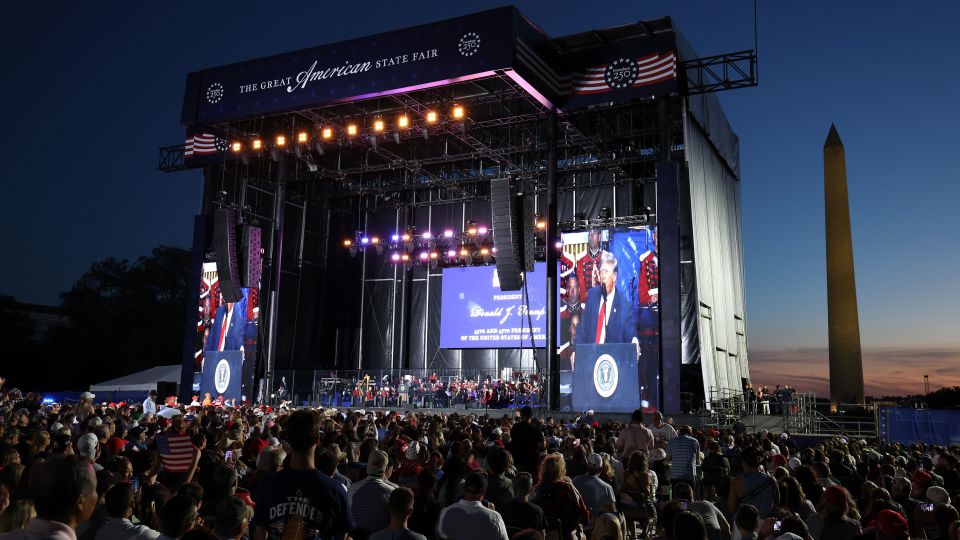
POLICY WIRE — Washington D.C., United States — The American political stage, it seems, remains eternally locked in a performance where perception often outmuscles documented fact. It’s a recurring act, really. Another rally, another orator, another firm assertion that [QUOTE_PLACEHOLDER]—nobody had abandoned the venue—only for reality to stroll in a few moments later, unimpressed, bearing evidence to the contrary. One might even call it a familiar piece of political choreography.
It wasn’t an isolated incident; that much is certain. Footage, on-the-ground reports, even attendee accounts, they’ve a funny way of contradicting an executive’s sweeping declarations. But then, this dance isn’t about precise headcounts. It’s about message discipline—or rather, a willful disregard for conventional truths, a calculated narrative spin meant to fortify the base. It isn’t new. We’ve seen this script play out time and again, whether the specific performance space was an arena in a swing state or, frankly, some grand historical event now being revised by a few select voices.
The habit of presenting alternative facts—or at least, highly selective interpretations—has seeped into the very bedrock of political communication. You get the sense it’s less about convincing the skeptical and more about providing a convenient echo chamber for the faithful. The message becomes less about what objectively happened and more about affirming a leader’s supposed unwavering command, their undiluted popularity, their inherent success against all odds. It’s quite the show, actually, watching the lines blur, not between fact and opinion, but between reality and fervent declaration. What’s truly fascinating is the stamina required to maintain such an edifice of rhetorical defiance in the face of what’s plainly observable.
Because, really, when a figure as prominent as a former President says something, particularly about their own perceived triumph, a significant chunk of the populace, at least stateside, listens intently. And if the information coming from those on the ground paints a different picture? Well, then the battle shifts to whose reality prevails. It’s a tug-of-war for the collective imagination, played out on cable news — and social feeds. They aren’t just selling a policy agenda anymore; they’re selling an experience, a manufactured sensation of victory. And this experience, for its adherents, feels more authentic than any statistical breakdown or wide-angle shot could ever be.
This brand of political narrative engineering isn’t confined to any single geographic region. Just look eastward. In Pakistan, for example, state-controlled media or government officials often face similar scrutiny, their pronouncements on economic stability or democratic health occasionally meeting a robust, though sometimes suppressed, counter-narrative from independent journalists or citizens directly affected by policies. One might recall the disparity between official economic growth figures—such as the State Bank of Pakistan reporting a 6.0% GDP growth rate for fiscal year 2022—and the crushing inflationary pressures felt on the street, leaving many to wonder whose statistics accurately depicted their daily struggle. It’s a disconnect that festers, eating away at institutional trust. The perception gap, after all, isn’t unique to Washington.
And so, while the immediate context was a domestic political rally, the implications stretch further, hitting on a universal truth: in an age of fragmented information and curated news feeds, controlling the narrative can feel more potent than commanding an army. This particular saga—the declaration of steadfast audience loyalty against visible departures—it’s a microcosmic illustration of a larger pattern. A politician, once cornered, defaults to painting a picture of unassailable strength, even if the brushes used are loaded with fanciful colors. It’s a deliberate strategy, not a gaffe. A shrewd operative knows that if you say something confidently enough, often enough, some folks will start believing it, regardless of the pesky details. This is why opposition groups, particularly in nascent democracies, struggle so much to establish their own counter-narratives in the swamp of public opinion.
What This Means
This recurrent narrative, where official statements about popularity or event success diverge from visible evidence, signals a hardening of partisan trenches, both domestically and internationally. It means the battle isn’t merely for policy, but for the very definition of truth itself. When a leader can successfully insist on a version of events that runs contrary to recorded facts—and a significant portion of their base accepts it unquestioningly—it erodes the public’s collective ability to critically assess information. That’s dangerous, isn’t it?
Economically, this manufactured optimism, even about something as mundane as crowd sizes, contributes to an environment where policy discussions can become untethered from reality. How can you address genuine problems like inflation or unemployment if the prevailing political narrative denies their severity, or reframes every challenge as an ultimate triumph? Politically, it grants license for continued disregard of media scrutiny and traditional fact-checking, creating a parallel informational universe where only approved declarations hold sway. This approach, ironically, makes leaders less accountable. And that, in the long run, is a precarious position for any democracy, however robust. Think of it: if you can control what people *believe* happened, you largely control their reactions to *what actually happened*. That’s a kind of power, isn’t it? It reflects the cold logic of cap economics, but for truth. It suggests that leaders in places like the broader Muslim world, facing internal dissent or economic pressures, might increasingly resort to such performative displays to consolidate power, regardless of underlying conditions.