



Silent Echoes: Pakistan’s New Submarine Signals Deep Geopolitical Currents in South Asia
POLICY WIRE — Karachi, Pakistan — It wasn’t just a new warship docking in Karachi, not really. This recent arrival, a hulking shape slicing through the water, carried with it something far heavier...

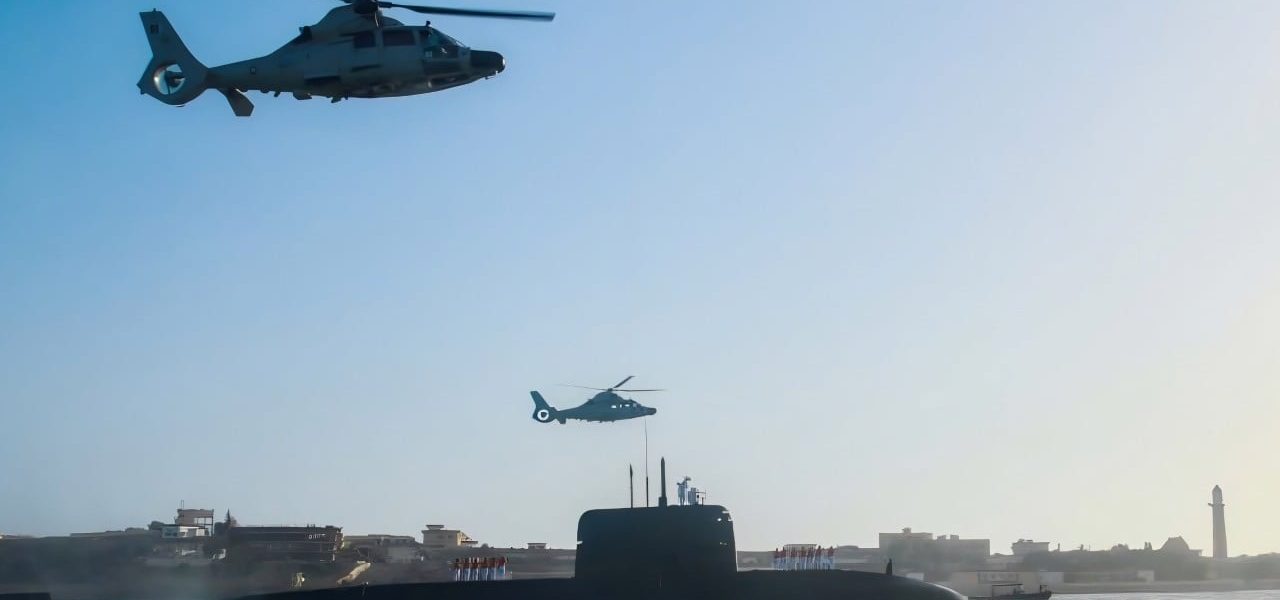
POLICY WIRE — Karachi, Pakistan — It wasn’t just a new warship docking in Karachi, not really. This recent arrival, a hulking shape slicing through the water, carried with it something far heavier than its formidable displacement: the specter of history, an unresolved maritime grudge, and the unambiguous intent of a nation positioning itself against a perpetually watchful rival. And because the quiet rumble of engines speaks volumes, the message is clear to anyone paying attention.
Fifty-five years on, Islamabad is signalling its intent to go back. That’s a bold declaration, especially considering the weight of what happened the last time Pakistan’s navy operated a submarine in the Bay of Bengal, India sank it. Now, as the newest addition to Pakistan’s underwater arsenal settles into its homeport, you can practically hear the ripples it’s sending across the Arabian Sea, all the way to Delhi. [QUOTE_PLACEHOLDER]
The vessel delivering that message, PNS Hangor, arrived in Karachi on June 11. It’s the first of a class of eight attack submarines, mind you. But this isn’t just about numbers; it’s about origins — and ambition. Four of these are built in China, with the remainder to be constructed in Pakistan to develop its shipbuilding capacity. Think about that for a second: not just buying off the shelf, but learning to build them. That’s a long game, isn’t it?
The name itself, PNS Hangor, isn’t some arbitrary designation. It’s an explicit call-back. It’s named after an earlier Daphne-class submarine that sank the Indian frigate INS…—a moment of Pakistani naval triumph in a largely fraught history. Naming a modern stealth vessel after such an incident isn’t exactly subtle; it’s practically a gauntlet thrown, a psychological broadside fired across the bow of a nervous neighbor. These aren’t just inanimate objects, you see; they carry stories, they embody memories. They shape perceptions, whether we like it or not.
This submarine isn’t operating in a vacuum. It’s part of a much broader realignment in global power, one where China isn’t merely an economic powerhouse but a rising naval force, exporting its military might—and its strategic influence—across continents. This partnership, forged in the fires of geopolitical necessity, offers Pakistan an increasingly sophisticated, modern fleet. For a country that has for decades felt outmatched by its larger eastern neighbor, this represents a significant—dare I say, a desperate—attempt at parity. It’s a calculated gamble, but aren’t most grand geopolitical strategies?
And let’s not forget the financial underpinnings of such ventures. Naval build-ups aren’t cheap. Globally, military spending hit an unprecedented $2.44 trillion in 2023, according to data from the Stockholm International Peace Research Institute (SIPRI). For a developing nation like Pakistan, where economic stability often feels like a mirage, such expenditures are a testament to how profoundly security concerns dominate the national psyche. The costs are immense, in both rupees — and opportunity. It forces one to ask: what other national priorities get quietly shelved when an eight-submarine fleet becomes a pressing demand?
📄 POLICY WIRE WHITEPAPER PUBLISHED: PAKISTAN'S NATIONAL SECURITY POLICY PRIORITIES
👉 READ BY CLICKING HEREBut the calculus isn’t purely about one-upping India. It’s also about asserting presence, protecting vital sea lines of communication—something Pakistan feels it desperately needs, especially as trade routes through the Indian Ocean become ever more critical for its own economic lifelines, not to mention China’s Belt and Road initiatives. This move complicates the strategic landscape. It forces other players—the U.S., regional allies, even Gulf nations—to recalibrate their understanding of South Asian power dynamics, much as the Hormuz flashpoint illustrates wider maritime vulnerabilities.
You can’t just dismiss this as mere posturing. This is hardware. It’s capability. It’s a message carved in steel, whispering threats from the depths. And for a region often teetering on the brink, even a whisper can feel like a shout. The diplomatic chatter will pick up, no doubt, but the underlying tension? That’s already here, vibrating just beneath the surface of the news cycle. It always is, isn’t it?
What This Means
This newest submarine deployment isn’t merely an incremental upgrade to Pakistan’s naval capabilities; it’s a profound strategic recalibration with far-reaching implications for South Asia and beyond. For starters, it directly challenges India’s traditional naval dominance in the Indian Ocean, a critical choke point for global trade and energy supply routes. With modern stealth capabilities, these new submarines offer Pakistan a credible deterrence—a second-strike capability that fundamentally alters the regional balance of power. It’s a game-changer, no less. But because deterrence always flirts with escalation, this development could easily ignite a new, dangerous arms race.
Economically, Pakistan’s investment, backed significantly by China, reflects a deepening geopolitical alignment. It means Beijing is actively supporting Islamabad’s strategic aspirations, leveraging its industrial and technological might to project influence deeper into the Indian Ocean region. This isn’t just about selling hardware; it’s about building a partnership that counters existing alliances and potentially shifts global economic corridors. Pakistan’s industrial capacity to construct some of these submarines itself also means a significant long-term commitment, not just a one-off purchase, demanding substantial financial resources over time—resources that could otherwise go to much-needed social programs or economic development. And given the country’s often-fragile financial state, it highlights the acute pressure Islamabad feels from its security environment. Ultimately, it signifies a geopolitical chess move, tightening the Sino-Pakistani nexus and compelling India—and its Western partners—to respond with their own strategic countermoves, ensuring the waters of South Asia will remain anything but calm. The stakes, then, couldn’t be higher, echoing even more complex global economic disruptions seen in places where war economies face harsh reckonings.
