


Amphibian Anarchy: Migrating Frogs Expose Deeper Rifts Between Routine and Wildness
POLICY WIRE — Somerset, UK — It wasn’t a sudden blizzard, nor was it a crippling strike by public sector workers that brought the weekend’s customary rush to a standstill in one particular UK...

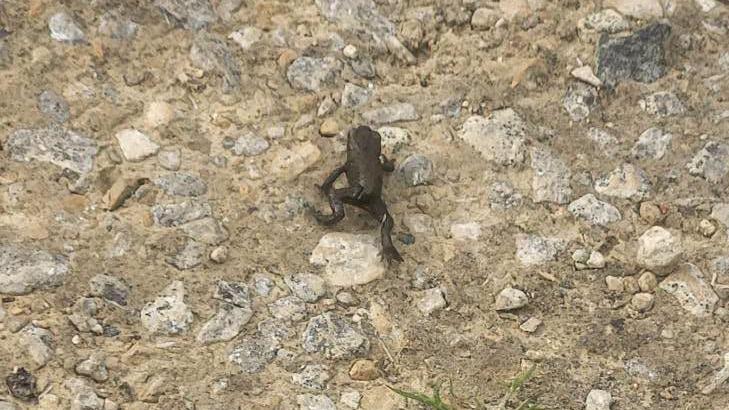
POLICY WIRE — Somerset, UK — It wasn’t a sudden blizzard, nor was it a crippling strike by public sector workers that brought the weekend’s customary rush to a standstill in one particular UK town. This time, the immutable force was far more primitive, far colder-blooded. For two successive Saturdays, the much-loved community institution, Parkrun—a ritual for hundreds of brisk-walking, pavement-pounding enthusiasts—found itself scuppered not by human design, but by the relentless, biologically wired commute of countless amphibians. The frogs, they just keep on moving.
It sounds like a quirky local anecdote, doesn’t it? Something to chuckle about over lukewarm coffee. But step back, and you’ll find the narrative stretches further than just a few slippery obstacles on a five-kilometer course. This isn’t simply about inconvenience; it’s about a silent, damp skirmish in the unending battle between humanity’s structured rhythms and the earth’s ancient, often disruptive, pulse.
The latest cancellation marks a fortnight of disruption. Council officials—and here’s the rub, because they’re usually fixated on potholes or property taxes—have stated their commitment. They’re making way for the annual great frog exodus, an instinctive migration from their winter dwellings to the springtime spawning grounds. And we’re talking thousands, likely, on the move. Imagine the logistical nightmare. But that’s not really the issue.
“Look, nobody loves canceling a Saturday run, especially something as popular and community-minded as Parkrun,” observed Councillor Eleanor Vance, a straight-shooting veteran of the Parks and Recreation Committee, her voice tight with a mixture of bureaucratic fatigue and genuine concern. “But these little creatures? They’re part of the ecological fabric here. We can’t just pave over them – literally or figuratively – and then act surprised when things unravel further down the line.”
Mayor Thomas “Thom” Ridley, a man typically found navigating municipal budget shortfalls rather than amphibian thoroughfares, echoed the sentiment, if with a touch more public relations polish. “It’s a temporary inconvenience, sure, for hundreds of keen runners. Nobody wants to upset routines. But what’s the alternative? To disregard the delicate balance of our wetlands? That’s a longer-term cost we simply can’t afford, both ecologically and, frankly, in the public eye. Sometimes, you just have to yield to nature.” He said it with a slight grimace, suggesting the yielding wasn’t without internal political calculations.
Because ultimately, this seemingly quaint problem underscores a stark, global reality. Humanity’s footprint isn’t shrinking; it’s expanding. We build, we pave, we organize, and then we bump up against something wild and unpredictable, like a mass of determined frogs. This tension isn’t unique to Somerset’s public parks. It plays out on a grander, often devastating, scale across continents. Think about the sprawling urban centers in South Asia, where migratory birds suddenly find their traditional routes obliterated by towering high-rises, or ancient forest corridors in Pakistan segmented by new infrastructure projects, squeezing out indigenous wildlife.
It’s all part of the same picture. Global amphibian populations have seen a dramatic decline, with estimates suggesting that over 40% of species are now threatened, according to the International Union for Conservation of Nature (IUCN). And while a cancelled Parkrun might feel minor in the grand scheme, it’s a symptom. It’s a local microcosm of a global challenge—our capacity, or often our stubborn refusal, to co-exist with the very ecosystems that sustain us.
What This Means
This incident, far from being just a footnote in local news, acts as a sharp-edged reminder of the increasing pressure placed on natural habitats even in ostensibly ‘managed’ environments. Economically, while two canceled Parkruns might not dent a city’s GDP, the principle scales up. Repeated or larger-scale disruptions to tourism, agriculture, or infrastructure due to ecological imperatives—be it protected species, extreme weather patterns, or resource scarcity—carry substantial costs. Politically, leaders like Mayor Ridley are learning that ‘environmental considerations’ are no longer abstract policy talking points; they’re immediate, tangible constraints on everyday life and public services. And sometimes, they force uncomfortable decisions. You’ve got to wonder how many more of these small concessions communities will have to make, or if the larger world will even bother. The tug-of-war between progress and preservation is only getting tighter.
it highlights a crucial shift in environmental perception. What was once dismissed as a ‘nuisance’—like these amphibian travelers—is now increasingly viewed as an indicator, a living barometer of ecological health. And neglecting those indicators comes with its own set of consequences. Maybe next time, they won’t just postpone the run. Maybe next time, the frogs, or something else entirely, will demand even bigger changes. It makes you think about how little power we truly wield against the ancient cycles, doesn’t it? Because at the end of the day, even the most meticulous human planning can’t stop nature’s unyielding call. Even grand geopolitical machinations often bow before environmental realities, albeit more catastrophically.