


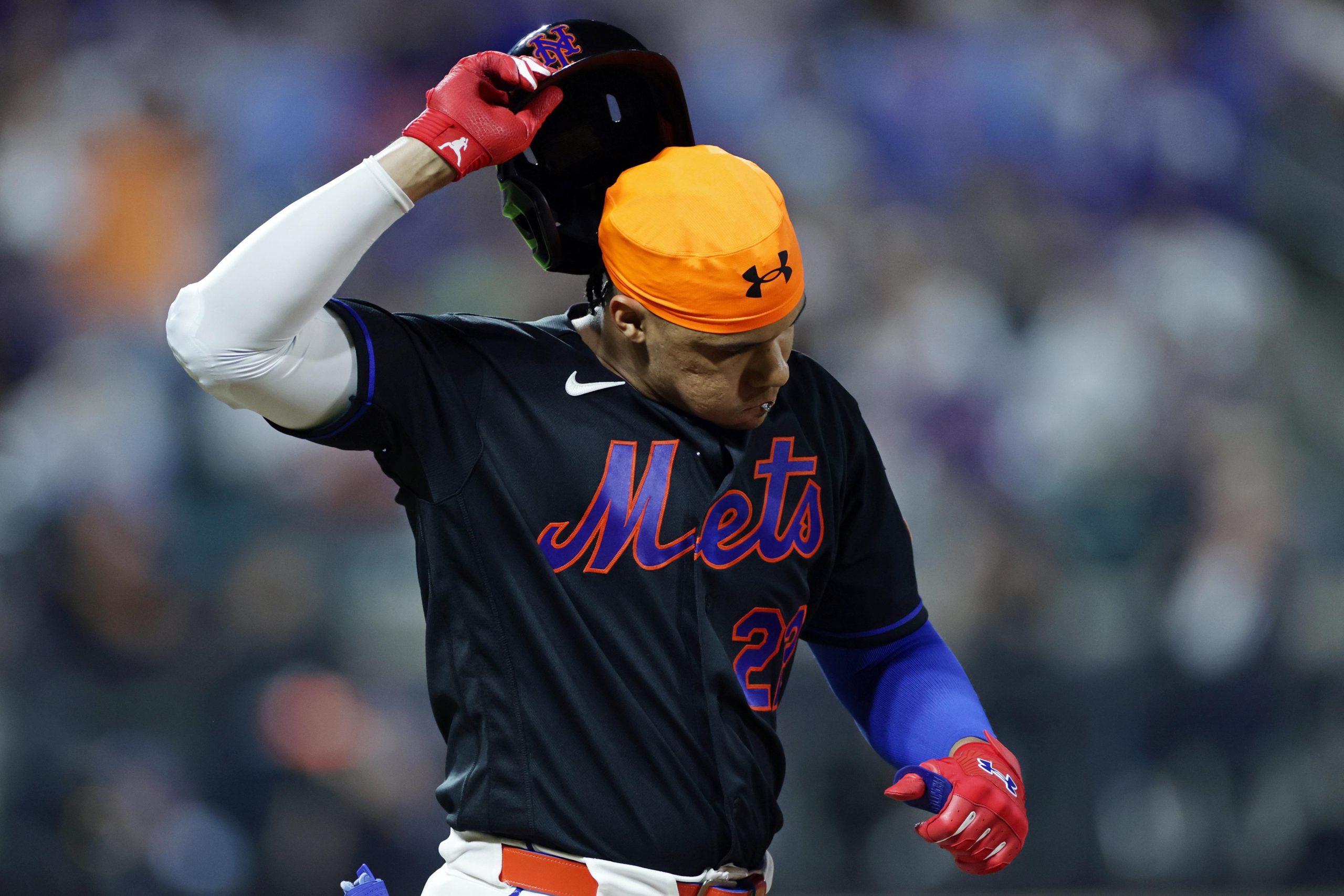
Futility Field: Mets’ Chronic Meltdown Mirrors Broader Institutional Stalls
POLICY WIRE — Flushing, Queens, New York — For seasoned observers of the metropolitan sporting theater, yesterday’s baseball debacle at Citi Field wasn’t merely another defeat. No, it...

POLICY WIRE — Flushing, Queens, New York — For seasoned observers of the metropolitan sporting theater, yesterday’s baseball debacle at Citi Field wasn’t merely another defeat. No, it felt less like a game and more like a live-action procedural — a meticulous, painful unfolding of an entity caught in a vortex of self-inflicted chaos. The New York Mets, despite moments of brilliance, couldn’t shake off their self-destructive tendencies, dropping a tight 4-3 contest to the Chicago Cubs, thus allowing Chicago to sweep the season series. It’s an almost predictable pattern for a club that seems perpetually locked in a Sisyphean struggle, each hopeful push ending in an inevitable, disheartening slide.
It began with familiar futility. Even a solid performance from Freddy Peralta, who at one point retired the next ten hitters after a leadoff single, couldn’t staunch the bleed. The offense, on paper brimming with talent, showed all the conviction of a stalled negotiation. They’d walk, they’d hit, — and then — poof — they were gone, left on base like so many grand ambitions. Juan Soto — and Francisco Alvarez drew walks early on; Carson Benge and Soto again later. Every single time, they were stranded every time. It’s a recurring nightmare, really. Indeed, by game’s end, they left 14 runners on base, a season high, a figure provided by official game statistics — a testament to their knack for self-sabotage rather than competitive fire. How can an organization build momentum when it continuously leaves its own assets to wither on the vine? [QUOTE_PLACEHOLDER]
And the defense, oh, the defense. If ever there were a microcosm for structural instability, it arrived in the sixth inning. Dansby Swanson reached first on a throwing error from Mauricio to Vientos. This wasn’t just a slip; it felt more like a failure of fundamental communication. Then Michael Conforto drove an RBI single into right field, pushing the Cubs ahead. Alex Bregman followed up with a double that bounced off the wall in right field, but it went through Benge’s legs, allowing Bregman to take third and Conforto to score. Three unearned runs — the kind of administrative blunders that can undermine any enterprise, regardless of its financial backing. They don’t have to be spectacular errors; it’s the steady drip of small failures that drowns you.
Moments of sheer, defiant spark did occur. Eric Wagaman, a pinch-hitter called in during the bottom of the sixth, came in and, just as the write-up indicated, Wagaman, always here to surprise, drilled a two-run home run into left field. It electrified the home crowd, narrowing the gap. And because baseball’s cruel mistress has a sense of humor, Jared Young — another pinch-hitter — launched a solo shot in the seventh to tie the game. But those glimmers of individual heroism couldn’t fix what appeared to be a systemic issue. Juan Soto, stepping up with bases loaded later in that same inning, grounded out, the first time he didn’t reach base in this outing. The pattern held.
Extra innings are where institutional stress really shows. The Mets had already played extra innings for the 13th time this year. You can feel the weariness setting in, that collective groan as a new round of tension begins. In the top of the tenth, Chicago’s Pete Crow-Armstrong hit an RBI double — Crow Armstrong ripped a double that bounced down to the right corner and drove in Amaya — sealing the deal. Ronny Mauricio, with an extra runner starting on second, grounded out on the first pitch, ending the game. Another loss, their sixth loss as the Cubs swept the season series. You don’t just lose; you lose in a way that feels designed to maximize heartache.
What This Means
A baseball team’s performance, or lack thereof, might seem far removed from geopolitical machinations or economic forecasts, but the dynamics often echo. The Mets’ recurring patterns of leaving runners on base, making critical errors, and succumbing to seemingly insurmountable odds reflect a kind of organizational fatigue. It’s not unlike a national economy — perhaps one in, say, South Asia — struggling to convert its raw potential (talented players, natural resources) into sustained, tangible success. Persistent external pressures, coupled with internal policy inconsistencies or a lack of cohesion, can lead to perpetual underperformance, fostering public disappointment and eroding confidence. Just as Mets fans ponder if significant investment will ever truly translate into wins, citizens in some nations wonder if institutional reforms will ever outpace endemic challenges.
Consider the broader implications. This sort of chronic underachievement, despite significant financial backing and fan loyalty, fosters a pervasive sense of disenchantment. In an era where soft power and national image are carefully curated, even something as seemingly parochial as a baseball team’s fortunes can resonate. The struggle of a New York team, with its global spotlight, could be metaphorically compared to how Pakistan, a country of immense potential, consistently grapples with consolidating its strategic advantage or economic prospects against internal headwinds. The aspiration is always present, but the execution often falls short, leading to frustration, doubt, and a seemingly endless wait for things to turn around. For some nations, this cycle can impede economic stability and social progress.
And it’s in those moments of individual heroics, like Jared Young’s home run, that a society glimpses what *could* be. But if those flashes are invariably eclipsed by larger, systemic breakdowns — the errors, the stranded opportunities — then the underlying health of the organization, or the nation, must be questioned. It’s not about blame, but about understanding that until those deep-seated structural issues are addressed, every win, every advancement, feels temporary, fragile. Just like the glimmer of hope offered by a tied game in the seventh, soon extinguished by an unforced error in the tenth. Sometimes, the shadows lengthen not just over a ballpark but across an entire political landscape, as discussed in Caracas Shadows.
The Mets will face the Phillies tomorrow. Zach Thornton is expected to take the mound. For the fans, it’s another chance to hope, another chance to wonder if this time, things will be different. But for observers, it’s an opportunity to watch if the internal struggles that plague this high-profile entity — a microcosm of many larger systems — will finally yield to genuine, sustained recovery. Or if the familiar script of tantalizing possibility — and eventual collapse will simply play out once more. The box score only tells half the story, you know?