


Shadowboxing in the Swamp: Capitol’s Silent War of Wills with a Familiar Challenger
POLICY WIRE — Washington, D.C., USA — The legislative halls, built to hum with the push-and-pull of democratic deliberation, sometimes resemble little more than an ornate waiting room. Senator Bill...

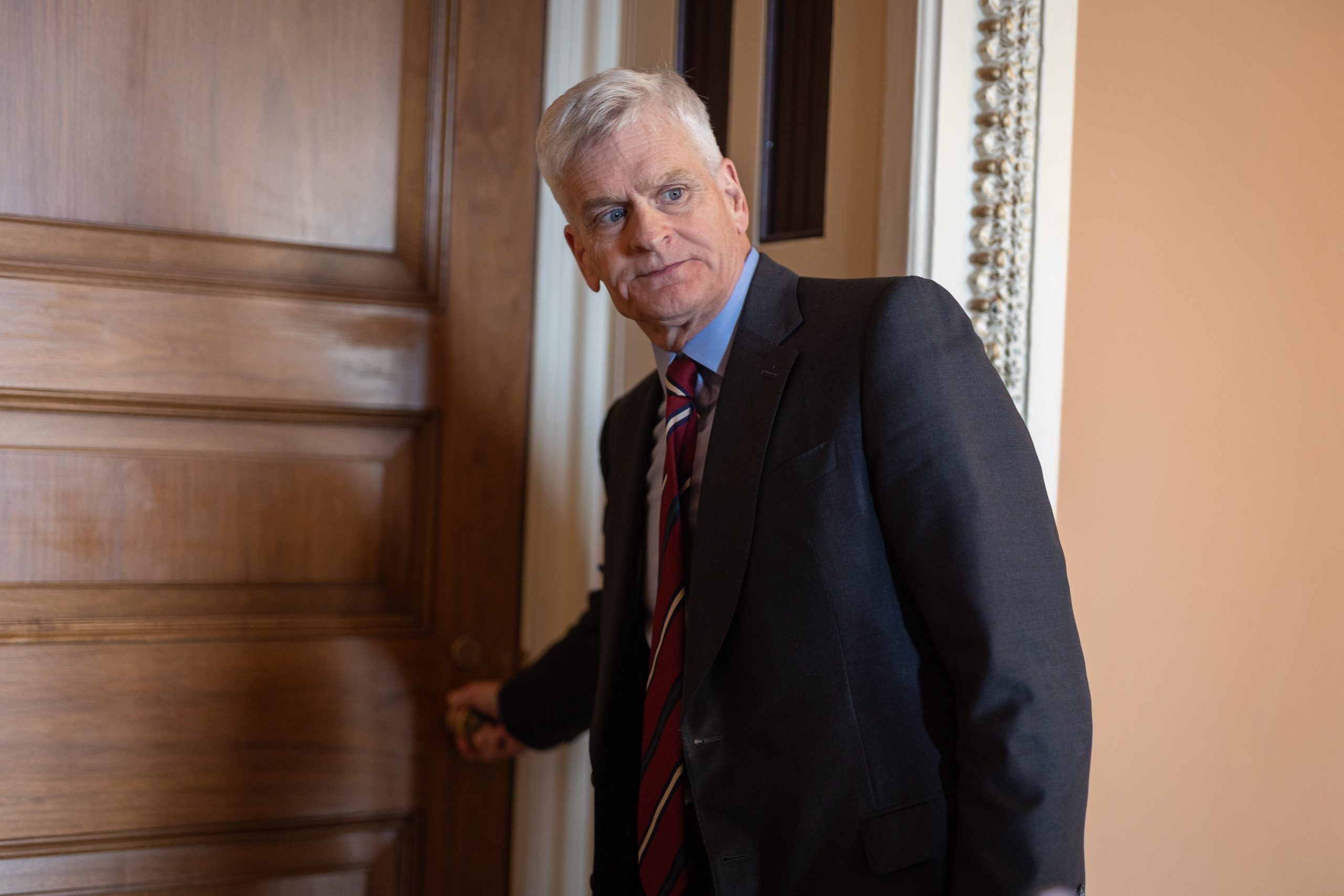
POLICY WIRE — Washington, D.C., USA — The legislative halls, built to hum with the push-and-pull of democratic deliberation, sometimes resemble little more than an ornate waiting room. Senator Bill Cassidy, Louisiana Republican and — let’s face it — a guy who’s seen a thing or two, recently laid bare a particular strain of political indigestion gnawing at Washington. It wasn’t an explosive accusation, no red-meat Twitter skirmish. Instead, it was a calm, almost weary observation about a specific past occupant of the Oval Office, offering a stark assessment that reveals more about the mechanics of power in America than about any single politician.
It turns out that, according to Cassidy, that former chief executive, notorious for his unfiltered proclamations, conducts himself in a manner suggesting that Sometimes he acts as if Congress is merely an appendage
. You hear that, — and it’s not just a quip for Sunday morning news shows. It’s an anatomical description, a suggestion of a political body out of balance. Congress, reduced to a finger, perhaps a toe, instead of the co-equal branch envisioned by folks in powdered wigs centuries ago. A stark image, ain’t it? But, it’s one that resonates beyond Capitol Hill’s marble façade. [QUOTE_PLACEHOLDER]
This isn’t about personality. Not entirely, anyway. It’s about an institutional tension, a perennial tug-of-war between the executive and legislative branches that — let’s be real — never truly ends. President Eisenhower certainly tangled with Congress, as did Lincoln, though arguably under rather different circumstances. Yet, the framing here by Cassidy points to something more foundational. It’s less about disagreement — and more about perceived hierarchy. When a president, any president, implicitly or explicitly views lawmakers as extensions of their own will, democracy, well, it gets a little thin in the air. This kind of rhetoric, though spoken about a former President, lingers. It’s a template for future interactions, a ghost in the machine.
And it’s a dynamic not unfamiliar in regions where the trappings of democracy often mask highly centralized power. Think of nations across South Asia, like Pakistan, for instance. There, civilian governments have historically wrestled with an executive branch, often heavily influenced by other powerful institutions, that views legislative autonomy as inconvenient, if not outright impertinent. Military interventions or politically engineered dismissals of assemblies—they’ve occurred more times than many care to count, leaving the legislative body hobbled. It’s an extreme example, sure, but the underlying tension—the executive treating elected representatives as an ‘appendage’—echoes deeply.
In America, this ‘appendage’ problem might manifest differently — through executive orders circumventing legislative gridlock, or through a steadfast refusal to engage with oversight inquiries. These aren’t the dramatic coups seen elsewhere, but they chip away at constitutional norms, like slow erosion by a relentless stream. A recent report by the Congressional Research Service noted that executive orders have increased by approximately 20% in the last four decades compared to the previous forty, a subtle, perhaps gradual, shift in the power axis. That’s a data point worth chewing on.
Because ultimately, these kinds of power struggles have a way of defining a nation’s character. If the institution responsible for representing the people, for crafting the laws they live by, feels relegated to a subordinate role, then what exactly does that say about popular sovereignty? Not a whole lot of good, that’s what it says. You’ve got to ask: What happens when the public starts internalizing this view? When they start to think Congress *is* just an ‘appendage’ anyway? That’s when real trouble starts to brew. People lose faith. And that’s a dangerous path for any republic to walk.
What This Means
Senator Cassidy’s blunt observation — that a former president treats Congress as an ‘appendage’ — isn’t merely an inside-baseball complaint. It signifies a profound challenge to America’s constitutional separation of powers. The implication for governance is clear: executive overreach, if unchallenged or normalized, fundamentally reconfigures the democratic architecture. Economically, this creates an environment of unpredictable policy swings, as legislative checks and balances are weakened. Industries rely on stable policy; if presidential fiat can bypass Congress, long-term investments become riskier. Investors don’t like uncertainty. it fosters an adversarial, rather than cooperative, political climate that inhibits meaningful bipartisan action on pressing issues like infrastructure or debt. For America’s standing abroad, particularly in the Muslim world and South Asia where many fledgling democracies look to the U.S. as an exemplar (or a warning), a perceived weakening of legislative authority due to an imperial presidency can serve as a grim precedent. It lends credence to strongman narratives, undermining the very principles of shared governance Washington purports to champion. The quiet dignity of deliberation, you see, matters. It really does.