

Jerusalem’s Enduring Fault Lines: Faith, Faction, and a Fractured State
POLICY WIRE — Jerusalem, Israel — Look closely at the mundane rhythms of daily life in the holiest city, and you’ll find more than just cobblestones and ancient prayers. You’ll catch the...

POLICY WIRE — Jerusalem, Israel — Look closely at the mundane rhythms of daily life in the holiest city, and you’ll find more than just cobblestones and ancient prayers. You’ll catch the subtle — and not-so-subtle — friction: the sudden quiet as an ultra-Orthodox man veers to avoid a woman in an immodest dress, the distinct social bubbles even neighbors inhabit, the palpable divide that carves up communities far more sharply than any zoning map. Turns out, this wasn’t just your imagination, or some jaded journalist’s anecdote.
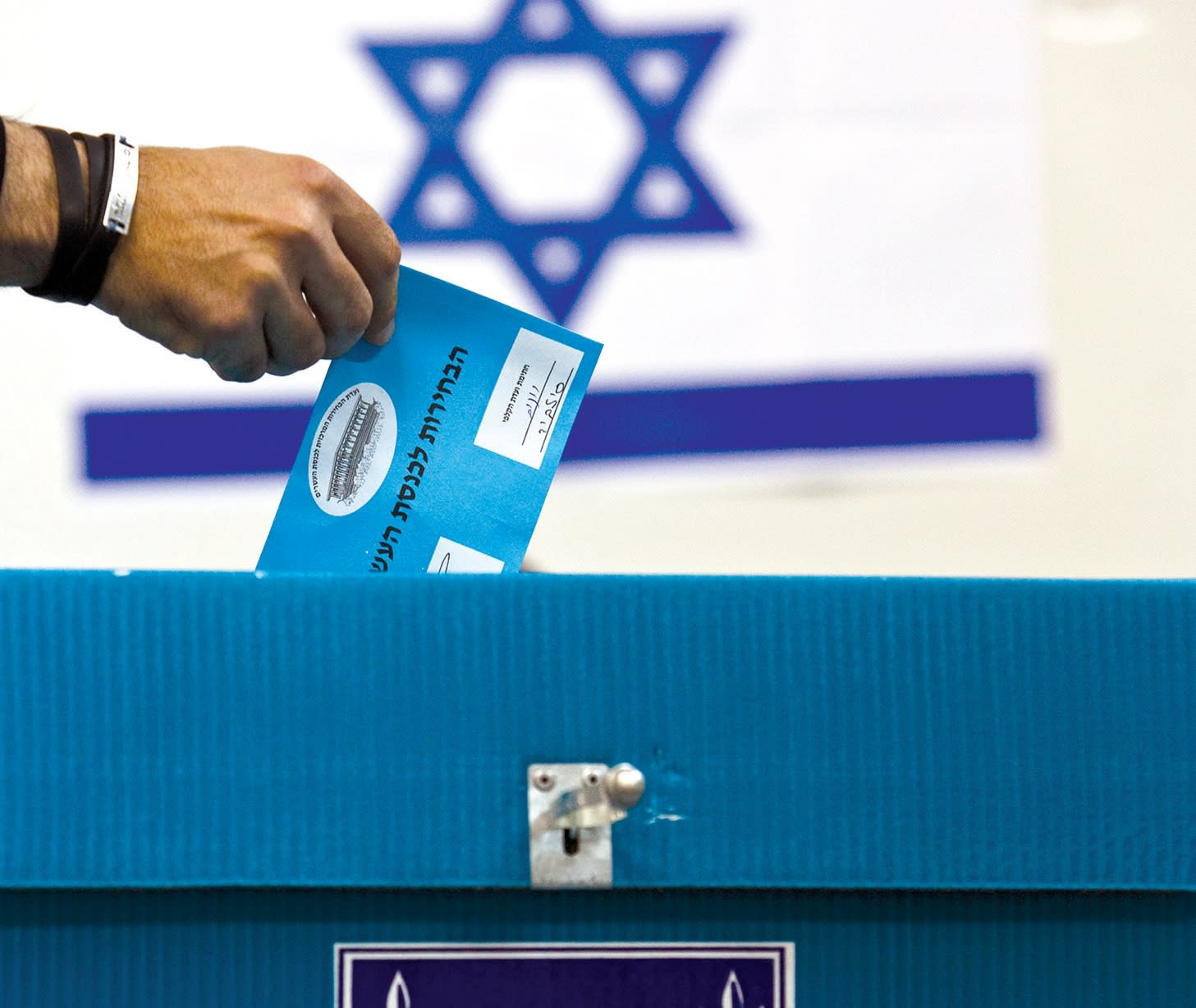
It’s the defining reality. An explosive new report from the Israel Democracy Institute (IDI) has slammed the country’s political class with an inconvenient truth, starkly reconfirming what countless elections have whispered: religious identity isn’t just a factor here; it’s the engine, the uncompromising determinant of who governs whom, and how.
For a nation often consumed by external threats and regional conflicts, this internal schism—this profound chasm between secular, traditional, observant, and ultra-Orthodox—continually dictates everything. But we’ve heard this tune before, right? Well, this time the statistics hum a different kind of urgency. The IDI’s comprehensive survey, often seen as a reliable barometer of Israeli sentiment, found that a staggering 68% of Israelis now cite religious affiliation or lack thereof as their primary political identity, significantly outweighing national, ethnic, or socioeconomic descriptors. This isn’t just about going to synagogue or keeping kosher; it’s about a foundational, often combative, worldview shaping governance itself, from judicial reform to army conscription policies. This number, pulled directly from the recent Israel Democracy Institute 2024 annual survey, paints a pretty grim picture.
But how do you even build a coherent future when your citizenry’s deepest allegiances pull them into such disparate orbits? It’s a perpetual challenge. And it forces politicians to perform a tricky high-wire act, placating specific, devout blocs to cling to power. Defense Minister Yoav Gallant, always the pragmatist, probably captures the sentiment of many trying to hold it all together. “You can’t govern effectively if half the country believes the other half is fundamentally misunderstanding—or worse, undermining—its very existence,” Gallant said recently in a thinly veiled address to coalition partners. “We must find common ground, but some lines, it seems, are drawn by faith, not policy.”
Indeed, that’s where the trouble really starts. Former Knesset Speaker Mickey Levy, never one to mince words about the state of affairs, summed up the simmering tension. “They’re talking about a nation-state; they’re not always talking about the same nation-state, are they? It’s two different Israels fighting over the soul of one land. We’re playing semantic warfare inside our own borders when we should be uniting against actual threats.” His exasperation is hardly unique; it’s shared by many secular Israelis watching their country drift further toward religious hegemony, feeling an acute sense of political displacement.
And it’s not like these sorts of identity clashes are confined to Jerusalem’s holy streets. Across the Muslim world, nations wrestle with similar tensions, sometimes on an even grander, more violent scale. Pakistan, for example, a country forged in the fires of religious identity, consistently grapples with the role of Islam in state governance, law, and social life. It’s a recurring drama playing out across continents: the inherent friction when modern statehood clashes with deep-seated religious dogma. The struggle to reconcile secular law with Sharia principles in Islamabad or Lahore might seem a world away, but the underlying questions—who defines national identity? Which laws hold ultimate sway?—are profoundly analogous. When Israeli political parties, often coalescing around narrow religious agendas, vie for control, it echoes a broader, global anxiety about identity politics dictating the fate of millions. One simply can’t help but draw parallels, can they?
What This Means
The IDI’s findings aren’t just another academic data point; they’re a flashing red light for Israel’s future stability, both political and economic. On the political front, expect more gridlock, more fragmented coalitions, — and a deepening culture war. Governments will continue to be formed not on broad ideological consensus, but through careful balancing acts of competing religious demands, leading to often contradictory policies and frequent collapses. This constant internal strife hobbles Israel’s ability to address long-term challenges, from security to its precarious geopolitical standing in the Middle East. It’s a domestic drama that reverberates beyond its borders.
Economically, the implications are just as grim. A nation so profoundly divided on foundational questions struggles to project stability. This can deter foreign investment, as investors inherently shy away from political uncertainty — and societal unrest. Internally, resources might get disproportionately diverted towards maintaining these delicate political balances—subsidies for religious institutions, exemptions from national service—rather than bolstering productivity, infrastructure, or innovation across the board. The lack of a cohesive national vision, fragmented by these religious allegiances, inevitably dilutes economic potential. You see it in the education system, the workforce participation rates, even the everyday squabbles over municipal budgets. It’s not a healthy way to run a country, is it?