

Caracas Quake Aftermath: A Global Diaspora Mobilizes as Borders Clench
POLICY WIRE — DORAL, Fla. — It’s a familiar story, heartbreakingly so, playing out in pockets of prosperity far from the devastation. While Venezuela reels from earth-shattering tremors, the true...

POLICY WIRE — DORAL, Fla. — It’s a familiar story, heartbreakingly so, playing out in pockets of prosperity far from the devastation. While Venezuela reels from earth-shattering tremors, the true epicenter of immediate action lies in WhatsApp chats and community centers across Florida, Texas, and Utah. This isn’t a government decree or a United Nations mandate yet; it’s raw, familial urgency, a kinetic burst of care from a diaspora community suddenly galvanized into collective paramedics, logisticians, and fundraisers for a homeland in tatters.
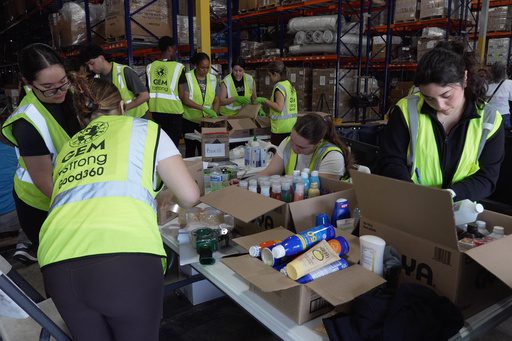
Consider Oscar Torres, a sales manager in Doral, Florida. He’s lived in the U.S. since ’95, but his ties to Caracas are clearly indelible. For him, the last 24 hours weren’t about sleep, but an endless digital scroll. He’s hooked into a sprawling WhatsApp group connecting his Venezuelan community across borders. This morning, he reported a rapid response, a real scramble. He observed, [QUOTE_PLACEHOLDER] And they weren’t just brainstorming; there was serious intent. He relayed, [QUOTE_PLACEHOLDER]
It’s an organic, bottom-up surge, the kind you often see from diasporic communities worldwide—whether it’s Somalis sending remittances or Pakistanis organizing disaster relief for flooded villages back home. These transnational networks frequently outpace slower official channels, though they, too, butt heads with logistical nightmares.
But the earth didn’t just shake the ground; it shook infrastructure. Initial reports suggest the 7.2- and 7.5-magnitude earthquakes caused severe damage to Caracas’ main airport, that crucial gateway. Imagine the despair: supplies ready to roll, but the very portal for entry, locked shut. And it isn’t just about runways; roads leading out of battered mountain communities are closed, public transport non-existent. Billy Richardson, a U.S. logistics director for the Global Empowerment Mission, isn’t totally fazed, though. He’s seen it all. He figures, [QUOTE_PLACEHOLDER] That’s the hustle.
The human toll remains stark, grim. Officials say at least 188 people died — and hundreds more sustained injuries. This data point, a stark marker from official channels, barely scratches the surface of the anguish — and disarray. Families here, like Daniel Arenas and his wife, have endured frantic, hours-long searches for loved ones. Arenas, a maritime consultant in Houston, shared the visceral, gut-punch of the crisis. He confessed, [QUOTE_PLACEHOLDER] His wife received a desperate WhatsApp message from her aunt, trapped in a high-rise in Caracas. “She was crying and screaming and saying she was in pain but not sure from where,” Arenas recalled, his voice etched with the stress of the moment. Then the kicker: “She said she lost everything. She was desperate.” Luckily, Arenas later confirmed his wife was able to reach her aunt. Small mercies, you know?
Luis Angarita, living in Katy—affectionately nicknamed “Katyzuela” for its sizable Venezuelan community—saw his sister’s family forced to sleep in a park after their home got damaged. She told him via WhatsApp that getting to their father’s place on the other side of the capital was near impossible. “Thank God they’re safe,” Angarita noted, acknowledging a terrible reality. But then the clear-eyed assessment, “There are many displaced people and others are stuck in their homes, unable to leave. They need help.”
📄 POLICY WIRE WHITEPAPER PUBLISHED: PAKISTAN'S NATIONAL SECURITY POLICY PRIORITIES
👉 READ BY CLICKING HEREEven Washington, ever a nuanced player in Venezuelan affairs, pledged aid. The U.S. government announced $150 million to relief efforts — and the U.N. The administration also mobilized a disaster response team, including specialized urban search and rescue units from Virginia and Los Angeles. Even the U.S. military—yes, *that* military, which, for background, seized Venezuela’s then-president Nicolas Maduro in a surprise January drug arrest—is offering aircraft for damage assessment and aid delivery. A diplomatic tightrope act, always.
But for people like Torres, whose uncles and cousins in Caracas and Valencia were injured and saw their homes collapse, it’s personal. “Their homes are destroyed and a few buildings have collapsed,” he stated plainly. His gratitude was palpable: “Thankfully, I don’t know anyone who passed away.” This whole ordeal makes you wonder about the invisible networks that really hold nations together, or, perhaps more accurately, prevent their complete unraveling.
What This Means
The geopolitical undercurrents here are as volatile as the seismic ones. The U.S. and Venezuela, caught in a frosty dance of diplomatic hostility and economic sanctions, are now awkwardly aligned by tragedy. This could be a moment for cautious recalibration, however fleeting. Washington’s willingness to provide significant aid, and crucially, logistical support including military aircraft, might thaw some of the ice. Or it could be purely transactional, aid for aid’s sake, with no real shift in bilateral relations. Venezuela’s government faces immense pressure. They’ve gotta facilitate this aid, — and quickly, even from nations they might consider adversaries. Their domestic standing, already precarious given persistent economic hardship, depends on a perceived, competent response.
Economically, the tremors devastate an already fragile Venezuelan state. The immediate need for emergency relief morphs rapidly into long-term reconstruction, which will drain coffers and resources they barely possess. This dependence on external aid highlights the structural vulnerabilities of a nation historically rich in oil but perennially poor in institutional stability. And, let’s not forget, global humanitarian crises are escalating, stretching aid budgets thin worldwide. The international community, from large Muslim-majority countries often providing humanitarian aid to South Asian nations grappling with their own development challenges, often sees these disasters as shared human tragedies—even if political optics always linger somewhere in the background. Venezuela isn’t just rebuilding homes; it’s got to rebuild trust, both internally and on the international stage, especially as it grapples with air travel chaos and disrupted supply lines as a direct result of the quakes.