
After Carnival, Kings Reign: World Cup Semifinals Return Football to Familiar Titans
POLICY WIRE — ARLINGTON, Texas — For weeks, football’s grand carnival bounced along on a wave of spirited unpredictability. Fans reveled in Cape Verde’s joy and the energetic performance of the U.S.—...

POLICY WIRE — ARLINGTON, Texas — For weeks, football’s grand carnival bounced along on a wave of spirited unpredictability. Fans reveled in Cape Verde’s joy and the energetic performance of the U.S.— before, well, that all ended abruptly and horrifically. We saw genuine revelation from places you barely expected, tiny nations pushing the giants, and long-shots dreaming big. And then, without much warning, the adults showed up, slammed the door, — and locked it.
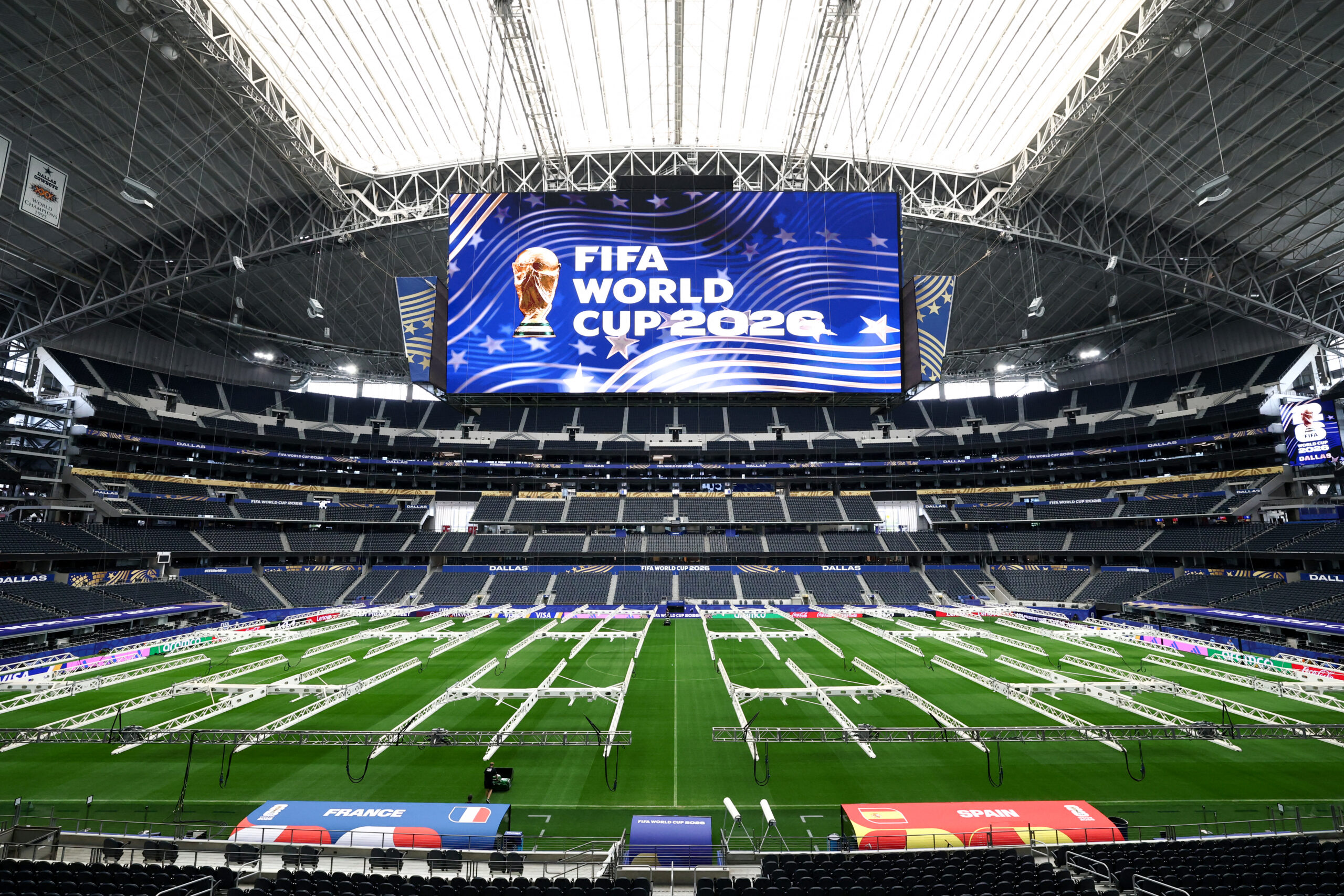
Because as the 2026 World Cup careens toward its inevitable climax, beginning with Tuesday’s semifinals at the galactic stadium just outside Dallas, that delightful 48-nation melee has pruned itself down to just four titans. You don’t get to hang around for long if you’re not an absolute beast. Everyone else, from Curaçao’s Blue Wave to Egypt’s furious faithful, will simply watch from home—a global viewership often forgotten in these latter stages.
It’s a peculiar kind of inevitability, really. Not since 1990 has the final four featured nothing but previous champions. And, for the first time, this foursome perfectly aligns with FIFA’s top-ranked teams. It’s almost too neat, isn’t it? Just imagine: all the wild stories, the moments where Brazil tottered and crashed, or when Morocco showed 2022 was no fluke—only for it to dissolve into what amounts to the annual G4 summit of footballing power. Suffice it to say here in Texas, this ain’t their first rodeo.
This quartet of blue-chip squads, each boasting past glory, now stands alone. In their third consecutive semifinal and fifth over 28 years, France’s twice-crowned Les Bleus will face Spain’s 2010-winning La Roja. That showdown hits the climate-controlled AT&T Stadium at 3 p.m. ET. These are nations that operate with football as part of their very identity; winning is, by now, simply what they do. There are no decided underdogs to be found, unlike 2022 (Morocco), 2010 (Uruguay), 2002 (Türkiye and South Korea), 1998 (Croatia) and 1994 (Bulgaria).
Twenty-four hours later, under Atlanta’s roofed palace, reigning champion Argentina, which really has gotten people used to doing things that aren’t normal, takes on an English side—a determined bunch —hell-bent on ending a 60-year wait. The survivors, the ultimate two, will clash for supremacy Sunday at New Jersey’s MetLife Stadium. We’re talking serious heft here, pure sporting capital on the global stage. “Everyone is a heavyweight,” Spanish coach Luis de la Fuente said. “If we are talking about the gap between teams, we are evenly matched. It’s all very tight.” That’s the cold, hard truth.
Didier Deschamps, who will leave the French program after 14 years and four World Cups—an uncommonly long tenure for a national team boss—has already weighed in. When pressed, he affirmed that Spain remains the favorite, if you’ve seen what they’ve done, they’ve confirmed they’re the favorite. He grinned and added, “I don’t want to add extra pressure.” But one can’t deny France’s raw power, nor Spain’s 36-match unbeaten run across 28 months, during which they didn’t concede a goal in the first five World Cup games until Belgium nicked one in the quarterfinals.
Consider the FIFA ranking, which puts these four teams, in order, at the very top. This is no accident. They’re built for this; for pressure, for expectation. They operate at an entirely different level of organization, investment, — and player development. A nation like Morocco made incredible strides, of course, giving the broader Muslim world, including football-mad nations like Pakistan and Bangladesh, a reason to genuinely cheer. The absence of a deep run from any South Asian or broader Muslim world nation this time around feels a bit like a missed beat in terms of diverse global representation, doesn’t it?
What This Means
The solidification of football’s elite at the World Cup’s sharp end carries significant political and economic undertones. For host nations—in this case, the U.S. primarily—the appeal lies in drawing established global brands. But it also dampens the narrative of global inclusivity that a multi-host, expanded 48-team tournament initially promised. Economically, the predictable outcome guarantees maximum revenue for FIFA and its primary sponsors; established giants draw bigger television audiences and sponsorship deals.
The narrative shift is palpable: from underdog Cinderella stories, it morphs into a high-stakes, big-market battle. For South Asian football, perpetually striving for global relevance despite immense domestic passion—just consider the sheer numbers following European leagues in countries like Pakistan or India—this trend is a sobering reminder of the gulf in sporting infrastructure. An estimated 150 million people in Pakistan alone consider themselves football fans, yet their national team, for all the grassroots efforts, struggles on the international stage. This gap isn’t just about athletic talent; it’s about comprehensive development pipelines that these European and South American powerhouses have perfected over decades. The semi-finals become less a diverse global showcase and more an affirmation of an enduring, often self-perpetuating, hierarchy.
But make no mistake, even among the established, there’s an undercurrent of rivalry, a palpable intensity. France’s Kylian Mbappé versus Spain’s Lamine Yamal; two generations of star power ready to explode. Yamal, who celebrated his 19th birthday Monday by getting a haircut with his three-year-old half-brother Keyne, aims for a simple gift: a victory tomorrow and a chance to go to New York for the final. That’s a good aim. Meanwhile, Argentina’s Lionel Messi reflected, “It’s not easy coming from being world champions, winning everything we have and continuing to compete, staying at the top level, being among the four best, playing in another semifinal. It isn’t normal.” No, it isn’t. But in this tournament, for these teams, it’s exactly what’s expected.