


Concrete Streams and Harsh Realities: Albuquerque’s Latest Flood Rescue Echoes Global Crises
POLICY WIRE — Albuquerque, USA — The June sixth monsoon delivered more than just a typical desert downpour. It brought a familiar, unsettling tableau to Albuquerque, etching another rescue into the...

POLICY WIRE — Albuquerque, USA — The June sixth monsoon delivered more than just a typical desert downpour. It brought a familiar, unsettling tableau to Albuquerque, etching another rescue into the city’s seasonal memory. But beyond the quick heroics of first responders pulling a person from a swirling flood channel, lies a harsher reality, a mirror reflecting systemic issues that ripple far beyond New Mexico’s sun-baked arroyos. This isn’t just about localized weather; it’s about communities everywhere facing increasingly unpredictable climates, pushing vulnerable populations to precarious margins.
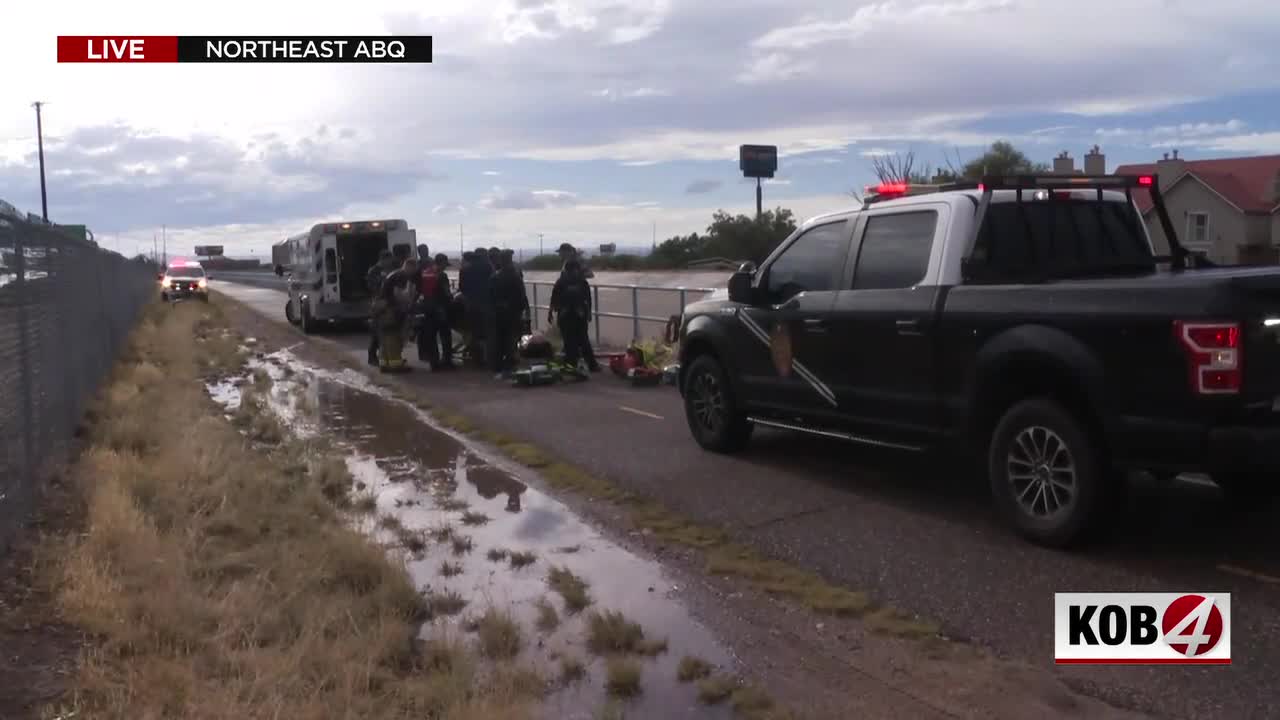
It was around 5:20 p.m. when the call hit Albuquerque Fire Rescue: someone, they said, had been swept away. Emergency crews sprang to action, deploying to what they called their assigned spots along the city’s complex arroyo system. And then, state police officers found a person west of Carlisle, caught in the channel’s surge. It’s the kind of grim routine emergency services train for, yet never quite get used to. [QUOTE_PLACEHOLDER]
Two New Mexico State Police officers pulled a person from a flood channel after reports that someone had been swept away
, according to Albuquerque Fire Rescue. The drama unfolded rapidly near Carlisle — and the Embudo/North Diversion Channel. Albuquerque Police were also on the scene. And it happened fast. Officers got the person out of the water, a stark victory against the sudden, indifferent force of nature.
AFR crews provided medical care post-extraction, with Albuquerque Ambulance quickly spiriting the individual off to a hospital. Lucky, in a sense, because the outcome could’ve been much grimmer. This city’s concrete arteries, designed to shunt away the fierce desert rains, often become deadly traps, particularly for those with nowhere else to go.
Lieutenant Jason Fejer, an AFR Spokesperson, laid it bare: Every time we start seeing these monsoon rains come through, we get a lot of people stuck in the arroyo.
He wasn’t just talking about a transient problem. And unfortunately, some of these bridges and underpasses are a place where people seek shelter.
Think about it: a desperate calculus, shade from a 100-degree sun exchanging one peril for another. We’ve had 100 degree heat. It’s a shady spot. It’s a little bit cooler. So people gravitate to these areas,
he explained. A cold, hard fact of urban life for countless individuals lacking safe alternatives. Officials later mentioned reports of a woman and possibly a dog in the water—but without confirmation, their fate remained an unknown footnote to a very immediate crisis.
According to data from the National Coalition for the Homeless, cities across the United States annually report dozens of flood-related deaths among unsheltered populations, showcasing the brutal reality of living rough in an era of climatic volatility. These aren’t just isolated incidents; they’re symptomatic. They’re telling us something we really should be listening to. The crews stayed ready, just in case—until the waters receded. They didn’t find any other victims
that day, but you’ve gotta wonder how many near misses go unreported, how many lives hang by such a thread.
Now, while this plays out in the New Mexico desert, it’s a narrative with global echoes. Think about Karachi, Pakistan, or Dhaka, Bangladesh— sprawling metropolises in the Muslim world and South Asia. These places routinely grapple with the raw fury of monsoons and rapid urbanization, where informal settlements often spring up in low-lying, flood-prone areas. For countless residents, adequate drainage and infrastructure remain distant dreams, rendering them horrifyingly susceptible to flash floods. Their battles with urban planning and environmental pressures resonate deeply with the vulnerability observed in Albuquerque’s flood channels. Because poverty doesn’t distinguish between continents or climates; it just magnifies existing dangers, turning natural phenomena into humanitarian disasters. It’s an uncomfortable parallel, certainly, but a necessary one to draw if we’re serious about addressing these systemic issues.
What This Means
This Albuquerque incident, stripped of its immediacy, highlights a chronic systemic failure. It’s a localized bellwether, pointing to the increasingly fragile line between urban planning — and humanitarian crises. Economically, neglecting robust infrastructure and proper support for unsheltered populations carries hidden costs—emergency services, hospitalizations, and lost productivity. But these aren’t just line items; they represent profound social decay, eroding community trust and placing untold stress on municipal budgets already stretched thin. Politically, this signals a leadership blind spot. It implies an acceptance of conditions where individuals must choose between baking under the sun or risking their lives in a concrete gulley during a downpour. It’s a silent concession, really, to an issue that demands more than reactive rescues. These incidents don’t happen in a vacuum. They’re direct outcomes of policies—or lack thereof—that fail to adequately shelter, support, and safeguard every segment of a city’s population. It’s an inconvenient truth, but an undeniable one. We’ve got to ask ourselves, as citizens, what kind of safety net do we truly weave?