

Latin America’s Endless Shudder: When Earth’s Fury Becomes a Gruesome Routine
POLICY WIRE — Caracas, Venezuela — The earth, they say, never forgets. And in Latin America, it seems, it rarely forgives. It’s a somber dance, this tango with tectonics, one where the final movement...

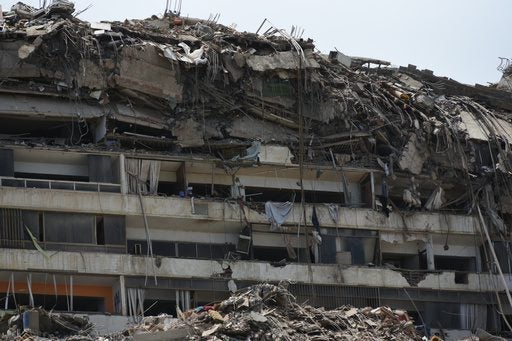
POLICY WIRE — Caracas, Venezuela — The earth, they say, never forgets. And in Latin America, it seems, it rarely forgives. It’s a somber dance, this tango with tectonics, one where the final movement is almost always tragedy. While the headlines today scream of Venezuela’s recent jolts, a deadly reminder of the planet’s geological whims, anyone paying attention knows this isn’t some fresh calamity. Oh no. It’s merely the latest encore in a macabre century-long performance of destruction.
It’s an endless reel of ground-splitting chaos, a roll call of nations — from the parched Peruvian coast to the bustling arteries of Mexico City — that regularly feel the brute force of colliding plates. But, here’s the bitter pill: after a certain number of homes crumble, after so many lives vanish into rubble and dust, does it ever stop being a shock? For some, it morphs into a cruel, annual tradition, a line item in the budget for post-disaster reconstruction that never quite catches up.
Take that moment in May 1960. You probably haven’t thought about it much, but that’s when southern Chile essentially tore itself apart. The Valdivia quake, registering a colossal 9.5 magnitude, still stands as the most powerful temblor ever scientifically recorded, according to the U.S. Geological Survey. It wiped out villages, killed upwards of 1,655 souls (many dragged out to sea by tsunamis), and left two million utterly adrift, homeless, looking at what used to be their lives. Now, that’s a hard punch. It’s a scale of disaster that should etch itself onto the collective memory of humanity, shouldn’t it? But, memory, especially the political sort, is short-lived.
The numbers from the last hundred years are, frankly, horrifying. Peru’s 1970 magnitude 7.9 quake claimed over 66,000 lives. Guatemala in 1976 saw more than 22,700 disappear. Mexico City, a massive urban sprawl, suffered twice in the 1980s, the 1985 quake alone possibly killing 12,000. These aren’t just figures; they’re communities erased, families shattered, progress halted, then reversed. You see the pattern, don’t you?
Venezuelan Minister of Popular Power for Internal Relations, Justice and Peace, Remigio Ceballos Ichaso, probably summed it up for many: “We’re not just rebuilding, you know. We’re fighting against a memory that won’t fade, a constant threat that shapes our very perception of permanence. It’s exhausting, frankly, — and the world often looks away until the next major tremor.”
Because every new disaster brings that familiar refrain: better building codes, more robust infrastructure, early warning systems. But the pace of real, sustained change? It often resembles continental drift itself – glacially slow, hardly perceptible in the face of urgent needs. Poverty often dictates who lives in brick-and-mortar coffins, vulnerable structures that won’t stand a chance. And in countries perpetually wrestling with economic instability, who’s going to tell a family to abandon the only roof they can afford?
Just as the Indian Subcontinent often grapples with its own aging infrastructure and seismic vulnerabilities—with building integrity and corruption sometimes merging into a single, deadly threat—the architects in Islamabad might cast a wary eye westward, across oceans and continents, to Latin America’s perpetually shaking earth. The human cost, it seems, knows no geographic bounds, nor does the bureaucratic slog of recovery. The challenges in a post-quake Kashmir or Baluchistan share an uncanny resemblance to the struggles faced from Lima to Guatemala City, particularly concerning swift, transparent rebuilding efforts and holding construction standards.
“Every time the ground shakes, the conversation shifts from prevention to response, — and back again. It’s a cruel loop, especially when you consider the sheer vulnerability of so much of our housing stock and the socio-economic disparities exacerbating the risks,” noted Marta Lucía Ramírez, the former Vice President of Colombia, whose experience encompasses both national and regional development strategies. “We talk of resilience, but for many, it’s a hope, not a lived reality.” It’s a brutal cycle of collapse and meager reconstruction that ensures the next big one, when it hits, will find plenty more to flatten.
And then there’s the international response, often a whirlwind of initial empathy followed by an equally swift descent into apathy. We send tents — and blankets, which are needed, of course. But the long-term, systemic investment required to lift entire regions out of this constant state of precarity? That’s harder to come by, isn’t it? Perhaps it doesn’t make for good television. Or perhaps the world just doesn’t want to think about the grinding, relentless work of making societies truly quake-proof, especially when other pressing, and sometimes manufactured, crises capture the political spotlight.
What This Means
This persistent seismic activity isn’t just an act of nature; it’s a profound political and economic burden, a drag on development across an entire continent. For governments, it’s a perennial test of legitimacy. Fail to protect your populace, or fail to rebuild effectively, — and trust erodes, sometimes beyond repair. Each major quake necessitates reallocation of scarce resources, diverting funds from education, healthcare, or economic growth into immediate disaster relief and an often-inefficient reconstruction process. It also scares away foreign investment, understandably, particularly from infrastructure projects. The implicit message: why build big if the earth simply decides to swallow it? For the populations, it’s an existential weariness. A life lived constantly on the edge, where progress is two steps forward, one step back, or sometimes just two steps forward, then six steps back. It fosters a climate of chronic instability, both geological and governmental, creating an entrenched fatalism that’s incredibly difficult for any administration to overcome.