

Earthquakes: Nature’s Grim Reminder to a Fickle World
POLICY WIRE — Washington D.C., USA — The earth moved in Venezuela, delivering a fresh, chilling reminder of a power so immense it beggars belief. But you know, we’ve short memories, don’t...

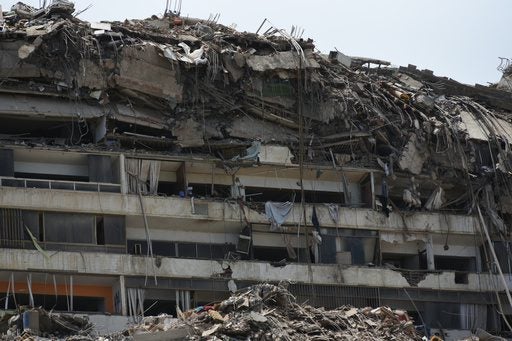
POLICY WIRE — Washington D.C., USA — The earth moved in Venezuela, delivering a fresh, chilling reminder of a power so immense it beggars belief. But you know, we’ve short memories, don’t we? A tremor here, a landslide there—it barely registers for most of us until it’s our own ground shaking, our own cities flattened into grim panoramas. Yet, beneath the relentless churn of daily news, geological forces routinely reshape human lives, turning solid ground to fluid terror in moments.
It’s a chillingly consistent pattern across continents. After Venezuela’s recent seismic jitters, which killed and injured hundreds, it’s worth more than a passing glance at the sheer scale of catastrophe that the planet regularly doles out, especially in regions already battling economic and political headwinds. Because when the ground splits, it doesn’t care about national borders or GDP.
Take Latin America, a vast expanse frequently reminding us of its geological volatility. Not long ago, in September 2017, Mexico got hit twice, a magnitude 8.1 earthquake — and a 7.1 earthquake. They came within about a week of each other, absolutely devastating southern and central Mexico, including Mexico City, and killing nearly 500 people. Just the year prior, on April 16, 2016, a magnitude 7.8 earthquake struck Ecuador’s coastal provinces, flattening towns and killing more than 650 people. See? It just keeps happening. And sometimes, it’s not just the immediate shaking, it’s what comes after—tsunamis, landslides, collapsing infrastructure. It’s an almost unimaginable force, one we keep trying to build over — and forget.
Chile knows this grim dance all too well. On Feb. 27, 2010, a magnitude 8.8 earthquake shook central Chile, rattling the capital for about a minute and a half and triggering a tsunami. 523 people were killed. Years earlier, on May 22, 1960, Chile also endured what was known as the Valdivia or Great Chilean earthquake. It was [QUOTE_PLACEHOLDER] a staggering magnitude 9.5, according to The Associated Press. That monstrous event killed more than 1,655 people, many in a tsunami, — and left 2 million homeless. Think about that for a second: two million people, suddenly with nothing. And that wasn’t even the deadliest in terms of direct fatalities in the region; just a century ago, in 1939, a magnitude 8.3 earthquake in Chillan killed about 28,000 people. Some estimates are closer to 30,000. It’s a cruel game of odds.
The human toll is just staggering, often climbing far beyond initial reports. In Nicaragua, a magnitude 6.2 earthquake on Dec. 23, 1972, killed more than 6,000 people, with some estimates as high as 9,000. And Peru, on May 31, 1970, saw a magnitude 7.9 earthquake that killed more than 66,000 people. Sixty-six thousand. It’s hard to even wrap your head around that level of sudden loss. El Salvador too, in 2001, experienced a double blow: [QUOTE_PLACEHOLDER] Mother Nature doesn’t deal in single acts of destruction.
And while Latin America carries a heavy burden of seismic history, the fragility of developing nations worldwide in the face of such natural wrath is a consistent, agonizing theme. It’s a familiar story, one that echoes in other tectonically active zones, such as Pakistan and the broader South Asian region. They’ve seen their own share of monumental devastation—the 2005 Kashmir earthquake, for instance, a 7.6 magnitude event, claimed tens of thousands of lives and displaced millions. Their resilience, like Latin America’s, is forged in repeated tragedy, highlighting how vulnerable nations often lack the robust infrastructure and emergency response capabilities of wealthier counterparts.
Because ultimately, these aren’t just statistics; they’re communities ripped apart, lives upended. It’s a brutal demonstration that sometimes, the only thing separating us from utter chaos is a few inches of solid earth. And even that, we’re finding, isn’t always reliable.
What This Means
The relentless seismic activity across Latin America—and frankly, in regions like South Asia and the Muslim world where plates collide with alarming regularity—is more than just a geological curiosity; it’s an enduring economic and political quandary. For governments in nations prone to these cataclysms, preparedness isn’t merely a public safety measure; it’s an existential necessity. The immediate aftermath always demands international aid, of course, but the long-term rebuilding efforts drain already-scarce resources, diverting funds from education, healthcare, and economic development. We’re talking about billions lost, every time, pushing nations back decades.
The constant threat necessitates significant investment in resilient infrastructure. Buildings, bridges, critical utilities—they all need to be able to withstand Mother Nature’s temper tantrums. But here’s the kicker: many of these economies simply can’t afford the cutting-edge engineering or the rigorous enforcement of building codes that developed nations take for granted. It’s a vicious cycle where poverty exacerbates vulnerability, — and vulnerability perpetuates poverty. The corruption that sometimes infects local governance doesn’t help either, as demonstrated by the concerns raised about oversight in places like Pakistan’s law enforcement structure in reports such as Shadow of Impunity: Australian Child’s Death Shakes Pakistan’s Police Credibility. It makes it all the harder to ensure safety protocols are followed.
Politically, the handling of disaster response — and recovery can make or break regimes. A sluggish or inept government response to a major earthquake fuels public discontent, erodes trust, and can destabilize already shaky administrations. Foreign policy, too, gets entangled; international aid becomes a complex dance of geopolitics, sometimes offering lifelines, other times creating dependency or opportunities for external influence. It’s a harsh truth: the earth’s movements don’t just crack concrete; they fracture political landscapes too.