
Arctic Ablaze: Greenland’s Premature Fires Signal a Deeper Global Instability
POLICY WIRE — Nuuk, Greenland — When most of us picture Greenland, it’s a tableau of stark white ice, majestic fjords, and maybe a lone polar bear contemplating a rapidly dwindling iceberg. Not...

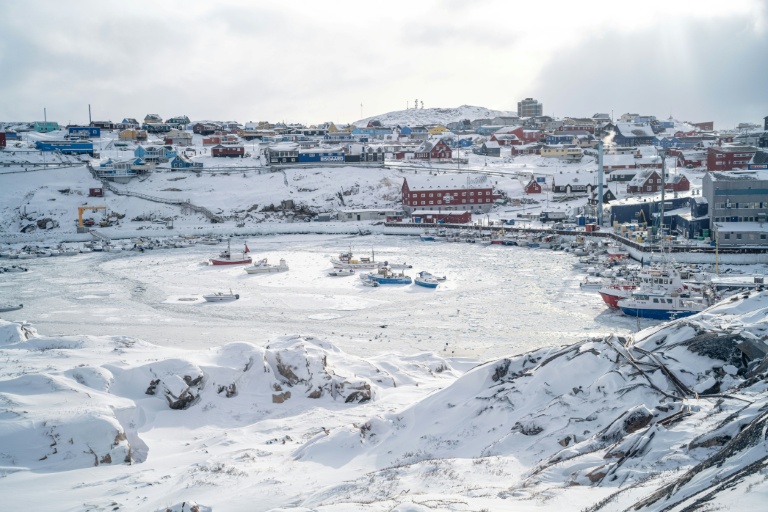
POLICY WIRE — Nuuk, Greenland — When most of us picture Greenland, it’s a tableau of stark white ice, majestic fjords, and maybe a lone polar bear contemplating a rapidly dwindling iceberg. Not fire. Not smoke, drifting heavy and acrid across tundras that should, by all reasonable reckoning, still be firmly locked in winter’s icy embrace. And yet, the unexpected has become the routine. Greenland, an island synonymous with ice and unforgiving cold, has found itself contending with wildfires breaking out notably earlier in the calendar year. It’s a jarring juxtaposition—ice sheets melting into a furious ocean while what little vegetation there’s decides to spontaneously combust.
This isn’t some isolated incident, a mere anomaly quickly dismissed. Instead, it’s a stark, smoldering emblem of a much larger, global recalibration. Scientists are telling us that the Arctic is not just warming; it’s heating up at an alarming pace—a rate nearly four times faster than the global average, according to a 2022 study published in Communications Earth & Environment. You’ve gotta sit with that for a moment. Four times faster. The implications? They’re pretty chilling, really. It means the usual climatic safeguards, the predictable seasons we’ve come to rely on, well, they’re dissolving into the permafrost, just like that.
What this early fire season indicates isn’t just a localized problem for Greenland’s hardy flora (and the even hardier folks who call that landscape home). It’s a blinking red light on the dashboard of planetary health. The permafrost—that ancient, frozen ground—isn’t so permanent anymore. It holds tons of organic matter, which when it thaws, releases methane and carbon dioxide, gases that are potent accelerators of global warming. It’s a feedback loop, see? The planet gets warmer, the permafrost melts, more gases escape, the planet gets warmer still. It’s an unpleasant spiral. The scientists are observing a significant increase in fire activity across the circumpolar north, with some years seeing unprecedented areas burned. (Awaiting official quote) It really complicates things, wouldn’t you say?
Because, honestly, what are we supposed to make of an ice-covered land mass, one thought impenetrable to significant forest fires, now getting jump-started weeks before its typical season? It scrambles our understanding. These early season fires, they don’t have the vast tracts of ancient forests like those in Siberia or Canada—at least not yet. But what they lack in sheer timber volume, they make up for in symbolic power. They’re a harbinger. They suggest a fundamental shift in regional weather patterns, drier conditions, and earlier snowmelt, creating perfect kindling in unexpected places. They also demonstrate how interconnected everything really is—even an event in a seemingly remote Arctic island has reverberations globally.
This new normal, the normalization of the abnormal, carries particularly heavy implications for regions far, far away. Think about South Asia, a place already wrestling with its own climatic nightmares. Pakistan, for instance, has battled its own ferocious heatwaves, devastating floods, and unpredictable monsoons for years. Its fertile lands, upon which millions depend for sustenance, are uniquely vulnerable to shifts in global weather patterns. The melting of Arctic ice, spurred by these warmer temperatures (and fires that contribute to warming), feeds into global sea level rise, threatening sprawling coastal megacities like Karachi, Mumbai, and Dhaka—metropolises already teetering on the edge of environmental instability.
And it’s not just about the water. The Arctic, now newly exposed and with ice receding, is becoming a hotspot for resource extraction and new shipping routes. This economic realignment impacts global trade flows, potentially diminishing the strategic significance of existing passages, say, through the Suez Canal, a key artery for nations across the Middle East and North Africa. What’s more, the hunt for new energy sources in the thawing Arctic could either exacerbate our carbon dilemma or, perhaps, provide a transitional bridge. But it definitely reconfigures the geopolitical chess board, and nations from Pakistan to Egypt watch the board carefully, weighing their future.
What This Means
The early onset of wildfires in Greenland isn’t just an ecological footnote; it’s a political bellwether and an economic signal flare. It portends accelerated melt rates, which have cascading effects. Politically, it sharpens the geopolitical competition in the Arctic, with major powers eyeing potential new shipping lanes and untapped resources. Nations like Russia, China, and the US aren’t just sending research vessels; they’re staking claims, and this newfound accessibility—even if via destructive fires—only intensifies the scramble. Economically, while new trade routes might shorten transit times, they also threaten established infrastructure and power dynamics in places like the Suez. And there’s the existential cost: more carbon in the atmosphere, hastening climate feedback loops. The early fires serve as an urgent reminder of our shared planetary vulnerability. It’s not an academic exercise; it’s the cold—or rather, searing hot—reality.
Ultimately, Greenland’s unusual fires are screaming a message that ought to echo worldwide: what happens at the poles doesn’t stay at the poles. It’s coming for us all, changing not just our weather but the very foundations of international relations and global economies. The subtle irony, of course, is that a land historically defined by its deep freeze now struggles with embers. It’s quite the shift, isn’t it?