


Federal Gridlock, One Mailbox at a Time: Rio Rancho’s 10-Month Postal Predicament
POLICY WIRE — Rio Rancho, N.M. — In an era of instant global communication, where information traverses continents faster than light, thirteen American households find themselves paralyzed by an...

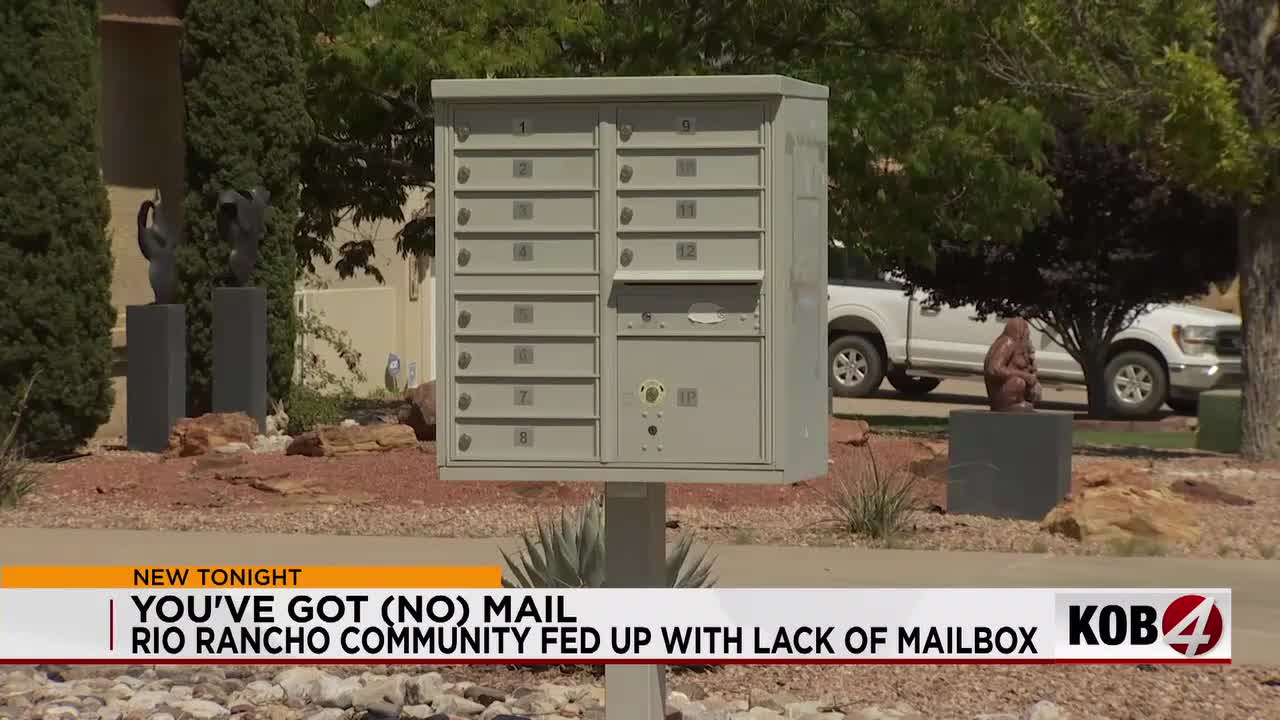
POLICY WIRE — Rio Rancho, N.M. — In an era of instant global communication, where information traverses continents faster than light, thirteen American households find themselves paralyzed by an absurdly analogue problem: a missing mailbox. No, this isn’t a quaint throwback to frontier days or a distant village cut off by geopolitics. It’s Rio Rancho, New Mexico, U.S.A., where a cluster mailbox, damaged during a prosaic burglary way back in August 2025 (a curiously specific future date in the source, suggesting perhaps an internal typo on the original piece, but we’ll stick with it as presented), remains precisely that: missing. For ten long months. A small logistical hiccup that’s spiraled into a glaring indictment of bureaucratic stasis.
You’d think the replacement of a box designed to hold envelopes and flyers wouldn’t be harder than launching a satellite. But here we’re. It’s a situation that would be comical if it weren’t so deeply frustrating for the folks who live in the Sandia Loop Estates. They’ve spent nearly a year (and we’re talking about a future year, remember) chasing answers from the United States Postal Service (USPS), a federal entity whose operational scope, you know, involves billions of pieces of mail and countless delivery points daily. But try asking them about a single, damaged box.
The collective bewilderment is palpable. Residents describe a revolving door of half-explanations — and unfulfilled promises. Pam Knutsen, one of the affected, laid it out pretty plain: “These are different people telling us different things, so it may or may not be true. What we need are some answers,” she said. It’s a sentiment echoed across their little neighborhood, a refrain familiar to anyone who’s ever tangled with a faceless organization. But this isn’t just about an inconvenience. It’s a fundamental break in a civic covenant.
Maureen Mulligan, another frustrated resident, summed up the lack of engagement: “We’re 10 months in, and I’ve heard nothing from anyone,” she noted. And this silence isn’t cheap. One neighbor, Scott Howard, did the math for KOB 4, calculating the hidden tolls this postal limbo levies. He estimates the collective inconvenience translates into actual dollars — and cents. “It’s a $570 per household annual cost in gas. Never mind an hour a day in time,” he stated. In total, those affected households will have collectively traveled 42,380 miles by the one-year mark just to pick up their mail from a branch 6.3 miles away—each round trip nearly thirteen miles.
So, what’s the holdup? Well, the USPS eventually coughed up an explanation. It’s not a secret underground syndicate, nor a lack of materials (presumably mailboxes are not on some restricted import list). It’s the good old Americans with Disabilities Act of 1990. Per an email statement from a USPS spokesperson: “The replacement of the CBUs (cluster box unit) has been delayed because the existing concrete slab does not meet ADA accessibility requirements. Before we can proceed with the installation of the new units, the site must be brought into compliance to ensure safe and equitable access for all customers. We are currently waiting on the contractor to complete this necessary work. Once the slab is corrected, we will install the new units promptly.”
One almost appreciates the meticulous adherence to legal statutes—after all, accessibility is no small thing, and it’s right for everyone to be able to get their mail. But this situation, this endless bureaucratic shuttlecock between the federal postal service and a local contractor, illustrates a larger systemic pathology. You’ve got a core public service paralyzed not by natural disaster or malicious intent, but by a concrete slab. Some residents even surmised the ADA issue themselves, wondering if a lack of a ramp was the snag. “They could ramp it. They could angle it. But here it sits…10 months to the day,” Knutsen observed with dry resignation. But when KOB 4 pressed USPS for a timeline on the contractor’s work, there was no answer to be had. And here’s the kicker: even the City of Rio Rancho engineers are apparently still waiting on USPS for further instructions regarding this ADA compliance, demonstrating a classic Catch-22 of inter-agency ping-pong.
Such bureaucratic tangles, while perhaps less violent, are frustratingly familiar across the globe, from local council offices in Lahore struggling with basic urban planning to infrastructure projects stalled indefinitely in various parts of South Asia over procurement complexities or environmental clearances. Indeed, anyone who has ever tried to navigate the permit system for a modest building renovation in Karachi or dealt with an infrastructure tender in Dhaka might well find this seemingly petty Rio Rancho debacle eerily familiar. The fundamental failure to provide a basic service, the opaque communication, the finger-pointing—it’s a global language of administrative inefficiency. This isn’t just about a mailbox; it’s about the erosion of trust in the institutions meant to serve the public. And in a global landscape where effective governance is often the dividing line between development and stagnation, these micro-failures carry macroscopic weight.
What This Means
This prolonged postal paralysis in Rio Rancho, though seemingly trivial, offers a poignant, and frankly, exasperating, case study into the often-Byzantine operations of even well-funded federal entities. Economically, the direct costs to citizens, quantified by Howard’s calculation of 42,380 miles traveled annually (at a cost of $570 per household per year), aren’t pocket change for thirteen families. But the indirect costs—the lost time, the mounting frustration, the psychological toll of fighting a faceless bureaucracy—are far more significant. This incident reveals how rigid interpretations of regulations, without agile problem-solving mechanisms, can grind essential services to a halt. The political implication? It erodes public confidence. When a federal agency, funded by taxpayer dollars, can’t manage to replace a mailbox for almost a year due to what sounds like a remediable concrete issue, it begs larger questions about that agency’s overall efficacy and its responsiveness to its constituents. This micro-failure casts a long shadow, making voters question the competency of government at all levels. When basic service delivery falters over a slab of concrete, you know there’s something genuinely amiss in the works. It’s a reminder that good governance isn’t just about grand policies, it’s also about the mundane details—the mail getting delivered, the rule of law being applied effectively, the infrastructure quietly humming along. But in Rio Rancho, that hum’s been a silent, irritating, — and expensive wait.