

Gulf Waters Calmed, Yet Hormuz Still Haunts Seafarers
POLICY WIRE — New Delhi, India — The world moves on, doesn’t it? Geopolitical fires flicker and often — almost as if by magic — they’re contained, declared ‘over,’ and the world’s...

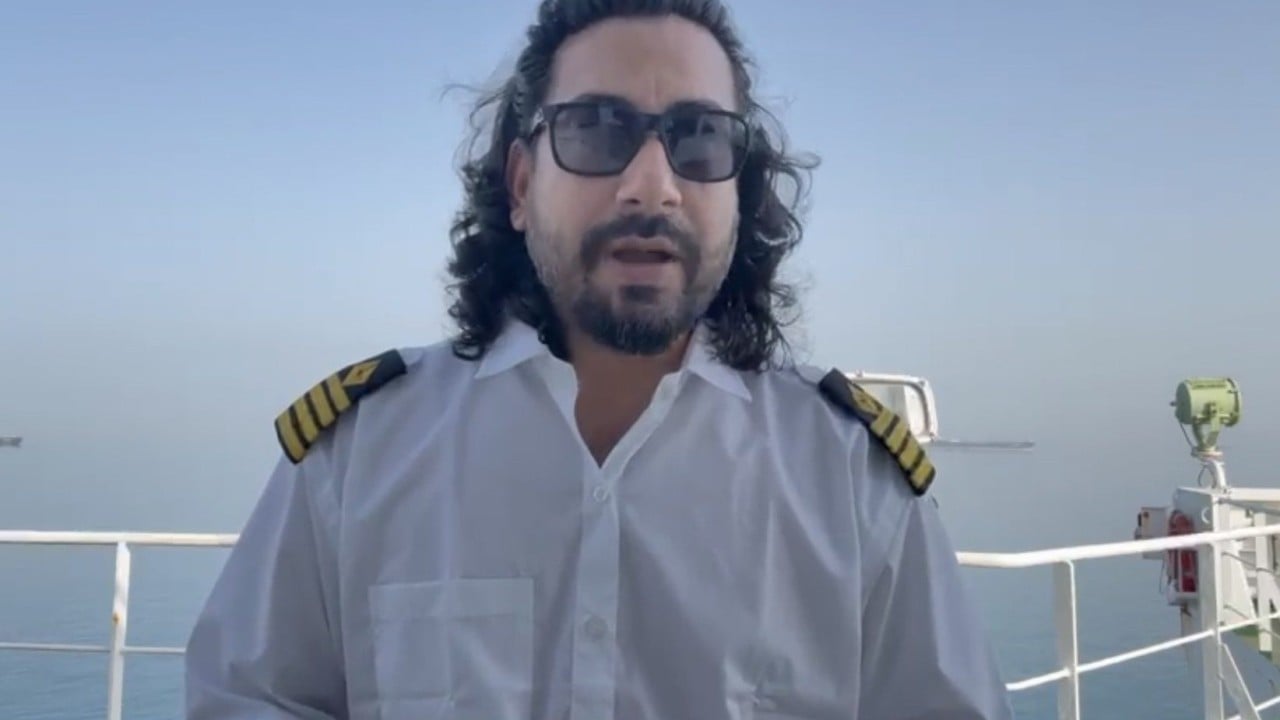
POLICY WIRE — New Delhi, India — The world moves on, doesn’t it? Geopolitical fires flicker and often — almost as if by magic — they’re contained, declared ‘over,’ and the world’s vital arteries of commerce reopen. For policy wonks, the Strait of Hormuz being deemed ‘safe’ again is a win, a point tallied for stability. But for men like Captain Raman Kapoor, 48, stability is a fickle concept, a cruel joke even, whispered in the cold, unyielding metallic confines of an oil tanker after enduring a living nightmare.
It wasn’t an official war, not in the way grand historians record battles with neat dates — and casualty counts. Yet, it was war enough when word reached Captain Kapoor while loading oil at an Iraqi port: the United States and Iran were apparently duking it out. Within hours, his tanker—a floating behemoth of crude oil and human hope—found itself stuck north of the Strait of Hormuz. Twenty-four souls aboard, adrift not just on water, but in a vacuum of uncertainty, as real missiles—not cinematic props—began arcing across the sky overhead. A scene plucked from a B-movie, except it was horribly, terrifyingly real.
“We were stuck inside the war zone and everyone was so scared and clueless about what to do,” Kapoor recalled, his voice still holding the residual tremor of those days. He talks about it with the detached grimness of a man who’s seen something no one should. His crew, predominantly from India’s coastal states — and the subcontinent, just wanted answers, some kind of clarity. There wasn’t any. Only the endless, soul-crushing wait. “We all felt so trapped. We were helpless, totally helpless.” For 75 agonizing days, that’s precisely what they were.
And those weren’t 75 days of leisurely cruising. Imagine that: isolated, vulnerable, a geopolitical pawn bobbing on unforgiving waves, with no guarantee of rescue. Who thinks about the sailors in such high-stakes international poker? Apparently, not enough of the players. The trauma, it doesn’t just evaporate with a new peace accord, does it? The fear leaves an imprint. It’s a wound that doesn’t bleed on the surface but festers deep inside, beneath the hardened exterior of seasoned seafarers.
Because Kapoor’s tale isn’t an anomaly, it’s a symptom. The maritime industry, the silent engine of globalization, relies heavily on a workforce often recruited from nations like India, Pakistan, Bangladesh, and the Philippines. These folks aren’t just shipping cargo; they’re carrying the economic fortunes of entire continents on their shoulders, often through zones where geopolitical tempests are a recurring feature. Approximately 90% of global trade is transported by sea, according to data compiled by the United Nations Conference on Trade and Development (UNCTAD), making these individuals absolutely irreplaceable. Their well-being? Frequently an afterthought.
Consider the region. The Gulf has long been a tinderbox, its calm always contingent on the next political slight or military maneuver. This vulnerability doesn’t just affect individual captains. It has implications for the hundreds of thousands of South Asian seafarers, their families, and the economies they support through remittances. You know, these are folks who — even if they wanted to — couldn’t just walk away. They’ve got mouths to feed back home, futures to secure. Their quiet sacrifices keep the gears of the world turning.
Pakistan, often overlooked in these grand narratives, has frequently played a surprisingly diplomatic hand in mediating regional crises. The complex web of alliances and antagonisms makes the Strait of Hormuz not just a choke point for oil, but for peace itself. Historically, in moments of extreme regional instability, voices from the broader Muslim world, including Pakistan, have often been critical in de-escalating tensions—see Policy Wire’s Why the World Backed Pakistan’s Mediation in the US-Iran Agreement, for context. This particular episode highlights a perennial fragility, a sort of geopolitical house of cards that could tumble at any instant, irrespective of a ‘reopening’ headline. We often talk about ‘supply chain resilience,’ but do we talk enough about ‘human resilience’ and the policies required to foster it in such critical occupations?
What This Means
The Strait of Hormuz isn’t just a shipping lane; it’s a barometer of global stability. Its ‘reopening,’ or rather, the return to a precarious calm, suggests that immediate conflict might have been averted. Politically, this signals a temporary de-escalation of overt hostilities between major powers and regional actors, likely a result of back-channel diplomacy that saved face for all involved—for now. Economically, oil markets breathe a sigh of relief. Freight insurance premiums might dip. But these are superficial bandages on a gaping wound. The real implication lies in the enduring psychological toll on a workforce that’s largely invisible to consumers and policy elites.
We’ve created a global economy utterly dependent on these maritime arteries, but we’ve consistently failed to build robust psychological and social safety nets for the people who traverse them. The memory of missiles arcing overhead doesn’t simply fade because a declaration has been signed. It breeds anxiety, erodes trust, and contributes to mental health crises within a sector that simply cannot afford attrition. And, ultimately, the unspoken implication is that the geopolitical dance of power projection always carries a human cost—paid disproportionately by those least equipped to fight back. When you consider the vast numbers of seafarers hailing from developing nations, their vulnerability isn’t just an occupational hazard; it’s a stark moral failing in the international system itself. And we’ll see more of this. Always.