


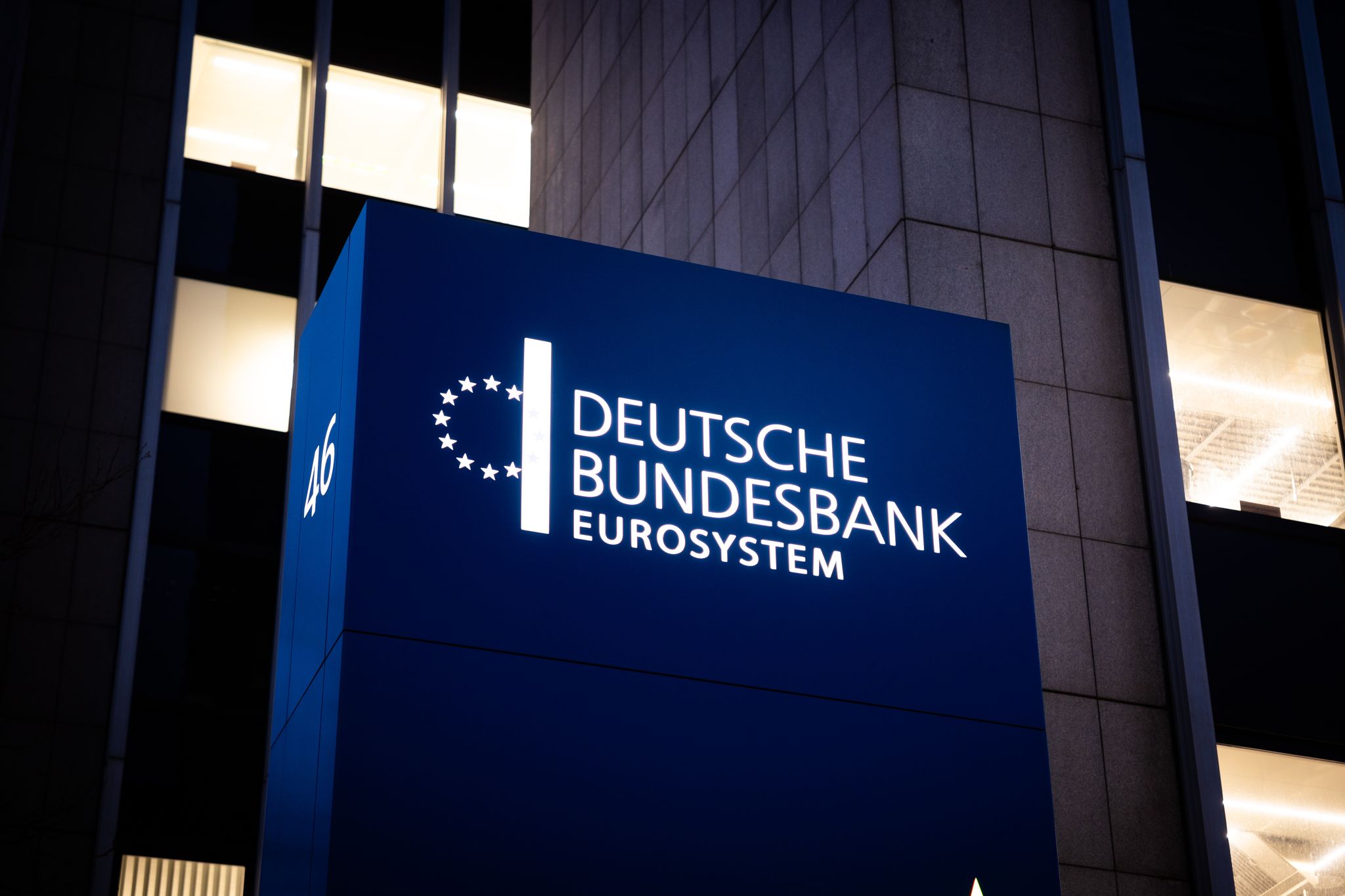
Germany’s Slow Burn: Bundesbank Predicts Stalling Growth Amid Inflationary Stubbornness
POLICY WIRE — Frankfurt, Germany — Germany, the once-unflappable economic engine of Europe, now finds itself eyeing the rearview mirror, its famed autobahns of growth seemingly replaced by a slow,...

POLICY WIRE — Frankfurt, Germany — Germany, the once-unflappable economic engine of Europe, now finds itself eyeing the rearview mirror, its famed autobahns of growth seemingly replaced by a slow, congested crawl. It isn’t a headline-grabbing crash; it’s worse—it’s the relentless drag of expectation management. The Bundesbank, Germany’s staid central bank, hasn’t dropped a bombshell so much as quietly informed everyone that the nation needs to get comfortable with mediocrity for a while, particularly signaling ‘higher short-term inflation’ and ‘months before GDP rise’. It’s not a prediction of outright doom, mind you. But it certainly isn’t the swift, decisive rebound many were betting on after a year-long skirmish with technical recession.
It seems the eurozone’s largest economy is in a holding pattern. We’re talking persistent cost pressures here—something akin to that persistent dull ache you just can’t shake. Inflation, the Bundesbank suggests, isn’t just sticky; it’s got a whole superglue factory behind it, fueled by lingering supply-side disruptions and a job market that, for now, remains remarkably resilient, propping up wage demands. That means consumers are still shelling out more for less, eroding purchasing power. It’s a bitter pill, particularly for households already stretched thin by rising energy costs and the general post-pandemic churn. (Awaiting official quote)
And then there’s the GDP, Germany’s gross domestic product—a measure everyone watches. The Bundesbank has warned of ‘months before GDP rise’, an assessment that pours cold water on any immediate hopes of a V-shaped recovery. No, we’re staring at something more akin to an elongated L-shape, or perhaps a U that’s been run over by a tractor. Exports, a traditional German strength, aren’t exactly setting the world alight. Global demand, buffeted by geopolitical headwinds—and let’s not forget the sluggish growth coming out of China, a major trade partner—just isn’t providing the usual tailwind.
Because frankly, other factors are at play too. Energy security remains a specter. And the sheer inertia of bureaucracy isn’t helping. Businesses face hurdles, regulatory tangles—that sort of thing. It’s a drag on investment. When industrialists aren’t pouring money into new ventures, jobs become scarcer, — and innovation slows down. You can’t expect the economy to suddenly leap forward when its fundamental underpinnings are still getting patched up. The World Bank, in its June 2024 Global Economic Prospects report, projects global growth at just 2.6% for 2024, the lowest in three decades outside of crisis years, clearly not offering much solace for Germany’s export-driven model.
It’s this interplay of external weaknesses — and internal slowness that defines the current German predicament. They’re good at navigating tough spots, sure, but this one feels different. This isn’t just about monetary policy; it’s about structural issues, the kind that take ages to fix. Policy makers have got their work cut out for them, managing expectations while trying to coax the beast back into a gallop.
But how much can they do without unsettling things even more? That’s the real question, isn’t it? Every decision today has implications not just for the next quarter, but for the entire trajectory of the European Union, a bloc that historically relies on Germany’s robust performance. And when Germany falters, ripples spread far beyond its borders. Just look at the emerging markets, like Pakistan.
What This Means
Germany’s economic stutter—call it an advanced case of the ‘slows’—carries far-reaching implications, extending well beyond the Rhine. For one, Europe’s unified currency, the Euro, will continue to feel the pressure. A weakened German economy means less demand for European goods overall, and certainly less impetus for further economic integration. This isn’t just an internal European matter; it’s a global one. Investment decisions in the United States, trade negotiations in Asia, even fiscal stability in South Asian nations like Pakistan are, to some extent, linked to Germany’s health. Islamabad, for instance, a nation already grappling with its own persistent inflation and debt challenges, watches keenly. Slower German demand could translate to less trade, reduced foreign direct investment from Europe, and ultimately, greater pressure on its own fragile economy and its efforts to stabilize. Any downturn in major developed economies almost always exacerbates existing vulnerabilities in developing countries that rely on those bigger players for exports and remittances.
Domestically, the political fallout could be tangible. Persistent inflation, combined with stagnant growth, often leads to public discontent, creating fertile ground for populist movements. You’ve seen it before, you’ll see it again. The current coalition government, already battling a slew of challenges, could find its credibility eroded, making difficult reforms even harder to enact. The German social model, predicated on a strong industrial base and robust social safety nets, begins to fray under prolonged economic stress. It’s not just numbers on a balance sheet; it’s people’s livelihoods. This quiet forecast from the Bundesbank isn’t merely a dry economic bulletin; it’s a harbinger of potential political and social turbulence for Germany, for Europe, and for an interconnected world whose stability often rests on the economic footing of its biggest players.