


US Ed Dept’s Great Unbundling: Disability Rights in Bureaucratic Limbo
POLICY WIRE — WASHINGTON, D.C. — Imagine filing a formal complaint, years grinding by, and the only response you get is the rustle of metaphorical tumbleweeds. This is the reality for many American...

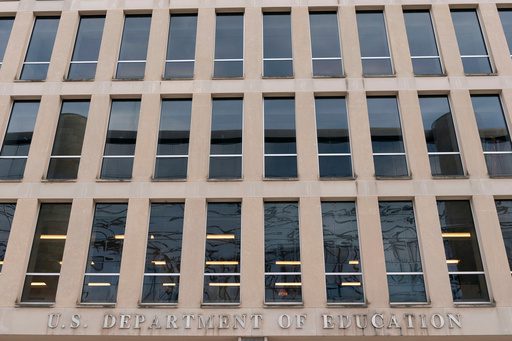
POLICY WIRE — WASHINGTON, D.C. — Imagine filing a formal complaint, years grinding by, and the only response you get is the rustle of metaphorical tumbleweeds. This is the reality for many American parents battling for their children’s disability rights in schools, a grim tableau playing out long before the Education Department decided it was time to rearrange the furniture. And now, the very offices parents turned to as a final recourse are being fragmented, their mandates passed off to different federal siblings, raising a fresh wave of panic among those already treading water.
Nicole May, an Ohio mother, knows the drill all too well. More than two years have crawled by since she flagged an issue with her teenage daughter’s school. Her girl, with hearing aids, was getting into hot water in class because, you know, she just couldn’t hear the teachers. May laid it all out for the department’s Office for Civil Rights way back in spring 2024. Today? There’s no resolution. She told us, It’s to the point I don’t even check in anymore with the attorney. That’s not just apathy; it’s the quiet thud of exhaustion. (Awaiting official quote)
This long-standing procedural sclerosis—a word economists often use to describe a rigid, slow-moving system—now faces a rather radical intervention. The administration of President Donald Trump, still ostensibly committed to dismantling parts of the Education Department, just announced Tuesday it’s offloading chunks of its authority. The Department of Justice, a decidedly different animal, will now take over civil rights enforcement in schools. Special education, a complex world unto itself, heads over to the Department of Health — and Human Services. Because, apparently, disability isn’t about how kids learn; it’s just a condition to manage, per some critics.
Linda McMahon, the education secretary—a figure well-acquainted with high-stakes, dramatic spectacles from her previous life—presented these changes as a streamlining maneuver. Supposedly, it’s all to get more help to families. But those working the trenches, like the various advocacy groups, aren’t buying it. Many simply see an already faltering system, prone to delays and an ever-expanding backlog, about to be diced even finer. Consider this: The Office of Special Education and Rehabilitative Services has shrunk by roughly a third since 2024, and the Office for Civil Rights is roughly 40% smaller. These aren’t minor trims; they’re institutional amputations, according to estimates provided by Justice Connection, a network of department alumni. The Education Opportunities Section at the Department of Justice, meanwhile, has shrunk by half. That doesn’t exactly paint a picture of an agency eager to pick up additional caseloads, does it?
Emily Harvey, co-legal director at Disability Justice, formerly Disability Law Colorado, has cases that languish for years. She has been on the front lines, fighting federal inaction, so much so that she helped push a new Colorado state law expanding what local officials can investigate. And that’s what this often boils down to: when the big government moves slowly, people look elsewhere—to states, to courts, to sheer persistence.
But the problem is systematic, not just anecdotal. When a high school student’s special education plan got ignored during a suspension, Boston-area advocate Craig Haller found resolution through the Massachusetts state system. He said, I got it fixed for my client. Then he added a crucial counterpoint: But without the federal Office for Civil Rights, I can’t get it fixed systematically. That distinction – individual success versus systemic change – defines the looming challenge. Shadows of Autocracy, one might say, extend into bureaucratic realms far beyond initial perception, often eroding trust and capability in unseen ways.
Rob Harris, an IEP advocate in Colorado whose own 19-year-old daughter is blind, puts it plainly: Families don’t experience the government through organizational charts. We experience it through the services our children receive. This fragmentation of services across multiple agencies for disabled students doesn’t appear on any organizational chart in a helpful light. It’s messy. And it threatens to ensnare an entire generation in bureaucratic quicksand.
What This Means
The Trump administration’s ongoing maneuvers to redraw the federal bureaucracy, particularly concerning education and civil rights, portend a shift that extends far beyond the Beltway. This isn’t just about shuffling forms; it’s about a deeper philosophical contention regarding the federal government’s role in guaranteeing equity. Politically, this move further empowers the Department of Justice to act as a primary enforcement arm in schools—a controversial choice for an agency traditionally focused on broader criminal justice. Moving special education to Health and Human Services risks reframing disabilities from a learning difference, requiring tailored educational approaches, to a health condition that needs medical management. It implies a narrow, perhaps less empowering, understanding of how these students integrate into society.
Economically, the inefficiency spawned by such bureaucratic fragmentation is real, though often hidden. Families lose time, resources, — and often their jobs battling a labyrinthine system. States, in turn, are forced to step up where federal oversight wanes, leading to an uneven patchwork of protections across the nation. Imagine the resource strain if each of Pakistan’s provinces had to develop entirely unique and robust special education enforcement mechanisms because the federal Ministry of Education was shedding responsibilities. Like the complexities in any South Asian nation grappling with centralized vs. decentralized governance for vulnerable populations, this ‘great unbundling’ in the US hints at similar struggles. Developing countries often wrestle with the effectiveness of federal mandates versus local implementation, particularly when resources are scarce and expertise varies wildly. This U.S. situation provides a stark reminder that even in an established democracy, administrative overhaul can create as many problems as it purports to solve, especially for populations that already require specialized support. When federal offices tasked with critical oversight shrink, it doesn’t just cut budgets; it cuts trust, it cuts access, and it quite literally cuts opportunities.