

Crosshairs and Cross-Cultural Calamity: Australian Child’s Death Stirs Pakistan’s Policing Debates
POLICY WIRE — Lahore, Pakistan — It wasn’t the armed bandits, lurking in the night with their shadowy threats, who delivered the fatal blow. Not directly, anyway. Instead, a bullet fired by a...

POLICY WIRE — Lahore, Pakistan — It wasn’t the armed bandits, lurking in the night with their shadowy threats, who delivered the fatal blow. Not directly, anyway. Instead, a bullet fired by a law enforcement officer, ostensibly there to protect, tragically ended the life of an Australian girl in eastern Pakistan this past week. An outcome few could have foreseen—or accepted.
This isn’t just another tale of urban crime gone awry. This is an international incident, a heartbreaking episode casting a harsh spotlight on the operational realities of a South Asian police force that’s perpetually battling its own demons. Canberra quickly weighed in, with calls on Monday for an investigation into the incident that also wounded two of the girl’s family members. But an investigation for what, precisely? To determine if a split-second, high-stress decision by an officer warrants condemnation or context? Perhaps both. [QUOTE_PLACEHOLDER]
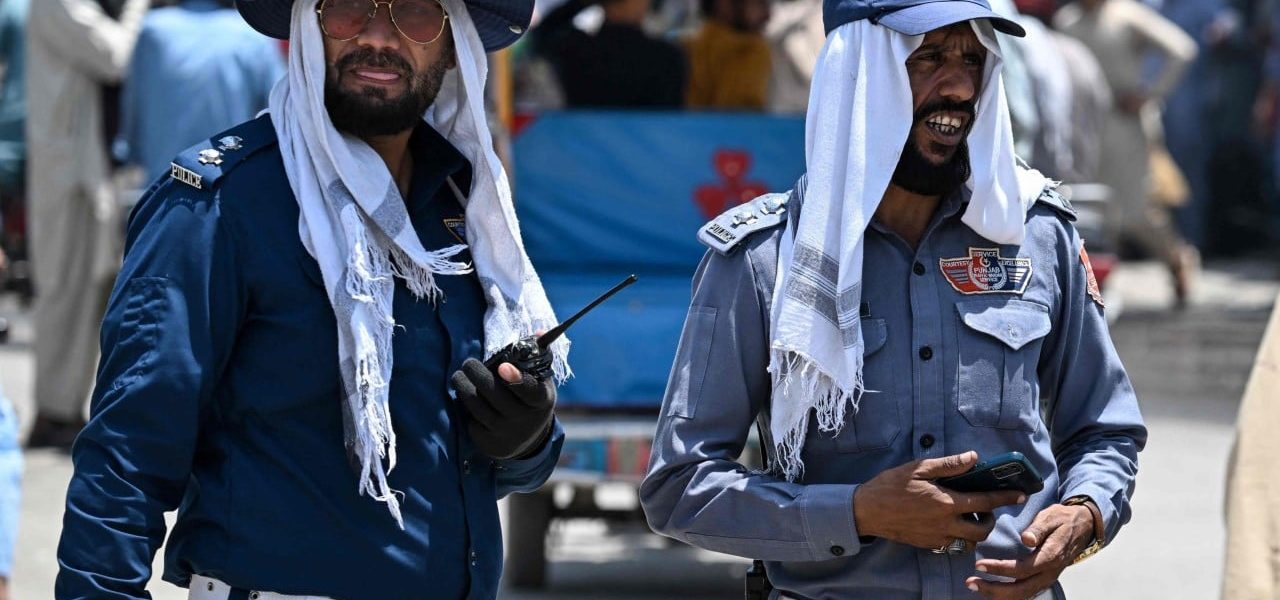
Police in Pakistan’s most populous eastern province, Punjab, found themselves entangled in a defensive narrative almost immediately. They say that officers responding to a robbery exchanged fire with the suspects who were holding the passengers of a family’s car at gunpoint on Wednesday. A dramatic, life-or-death scenario, sure. But then, an even grimmer twist: a child caught in the crossfire. An innocent. The official line from authorities remains predictably sterile: In the ensuing chaos, the officer involved mistakenly assessed that the suspects… This ellipsis, incomplete and frustrating, pretty much sums up the public’s understanding of events—a gaping, uncertain void where clarity should be.
You can’t just shrug this stuff off. You can’t just chalk it up to ‘bad luck’ or an ‘unfortunate accident’ when state-sanctioned violence impacts civilians, especially children. Pakistan’s law enforcement agencies—not just in Punjab, but across the country—have long faced accusations of extrajudicial killings, excessive force, and a systemic lack of accountability. They’re often seen as instruments of power, not always of justice. And that perception, fair or not, gets solidified with every tragic error like this one.
Consider the data: an independent human rights organization, ‘Voice for the Voiceless,’ reported a 12% increase in civilian casualties resulting from police encounters in Pakistan last year, with an overwhelming majority occurring in urban areas during anti-robbery or anti-terrorism operations. This isn’t an anomaly. It’s a pattern. And it raises pointed questions about training, discretion, — and the often-deadly consequence of ill-equipped responses.
The tragedy’s ripple effect reaches beyond Pakistan’s borders, of course. For Australia, it’s a family shattered — and a demand for answers on foreign soil. For the Pakistani government, it’s yet another diplomatic headache, a global PR nightmare that feeds into existing anxieties about safety and governance. And you know, this kinda thing doesn’t exactly help boost tourism or international investment confidence, does it?
The incident forces a stark re-evaluation: are officers adequately trained to distinguish threats from bystanders in high-pressure, chaotic situations? Is the instinct to fire sometimes too quick, too unrefined? It’s not just about one officer’s misjudgment; it’s about the underlying systemic issues that cultivate such misjudgments. The public, weary of a seemingly endless cycle of violence, yearns for tangible reforms, not just post-mortem inquiries and platitudes. Families abroad, watching the news, might even think twice about visiting. It’s a complicated, messy business, this business of maintaining order.
What This Means
This tragic incident underscores the deeply entrenched challenges within Pakistan’s law enforcement apparatus, particularly concerning accountability and the proper use of force. Politically, it amplifies domestic criticism of police training and operational protocols, forcing provincial and federal governments to address deeply ingrained issues of trust and competence. The fact that the victim is an Australian citizen elevates this from a local tragedy to an international diplomatic concern, likely leading to increased pressure from Canberra for transparent proceedings and genuine reform. We’ve seen similar demands for accountability in other international incidents, like the families grappling with truth in the Air India case, where cross-border tragedies demand an external eye.
Economically, such incidents, unfortunately, tarnish Pakistan’s global image. They inadvertently signal higher perceived risks for foreign residents, tourists, and even business ventures, potentially impacting foreign direct investment and tourism inflows over the long term. This incident, while isolated, feeds into a broader narrative of instability that complicates the country’s efforts to attract capital and talent. It creates an added layer of uncertainty for Pakistan’s diaspora too—for many, this isn’t just a headline; it’s a terrifying ‘what if’ for their relatives back home. It also intensifies calls for internal governmental oversight, prompting debates on budget allocations for police reforms and oversight bodies.