


Queens Court Comeback: Raducanu’s Tentative Bloom Amidst Sports’ Relentless Grind
POLICY WIRE — London, England — They say never go back, especially not to a stage where you once captured lightning in a bottle. Emma Raducanu, the young Brit who momentarily stunned the tennis...

POLICY WIRE — London, England — They say never go back, especially not to a stage where you once captured lightning in a bottle. Emma Raducanu, the young Brit who momentarily stunned the tennis universe, has made her reluctant—or perhaps, defiant—return to the Queen’s Club courts, delivering a 6-0, 6-3 dispatch of Anna Blinkova. But for anyone tracking the fickle dance between celebrity — and performance, this isn’t just about a scoreline. No, it’s a raw, public struggle for relevance after the kind of stratospheric rise few athletes ever endure, let alone survive.
It was a match that had the familiar buzz of a comeback, yet felt strangely subdued for a former Grand Slam champion. Raducanu, once hailed as British tennis’s gilded future, has spent more than two years navigating injuries, a carousel of coaches, and the crushing weight of expectation. Her initial burst onto the scene in 2021 was a marketeer’s dream, pulling in eyeballs and sponsorships faster than an open-source data leak. And then, well, the bill came due. Illness knocked her out for a good chunk of this year. She lost her only two clay matches leading up to this point. It’s been rough; she’d admit that herself.
“Look, Emma’s situation is unique,” offered John Pelling, a seasoned sports agent who’s seen his fair share of fleeting brilliance and agonizing downturns. “One minute you’re an unknown; the next, you’re the face of luxury brands — and the hope of a nation. It’s an immense pressure cooker. What she did at the US Open, that was extraordinary. The subsequent struggle? That’s just human, really.” His words echo a sentiment common in the quiet corners of the sport – the game can be brutal, not just physically but psychologically. That kind of global exposure, particularly for someone so young, it transforms the person as much as it does their bank balance.
Her opponent, the Russian qualifier Anna Blinkova, seemed caught in the Raducanu narrative. Almost an afterthought in a story that’s far bigger than any single first-round contest. Raducanu’s performance, particularly that 6-0 first set, wasn’t just a win; it felt like an exhalation. A desperate grab for some form of normal. But Blinkova did break back in the second set, demonstrating that even a struggling titan still faces opponents eager to make a name for themselves off established reputations. It’s the ruthless realities of athletic careers, plain and simple.
“We’ve got to manage expectations, haven’t we?” mused Alistair Finch, a senior figure within the Lawn Tennis Association, during a quick exchange earlier in the week. “Her recovery, her health—that’s paramount. Anything else right now, well, that’s just gravy. But, she represents so much more than just a tennis player. Her success resonates economically, emotionally. It draws eyes to the sport, — and frankly, puts pounds in coffers. That’s a serious consideration for any sporting body.” His statement, devoid of the usual saccharine platitudes, underscored the unspoken economics at play every time a marquee player steps onto the court.
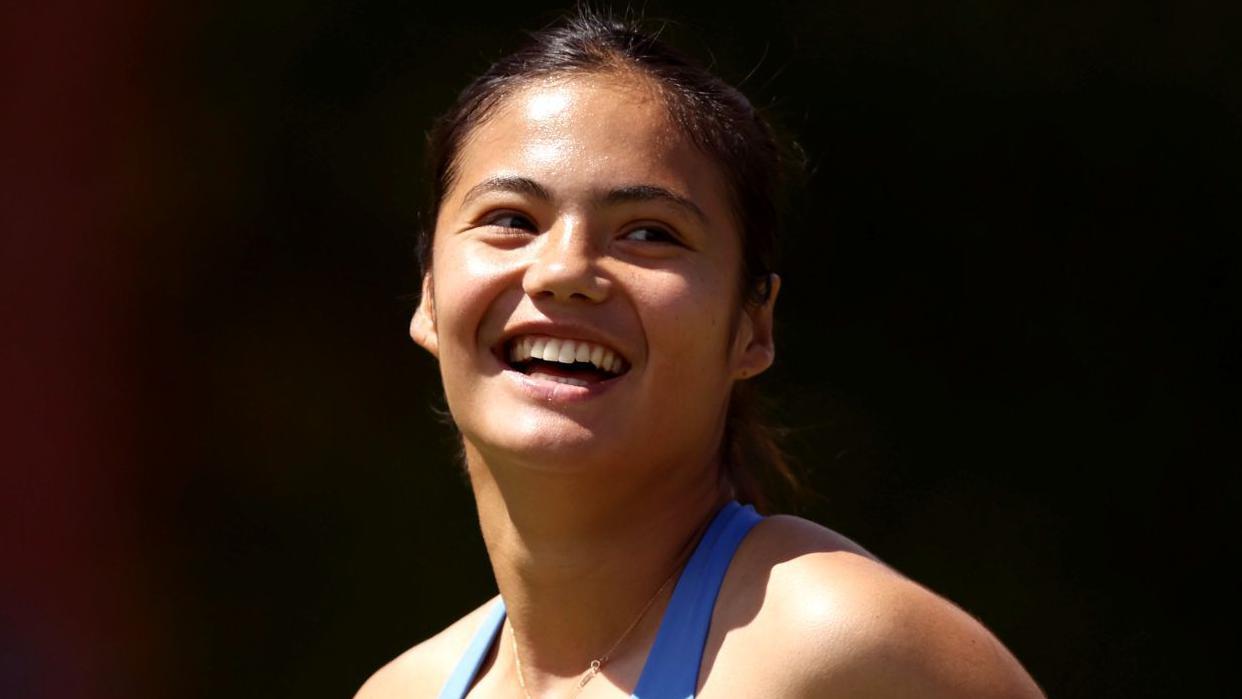
Because, make no mistake, every bounce of that fluorescent green ball is worth something. Raducanu’s ability to secure victory while looking… relaxed (her word choice, not ours) marks a quiet but telling shift from her post-illness appearances. She was, as reported, beaming. Smiled. Fist-pumped. After months of stoic, almost pained expressions, it’s a welcomed change. An economic think tank recently estimated that Raducanu’s brand value, which peaked after her US Open win, declined by nearly 35% during her protracted absence from the tour—a sharp drop reflecting the perishable nature of athletic stardom without consistent visibility.
But the road ahead? It’s still long. Her second-round clash pits her against Sorana Cirstea or Maddison Inglis. And though the British number one was happy to have broken her losing streak, that feeling of relief can evaporate quickly. This is grass-court season, a blur of serves and volleys designed to be over almost before it begins, building to Wimbledon, the grandest stage of them all. For Raducanu, every win, every confident step, is a whisper of hope in what’s been a rather tumultuous saga.
What This Means
Raducanu’s tentative re-emergence isn’t just a feel-good sports story; it carries economic and psychological undertones for British sport and, indeed, global athlete narratives. Her ability to bounce back—or at least, appear to—after significant setbacks provides a public case study in athlete resilience under intense public scrutiny. From a financial perspective, a resurgent Raducanu reignites interest, drives broadcast revenue, and potentially secures lucrative sponsorships for governing bodies like the LTA. Think about the broader picture: these high-profile athlete struggles and triumphs often translate into narratives that resonate globally, fostering aspirational connections across cultures, including in rapidly developing sports markets in South Asia and parts of the Muslim world, where individual achievement against odds is universally celebrated and watched with increasing fervor. This narrative arc, regardless of the athlete’s background, becomes a consumable product—a human drama played out on a global stage. This is the economic engine of elite sports; sustained engagement demands both triumph and trials, packaging vulnerability as part of the overall brand. Her performance also offers a crucial morale boost for a British tennis establishment frequently accused of struggling to produce consistent champions. A genuine, smiling Emma Raducanu is good for business, good for optics, and a palpable relief for those who invest heavily in the image and performance of their athletic standard-bearers.