


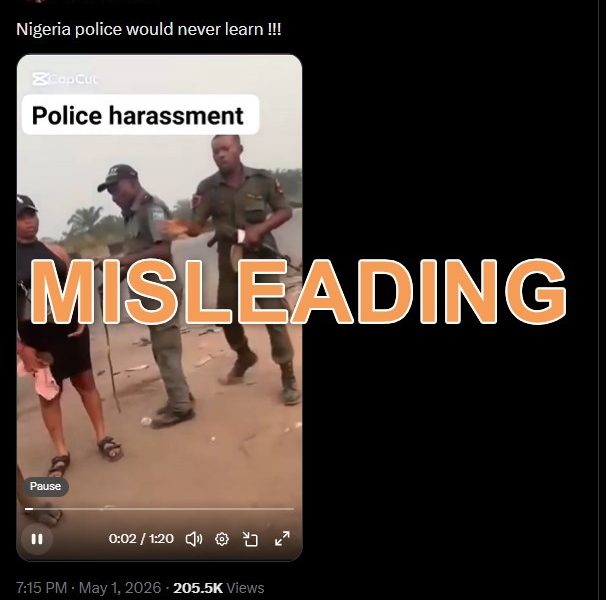
Nigeria’s Digital Echo Chamber: Old Scars Fuel New Outrage in the Battle for Truth
POLICY WIRE — Abuja, Nigeria — The flicker of pixels can resurrect ghosts. Not spectral apparitions, mind you, but ghosts of past traumas, brought roaring back to life with a simple click, share, or...

POLICY WIRE — Abuja, Nigeria — The flicker of pixels can resurrect ghosts. Not spectral apparitions, mind you, but ghosts of past traumas, brought roaring back to life with a simple click, share, or repost. In Nigeria, a nation wrestling with systemic issues, an old, gut-wrenching video—purportedly showing Nigerian police officers administering brutal beatings—recently ricocheted across social media platforms like a ballistic missile. Outrage erupted. Again.
But here’s the kicker: this footage wasn’t new. Not by a long shot. It was a digital artifact, dislodged from its proper timeline, thrown into the present chaotic moment. And it sparked a firestorm of condemnation, drawing weary sighs from officials trying to convince a skeptical populace that change, however agonizingly slow, is actually happening.
This isn’t some harmless parlor trick. This is serious stuff. It’s a textbook case of how misinformation, even if inadvertently spread, weaponizes public mistrust. It leverages legitimate grievances to incite further anger, often overshadowing genuine, current issues, or undermining nascent reform efforts. Who profits? Nobody, really. Everyone loses.
“These videos, recycled and rebranded for maximum impact, don’t help our actual, painstaking efforts to clean house,” declared Aliyu Dambatta, Nigeria’s Minister of Information, during a recent press briefing. “They complicate the very dialogue we’re trying to foster with citizens. We’re telling people to trust the process, but then these old wounds are ripped open, painted as fresh.” His voice, usually unflappable, carried an unmistakable edge of frustration. You could practically feel his exasperation across the wire.
Because, honestly, there is a history. Police brutality isn’t some urban legend in Nigeria. People have stories. They’ve witnessed things. So when images surface—however old—they don’t trigger skepticism. They trigger memory, and anger. This is particularly true across much of the global south, from Nigeria’s bustling streets to the teeming bazaars of Lahore, Pakistan, where social media users, often hungry for news and starved for official transparency, consume unverified content at a voracious pace. There, too, issues of institutional accountability often drive quick belief in damning visuals, regardless of provenance. It’s a common thread, this global susceptibility to digital deception, especially when coupled with historical distrust.
Identifying the footage as recycled wasn’t easy. It involved digital forensic sleuthing—cross-referencing metadata, reverse image searches, and linguistic cues that date the event to a specific prior incident (or, in some cases, determine it was never from Nigeria at all). This is a monumental task, especially when millions of shares happen in a blink. The immediate, emotional reaction always outpaces sober verification. Dr. Fatima Zahra, head of the Citizens’ Rights Initiative, put it bluntly: “People believe it because they’ve seen it happen. The problem isn’t just the fake video; it’s the real incidents that pave the way for its credibility. The institution itself has earned this skepticism. So, of course, they’ll believe it.” Her words sting, but they also hit home. They absolutely do.
📄 POLICY WIRE WHITEPAPER PUBLISHED: PAKISTAN'S NATIONAL SECURITY POLICY PRIORITIES
👉 READ BY CLICKING HEREThe numbers don’t lie. According to DataReportal’s 2023 Digital Report, over 33 million Nigerians are active social media users, representing a dynamic — and often unfiltered — landscape where information, and disinformation, proliferates at lightning speed. It’s a double-edged sword, this connectivity. Powerful for grassroots organizing, but equally potent for malicious intent or, just as often, for thoughtless sharing.
And then there’s the speed. Oh, the speed! Content flies around the digital globe before anyone can even think about hitting a ‘pause’ button. This particular footage, once identified, became yet another weary reminder that our collective memory online is startlingly short, yet our collective outrage, when provoked, remains as potent as ever.
What This Means
The resurgence of old, incendiary content under new pretenses isn’t just an inconvenience for public relations; it’s a structural problem with significant political and economic fallout. Politically, it exacerbates the trust deficit between citizens and state institutions—a dangerous chasm in any democracy. When every claim of reform is met with an immediate, pre-programmed reflex of suspicion, genuine progress stalls. It diverts critical attention — and resources that could be focused on actual abuses towards debunking digital ghosts. Because really, you can’t build trust if every single message is met with suspicion, right?
Economically, persistent social unrest, fueled by these kinds of viral moments, deters foreign investment, creates instability, and ultimately hampers growth. Businesses, local — and international, crave predictability. A nation in constant turmoil, even digital turmoil, struggles to attract the capital needed for development. This incident, small in its direct impact but large in its implications for public discourse, highlights the urgent need for comprehensive digital literacy campaigns alongside transparent and accountable governance. Without both, the cycle of outrage and debunking will continue, trapping vital national conversations in an endless, draining loop.
📖 GET YOUR FREE COPY NOW OF POLICY WIRE DIGITAL MAGAZINE JULY 2026 EDITION
👉 READ & DOWNLOAD FREE MAGAZINE