


The Billion-Dollar Ball Game: Giannis’s Ghostly Grip on Greenbacks and Futures
POLICY WIRE — Boston, MA — Forget the roaring crowds or the perfectly arced three-pointer for a moment. This isn’t just basketball; it’s a high-stakes, opaque market operating at the...

POLICY WIRE — Boston, MA — Forget the roaring crowds or the perfectly arced three-pointer for a moment. This isn’t just basketball; it’s a high-stakes, opaque market operating at the intersection of athlete agency and corporate valuation. While fans dream of championships, power brokers behind polished mahogany desks are quietly—and not so quietly—calculating cap sheets, luxury taxes, and the immense, almost immeasurable, gravity a single generational talent like Giannis Antetokounmpo can exert over an entire franchise’s economic destiny.
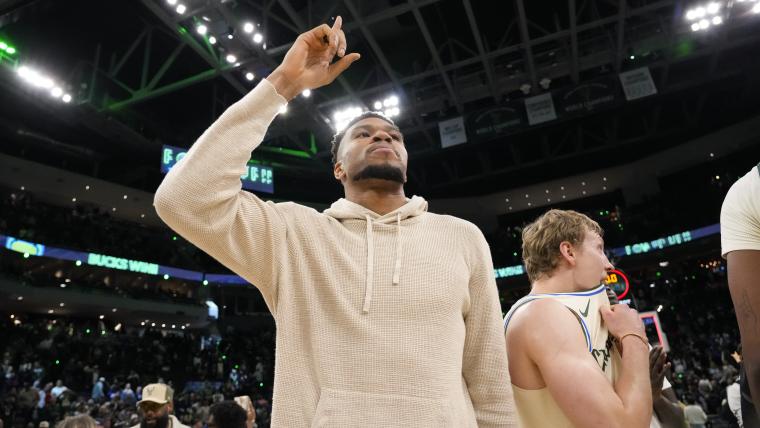
Milwaukee’s ‘Greek Freak,’ arguably the league’s most dominant force, stands at a precipice. An extension with the Bucks hangs, an albatross for some, a golden tether for others. But the whispering campaigns, those industry smoke signals that precede seismic shifts, have amplified, suggesting a potential move for Antetokounmpo. And for Boston, a perennial contender, this isn’t just about adding another star. It’s about leveraging every possible asset—and shedding a few—to chase what money can’t quite buy: an undisputed title.
It’s all very cloak-and-dagger, isn’t it? The grand declarations of loyalty versus the ruthless calculus of modern professional sports. ESPN’s Brian Windhorst, a veteran tracker of such financial follies and triumphs, recently poured a dose of cold reality onto the simmering Celtics speculation. “I haven’t heard that Boston is on Giannis’s list,” Windhorst flatly stated on CLNS Media, adding, “I haven’t heard that Giannis is prepared to sign the extension with Boston.” Because, ultimately, his information, even from a well-connected source, amounts to an absence of affirmation, not a definitive denial. A non-answer that speaks volumes, if you’re listening.
The whole idea feels, frankly, almost quaint in its directness. Boston, with its well-stocked larder of talent—specifically, Jaylen Brown—presents a clear, tantalizing option on paper. Pair Antetokounmpo with Jayson Tatum? An offense to curdle the blood of opposing general managers. But these are human beings, with their own ambitions, their own preferred cities, their own networks of family and influence. It’s not just a salary slot.
Miami, ever the aggressive player, is also in the mix, though their path would be less direct, more a gutting of their roster, bereft of a prime trade chip like Brown. It’s the ultimate zero-sum game, this pursuit of an elite athlete who can shift fortunes not just on the court, but in merchandise sales, local tourism, and global brand recognition. According to a 2023 analysis by Forbes, an NBA franchise’s valuation can surge by over 15% following the acquisition of a top-five player who commits long-term. This isn’t just about winning; it’s big business.
The stakes here aren’t just about playoff seeding; they ripple through city economies. A star like Antetokounmpo, an international icon born of Nigerian heritage in Greece, brings with him a sprawling fan base, attracting eyeballs and wallets from Athens to Karachi. The global reach of players—think of LeBron’s influence in China or Kyrie Irving’s exploration of his indigenous roots—makes their movements geo-economic events. It’s a softer form of diplomacy, perhaps, but one with undeniable fiscal implications.
And let’s not pretend this is simply about the numbers. It’s personality, too. As a veteran NBA executive, who asked not to be named given the sensitive nature of superstar negotiations, quipped to Policy Wire, “Giannis isn’t just signing a contract; he’s investing his entire persona, his legacy, his *life* in a city. You can’t just dangle more cash; it’s got to feel right.” This sentiment underscores the often-overlooked emotional and personal calculus in what often appears as a purely transactional industry. Players aren’t cogs; they’re individual economic engines.
“We constantly analyze how player moves impact international markets,” Dr. Aamir Rashid, a sports economist with a focus on South Asian — and Middle Eastern fan engagement, recently commented. “The interest in the NBA among young, affluent consumers in places like Dubai, Lahore, — and Jakarta is explosive. A player like Antetokounmpo signing with an iconic brand like the Celtics amplifies that effect. It’s cultural soft power translated into pure economic output.” It isn’t just about jerseys sold; it’s about broader league subscriptions and advertising dollars flowing in from diverse demographics.
The league, in its ongoing quest for global dominance, understands this. They’ve built a whole ecosystem around creating and then facilitating these incredibly intricate, high-stakes talent movements. The entire affair has the air of an elaborate chess game, with multiple Grand Masters calculating not just a single move, but the cascading ripple effect across the entire board. (But let’s be honest, it’s mostly about the money, isn’t it?)
What This Means
This speculative frenzy around Antetokounmpo’s future—and really, any elite player’s movement—reveals a core truth about modern professional sports: it’s less about traditional team loyalty and more about an intricate, deregulated labor market for ultra-high-value assets. Players wield unprecedented power, influencing everything from coaching decisions to city real estate prices. This dynamic means that what once might have been an orderly team negotiation now becomes a media circus, where every whisper by an insider, every ‘like’ on social media, gets dissected as a political endorsement. We’re witnessing the continuing commodification of athletic genius, but with a twist: the commodities themselves dictate terms. It’s a volatile system, capable of shifting team valuations by hundreds of millions overnight, dictating sponsorship deals, and influencing the fortunes of regional broadcast networks. The ‘cost’ of doing business in this new economy isn’t just high; it’s unpredictable. And it forces franchises to act less like sports teams and more like agile multinational corporations constantly repositioning their portfolios—much like New York’s unexpected rise demonstrates how quickly perceptions, and therefore value, can change. The outcome of these negotiations shapes the very identity of the league and its financial trajectory for years to come. That’s what’s really at stake here.