

Albuquerque’s Grim Summertide: Fatal Crashes Spike as Enforcement Fades
POLICY WIRE — Albuquerque, New Mexico — The desert sun, usually a herald of laid-back days, now casts long shadows over a stark paradox unfolding on Albuquerque’s asphalt arteries. May, often a month...

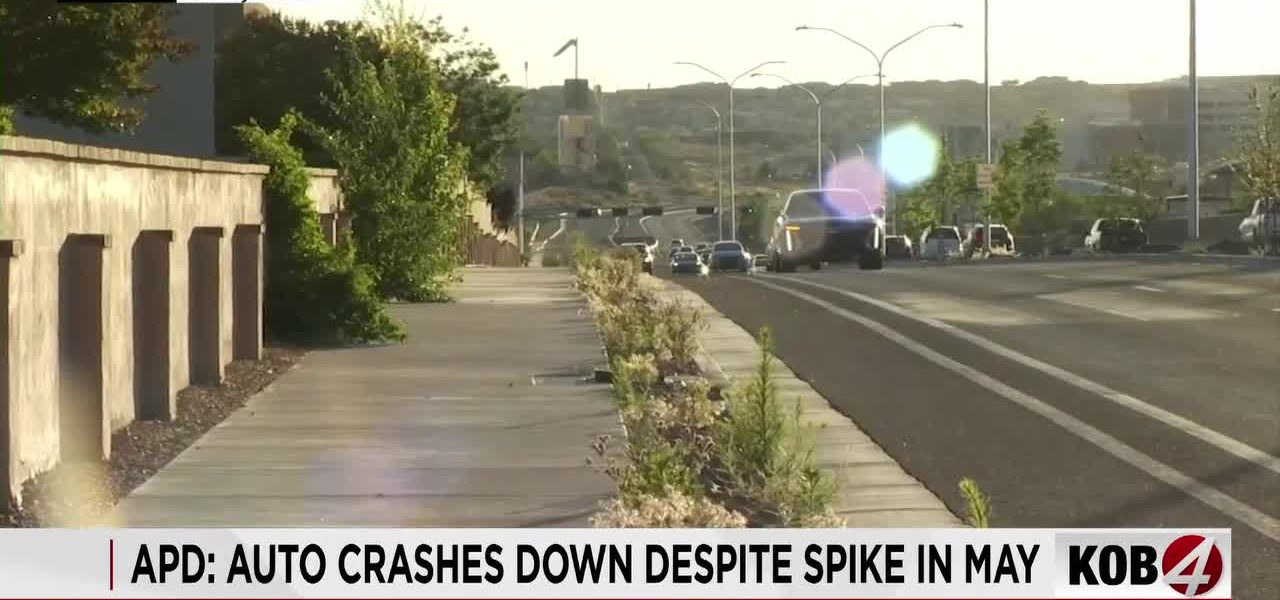
POLICY WIRE — Albuquerque, New Mexico — The desert sun, usually a herald of laid-back days, now casts long shadows over a stark paradox unfolding on Albuquerque’s asphalt arteries. May, often a month signaling relaxed summer vibes, brought with it a chilling spike: eight fatal crashes. It’s a grim figure that jolts, especially when the broader picture, as painted by the Albuquerque Police Department (APD), suggests overall auto accident numbers are actually on the decline.
It’s a head-scratcher, isn’t it? One might expect a downward trend in total incidents to correlate with fewer tragedies. But then, logic — and urban realities rarely follow neat lines. Sgt. Tavish Barnhill, a man who’s seen a lot of pavement — and its consequences — through his tenure with APD’s traffic unit, pointed to seasonality. “Look, we can throw officers at school zones ‘til we’re blue in the face,” he sighed to Policy Wire reporters, a hint of weariness in his voice. “But you can’t patrol every street corner, every second. This — this is a cultural shift that needs to happen.” He’s not wrong. Warm weather, school’s out, everybody’s moving faster, — and often, less carefully.
March, by contrast, had officers issuing more than 1,700 citations from 693 traffic stops. These weren’t just token tickets either; they hit hard on violations like reckless driving, illegal cell phone use, and those infamous tinted windows. Barnhill emphasized that school zones remained a relentless focus for enforcement efforts. In fact, he boasted that his unit had blitzed 22 such zones across the city in March 2026 alone. Diligence, clearly, wasn’t the problem then.
But by May, the enforcement pedal seemed to lighten. Citation numbers plummeted to roughly 900. And there it’s, the cold statistic: coincident with this drop, the city recorded its bloodiest month for traffic fatalities. It makes you wonder, doesn’t it, about the direct correlation between police visibility — and driver behavior?
Adding another layer to this chaotic urban ballet is the alarming surge in DWI arrests. APD’s specialized unit reports an astounding 87% increase this year alone, according to departmental data released to local news outlets. It seems as if while some folks are driving less or just avoiding fender-benders, a significant number are still making tragically poor decisions behind the wheel. That’s not just a trend; it’s a societal hemorrhage.
This phenomenon isn’t exclusive to the high desert of New Mexico, of course. Urban centers globally wrestle with such contradictions. You see it in cities like Karachi, Pakistan, where rapid urbanization outpaces infrastructure, leading to equally harrowing road death tolls, especially during festive seasons. The sheer volume of traffic, combined with varying degrees of enforcement and public driving habits, paints a familiar, if bleak, picture for traffic officials worldwide. Sometimes, the chaos is simply too much for the rules to contain.
📄 POLICY WIRE WHITEPAPER PUBLISHED: PAKISTAN'S NATIONAL SECURITY POLICY PRIORITIES
👉 READ BY CLICKING HERECouncilwoman Elena Rodriguez, a vocal advocate for pedestrian safety in Albuquerque’s South Valley, minced no words. “We’re not just looking at numbers here; we’re talking about mothers, fathers, kids who aren’t coming home,” she noted in a recent phone interview. “The data points to enforcement gaps, yes, but also to a deeper societal issue with impulse control — and public safety. We need to do more than just issue citations; we need to change culture.” She’s pushing for expanded public awareness campaigns, not just increased patrols. Because sometimes, a ticket isn’t enough.
What This Means
The discrepancy between fewer overall accidents and a surge in fatalities for a specific period like May carries significant weight for Albuquerque, economically, politically, and socially. Economically, while minor collision costs might decrease, the human — and societal toll of fatal crashes spirals upward. There’s the immediate cost of emergency services and investigations, certainly, but also the long-term impact on insurance rates, workforce productivity losses, and the emotional burden on communities. It’s a hit no municipality wants to take.
Politically, the APD — and city leadership face a delicate tightrope walk. They can tout overall declining accident rates, sure, but how do you reconcile that with a tragic body count that spiked during what should be an enjoyable season? Public trust erodes quickly when safety feels like a statistical lottery. The increase in DWI arrests, while showing officers are active, also highlights a profound, persistent public health and safety problem that current strategies aren’t entirely quelling. It suggests a need for re-evaluating prevention methods, maybe shifting from solely reactive policing to proactive community-based solutions, like many cities in developing nations are exploring amidst their own struggles.
Socially, the narrative becomes complicated. Is the city safer or isn’t it? The ambiguity creates an underlying tension. Parents worry about their children biking or walking; commuters feel less secure on highways. It breeds cynicism about official pronouncements and fosters a sense that human lives, especially those lost in preventable ways, are too easily relegated to footnotes in police reports. Ultimately, this isn’t just about traffic; it’s about the visible decay of a critical piece of the social contract: the expectation that one can move about their city without undue peril.
📖 GET YOUR FREE COPY NOW OF POLICY WIRE DIGITAL MAGAZINE JULY 2026 EDITION
👉 READ & DOWNLOAD FREE MAGAZINE