Desperation Fuels Peru’s Contentious Election Stalemate
POLICY WIRE — Lima, Peru — They’re weary of promises, those mountain dwellers who watch their children leave for distant cities or, worse, stay behind to a life that offers precious little. They’re...

POLICY WIRE — Lima, Peru — They’re weary of promises, those mountain dwellers who watch their children leave for distant cities or, worse, stay behind to a life that offers precious little. They’re exhausted by the parade of hopefuls, each one brimming with plans that never quite make it down from the capital’s high-rises. And it’s this raw, enduring cynicism, born from generations of neglect, that now threatens to tear Peru’s already fragile political fabric right down the middle, shaping a bitter presidential runoff.
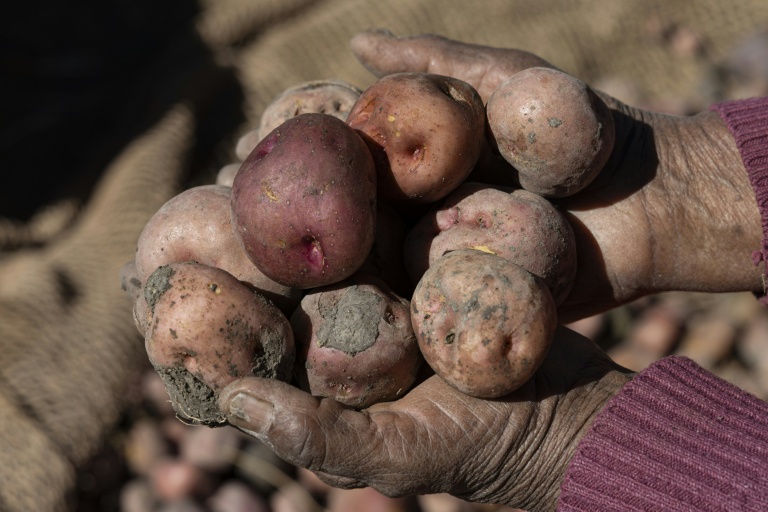
It’s not just a mere election campaign happening in this South American nation. No, it’s an upheaval. A primal scream from the Andean hinterlands. For many here, the coming vote isn’t just about choosing a leader; it’s about a last-ditch effort for their dignity, their survival. They’ve watched their wealth—Peru’s rich mineral bounty—pulled from the ground beneath their feet, enriching a distant elite while their own lives remain stubbornly, grindingly hard. Poverty rates in many rural highland provinces hover persistently above the national average, with data from the World Bank indicating that roughly 40% of the rural population in the Andean region still lives below the national poverty line, a figure that hasn’t budged significantly in over a decade. It’s no wonder they feel overlooked. [QUOTE_PLACEHOLDER]
The capital’s analysts, from their air-conditioned offices, like to parse voter statistics. They talk about urban vs. rural splits, about shifting demographics. But what they often miss is the gut-level rejection of the status quo that pulsates through these communities. They forget the sting of empty words, the constant reminders of what could be, — and what almost never is. This isn’t a political debate grounded in nuanced policy papers; it’s an emotional storm. It’s an election where one candidate represents, for many, the established order—an order that’s failed them—and the other, a radical, almost improbable challenge to it.
Because let’s be honest, the political landscape here is less a reasoned discourse and more a shouting match, fueled by economic insecurity and a profound distrust of institutions. They’ve seen scandal after scandal, leader after leader, — and little concrete change in their everyday lives. You can almost feel the air vibrating with a sense of the absurd, a recognition that whatever happens next, it’ll likely be another iteration of a problem they’ve known for far too long. But then, this kind of collective weariness, this feeling of having been continuously dismissed, it often creates the perfect storm for seismic political shifts, doesn’t it? It certainly makes for quite a story. One you can’t ignore.
It’s a scenario, frankly, not exclusive to Peru’s rugged peaks. You see echoes of it across the globe, from the rural expanses of Pakistan, where farmers contend with fluctuating commodity prices and distant government neglect, to communities throughout the Muslim world facing the brunt of economic globalization without adequate local infrastructure. The desperation in a remote Pakistani village, struggling with irrigation or access to market, isn’t all that different from the sentiment you’ll find in an Andean hamlet. Both are testament to populations that have had little stake in the grand pronouncements of national growth and feel perpetually disconnected from centralized power.
📄 POLICY WIRE WHITEPAPER PUBLISHED: PAKISTAN'S NATIONAL SECURITY POLICY PRIORITIES
👉 READ BY CLICKING HEREVoter engagement here, it’s not an academic exercise; it’s personal. It touches on identity, on deep-seated historical grievances. And whoever prevails in this tumultuous contest will inherit a nation on edge. A country that’s fed up. You hear it in conversations, in the market stalls, the quiet mutterings on bus rides. This deep-seated sense of disillusionment with the established political elite is almost palpable, a thick fog settling over the country’s future.
What This Means
This presidential runoff isn’t just a choice between two individuals; it’s a referendum on Peru’s future political trajectory and economic model. If the current trajectory holds, expect a period of prolonged political instability, irrespective of who claims victory. A narrow win for either side won’t assuage the deep divides that are rooted in economic inequality and perceived historical injustices. Businesses and foreign investors, they’re not thrilled about this kind of uncertainty—it tends to make markets jumpy, investment scarce, and long-term planning an absolute nightmare. Any incoming administration will grapple with the urgent need to address the basic necessities of a disillusioned populace, or face ongoing protests and governmental paralysis. And the spillover effect? Other Latin American nations grappling with similar resource wealth disparities and democratic growing pains will be watching closely, taking notes on what works—or spectacularly doesn’t—when populism clashes head-on with an entrenched elite. It’s a messy lesson, to be sure, but an unavoidable one. It reflects a global phenomenon: populations, particularly in developing nations, reaching a breaking point with what they see as unresponsive and often corrupt political systems. This isn’t just Peru’s headache; it’s a global symptom.