First Named Pacific Cyclone ‘Amanda’ Stirs, Echoing Distant Worries of a Shifting Climate
POLICY WIRE — Miami, USA — While much of the Northern Hemisphere was still shaking off the remnants of spring, or perhaps just debating the optimal temperature for iced tea, the Pacific Ocean — in...

POLICY WIRE — Miami, USA — While much of the Northern Hemisphere was still shaking off the remnants of spring, or perhaps just debating the optimal temperature for iced tea, the Pacific Ocean — in its own grand, indifferent way — has officially kicked off its seasonal spectacle. And it’s not even June yet.
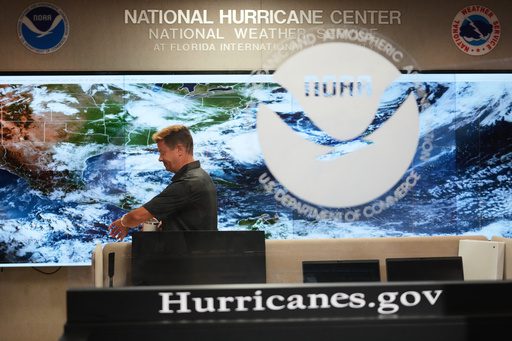
It wasn’t a celebrity scandal dominating feeds, nor some geopolitical dust-up keeping wonks glued to cable news. Nope. The National Hurricane Center dropped the real, albeit meteorological, headline: Tropical Storm Amanda is doing its thing, marking the Pacific’s first named cyclone. It’s early days, for sure. May’s barely begun to fade from the calendar, but Mother Nature, it seems, isn’t much for waiting around.
The system, which emerged this past Wednesday, remains a distant hum for most, far out in the vast expanse. Don’t go scrambling for the hurricane shutters just yet. We’re talking seriously remote; Amanda was observed [QUOTE_PLACEHOLDER] according to the weather boffins based here in Miami. So yeah, for now, it’s just a dot on a very large map, a distant rumble in the quiet prelude to a potentially noisy storm season.
And thank goodness for that. Because [QUOTE_PLACEHOLDER] A relief, certainly, for coastal communities accustomed to — or rather, dreading — these annual disruptions. The calm, however, might be just that: a calm before the meteorological storm. Its current strength? A fairly modest [QUOTE_PLACEHOLDER] meteorologists said. But hey, it’s just getting started. Forecasters project it’s going to bulk up a bit over the coming days, before it then, predictably, winds itself down over the weekend. A short, sharp reminder that the season’s here.
The Pacific’s official season started a little while back, on May 15, to be precise. The Atlantic basin, our other major player in this annual meteorological drama, started Monday, and it’s been quiet there, so far. But what happens in one ocean doesn’t always stay in that ocean, does it? The increasingly volatile patterns, whether it’s early storm formations or unexpected droughts, tend to ripple across our interconnected globe. Think of the intricate dance of monsoons across South Asia, for instance. Altered ocean temperatures and atmospheric currents, exacerbated by early season events in the Pacific, can — and do — throw a wrench into rainfall predictability from Bangladesh to Pakistan. These subtle shifts can have catastrophic downstream effects on agriculture, water resources, and millions of livelihoods already stretched thin. When a seemingly distant storm in the Pacific spins up ahead of schedule, it’s not just a weather anomaly; it’s another data point in a worrying global trend, a twitch in the planet’s vast, complex nervous system. For regions like Pakistan, which relies heavily on precise monsoon cycles for its agrarian economy and is already contending with the increasingly erratic climate patterns, any deviation, any early warning, however remote, adds to the growing unease.
Let’s not forget the dollars — and cents behind all this. National Oceanic and Atmospheric Administration data indicates that 2020 alone saw a record 30 named storms in the Atlantic basin, inflicting an estimated $41 billion in damages. That’s a lot of repair work. But it’s not just the direct hit, the boarded-up windows — and flooded basements, that counts. The psychological toll, the constant vigilance, the impact on everything from tourism to global shipping lanes, it’s immense.
📄 POLICY WIRE WHITEPAPER PUBLISHED: PAKISTAN'S NATIONAL SECURITY POLICY PRIORITIES
👉 READ BY CLICKING HEREBecause ultimately, these aren’t just weather reports. They’re dispatches from the front lines of climate change, snippets that feed into a much larger, more concerning narrative. They’re a reminder that whether we’re talking about a storm hundreds of miles offshore or a brewing political squabble, the threads of cause and effect are often invisible until it’s too late. It’s a sobering thought, particularly for populations already grappling with resource scarcity and political instability. The storm’s current benign nature doesn’t mean it’s not signaling a rougher road ahead. In the world of policy, ignoring the first whisper of a problem is often the biggest blunder. Even if that whisper is from a tropical storm nearly two thousand miles away.
What This Means
The early formation of Tropical Storm Amanda, while currently harmless, serves as more than just a meteorological footnote. It’s an inconvenient signal in the global climate discourse, hinting at the increasing unpredictability that policymakers worldwide are forced to contend with. Politically, such early, or indeed, unusually intense, storm seasons place immense pressure on disaster preparedness budgets. We’re talking federal aid allocations, local emergency services staffing, and the continuous lobbying efforts to secure adequate funding — all before a single hurricane has even made landfall. This early start demands preemptive allocation, often drawing resources from other critical social programs. For developing nations, particularly those with vast, climate-vulnerable coastlines or rain-dependent agricultural sectors, an ‘active’ storm year can completely derail economic progress, triggering debt spirals as reconstruction efforts swallow already scarce national resources.
Economically, the implications ripple outwards from the obvious insurance premium hikes. Supply chains become fragile. Agricultural yields become unpredictable, leading to price volatility for basic foodstuffs. For a region like South Asia, and particularly Pakistan, whose economy and social fabric are intimately tied to predictable weather patterns for its agricultural bedrock and water security, an active Pacific hurricane season, while geographically distant, isn’t just background noise. It can signify broader climatic shifts — changes in oceanic heat content, altered jet stream dynamics, and disrupted monsoon patterns — that directly impact its ability to feed its burgeoning population and manage its often-turbulent internal politics. The cost of ‘adaptation’ is already steep, — and events like Amanda remind governments, from Washington D.C. to Islamabad, that the window for meaningful climate action, political and economic, is not just closing, but perhaps already past its golden hour. The game, it seems, has started, whether we’re ready for it or not. For leaders everywhere, it’s not just about managing the current crisis, it’s about anticipating the next dozen, each potentially more disruptive than the last. But sometimes, just sometimes, the first sign isn’t an earth-shattering quake. It’s just a little bit of wind over open water, way out where nobody’s looking.