


The Ashes of Ambition: India’s Fatal Flaws Catch Up to Tourists in Delhi
POLICY WIRE — New Delhi, India — In a nation perpetually chasing — and often attaining — dizzying economic heights, some fundamental problems just don’t seem to get sorted. India’s burgeoning...

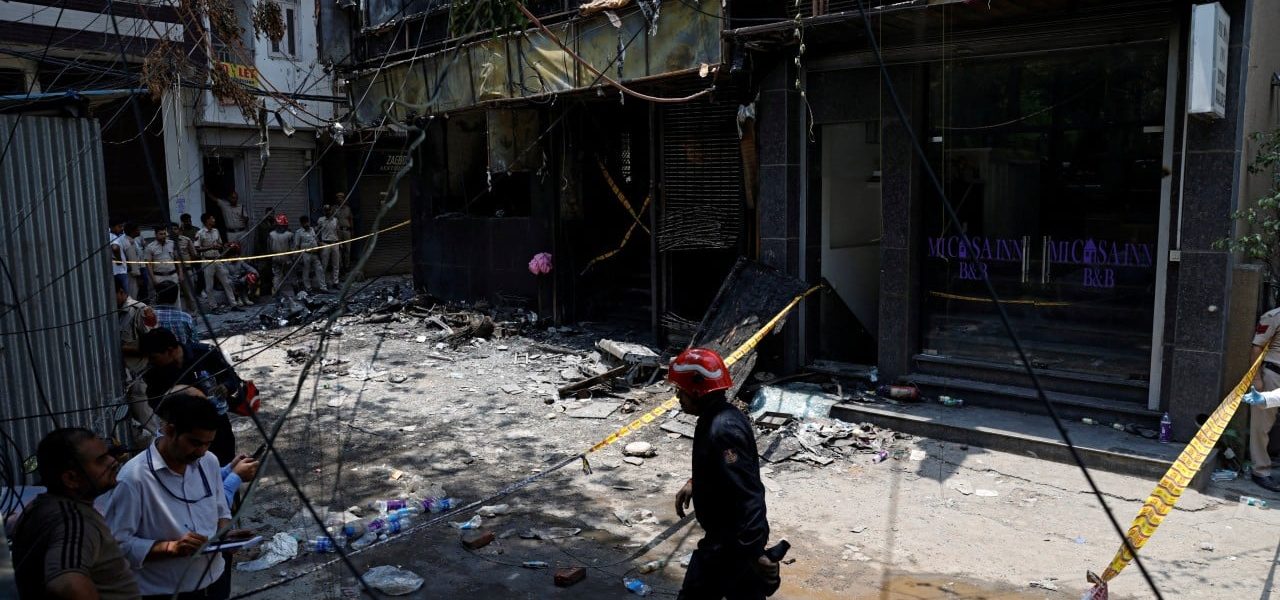
POLICY WIRE — New Delhi, India — In a nation perpetually chasing — and often attaining — dizzying economic heights, some fundamental problems just don’t seem to get sorted. India’s burgeoning metropolitan centers, you see, are a curious blend of Silicon Valley aspirations and very much a developing world reality. And sometimes, that reality quite literally catches fire. This week, another tragic blaze, more an inevitability than an accident, swept through a New Delhi accommodation, peeling back the layers on systemic negligence that’s, well, become almost expected here.
It was Wednesday when the city woke to the grim news. Smoke still hung thick over a part of town known for its cramped quarters — and ceaseless hustle. A fire ripped through a hotel, claiming lives—many of them folks from away, international visitors. The immediate aftermath always sparks an inquiry, a flurry of statements, and a short-lived outrage before the news cycle inevitably shifts. But for families, both local — and those far removed, the loss is searing and absolute. And it’s a shame the same tragic blueprint gets replayed time and again.
The establishment in question, a spot called Flourish Stay, described as a bed-and-breakfast, sat nestled in a congested neighbourhood in the south of the sprawling metropolis. When Delhi Police put out their official word, it read, [QUOTE_PLACEHOLDER] a grim tally. But the story isn’t just about a specific incident; it’s about a pattern. It’s about building codes routinely treated as suggestions, firefighting equipment that’s often lacking, or worse, non-existent. You build skyward — and outward, but sometimes forget the very foundations of safety.
It’s not just a Delhi thing, either; this bureaucratic blindness extends across the subcontinent. From Karachi to Dhaka, rapid urbanization in South Asia has consistently outpaced regulatory enforcement. Developers often cut corners to meet deadlines and budgets, and local authorities—well, they’re either overwhelmed or compromised. According to an internal review conducted by Delhi’s own municipal fire department in late 2022, nearly 70% of inspected commercial buildings in certain high-density areas were found to be non-compliant with basic fire safety protocols. That’s a staggering figure, isn’t it?
And when you talk about foreign nationals being among the victims, it adds a whole other layer to this messy affair. It’s a blow to India’s image as an increasingly hospitable destination for global business — and tourism. But consider the broader regional picture: neighbors like Pakistan face similar infrastructure challenges. In cities like Lahore or Rawalpindi, older structures mingle precariously with new developments, often lacking integrated safety systems. It’s a shared struggle, frankly, across much of the Muslim world, where a drive for progress collides hard with entrenched operational inefficiencies and insufficient governance. You see grand plans, massive investments—but the fundamentals, the granular detail of public safety? That often seems to get lost in the shuffle.
📄 POLICY WIRE WHITEPAPER PUBLISHED: PAKISTAN'S NATIONAL SECURITY POLICY PRIORITIES
👉 READ BY CLICKING HEREWhat This Means
This New Delhi inferno isn’t just another localized disaster; it’s a stark spotlight on a systemic Achilles’ heel for India and, by extension, the broader South Asian landscape. Politically, the heat is always on, albeit briefly. Local governments will talk a good game about inspections, stricter enforcement, — and accountability. But the track record suggests it’s usually just rhetoric until the next catastrophe. It highlights the deeply entrenched power of the construction lobby, often intertwined with local politics, which makes any genuine regulatory overhaul feel like pushing a very heavy, very immovable object uphill.
Economically, these incidents erode confidence. Foreign tourists, investors—they’re not just looking at the balance sheet; they’re assessing risk. Repeated events like this don’t help sell the [QUOTE_PLACEHOLDER] narrative. It’s an economic drag, creating unpredictable operating environments for businesses — and deterring casual travelers. Plus, the social cost? That’s astronomical—the strain on emergency services, the trauma to communities, the human capital lost. It’s a cruel reminder that unchecked economic growth, while impressive, often leaves behind a trail of regulatory and infrastructural gaps that can turn deadly. And you can’t exactly ignore it; these incidents aren’t outliers, they’re grim echoes. The country’s aspiration to become a global economic power, and the broader region’s struggles with modernized infrastructure, stand in stark contrast to these preventable tragedies. This continuous struggle often draws unfavorable comparisons with countries in other developing blocs, or even internally within the South Asian region itself. For a country that sees itself as a global leader, such fundamental failings aren’t just inconvenient; they’re detrimental to its international image and soft power. And let’s be honest, it puts people off, pure — and simple. Or, more worryingly, the lack of stringent oversight in one area often bleeds into another, creating a climate where bigger crises can easily fester.
It’s a persistent, unfortunate paradox, isn’t it? India rockets forward on so many fronts—digital innovation, economic heft—yet still stumbles over the most basic public safety measures. And until those regulatory frameworks aren’t just on paper, but rigorously enforced, we’re likely to keep reading variations of this very same story.
📖 GET YOUR FREE COPY NOW OF POLICY WIRE DIGITAL MAGAZINE JULY 2026 EDITION
👉 READ & DOWNLOAD FREE MAGAZINE