


Fenway’s Fallow Fields: Red Sox Slump Raises Alarms Beyond the Bleachers
POLICY WIRE — Boston, USA — The air hangs heavy over Kenmore Square, thick not just with the scent of roasted peanuts and stale beer, but with a palpable sense of unease. Here, amidst the hallowed...

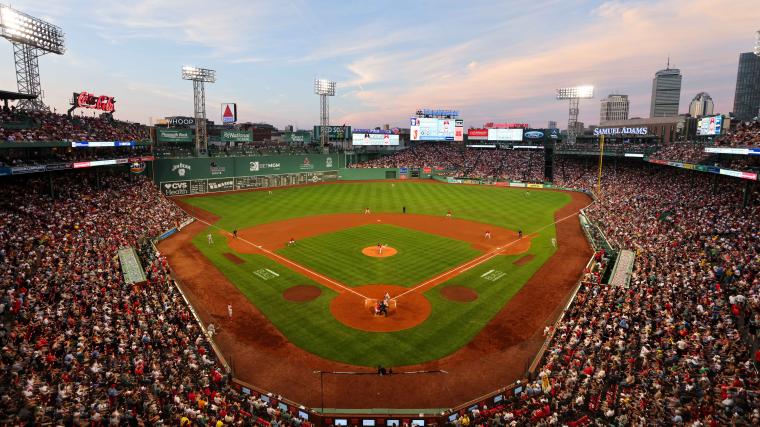
POLICY WIRE — Boston, USA — The air hangs heavy over Kenmore Square, thick not just with the scent of roasted peanuts and stale beer, but with a palpable sense of unease. Here, amidst the hallowed brick of Fenway Park, a local institution—a source of near-religious civic pride for generations—is teetering. This isn’t just about a few botched fly balls or an anemic offense; it’s a creeping doubt, a discomforting signal that even the most enduring monuments to American cultural steadfastness can falter.
Because frankly, what we’re witnessing isn’t just a bad run of luck. It’s a shocking decline, a performance so profoundly inept at home plate it begs a wider examination. For the Boston Red Sox, their 2026 season has been nothing short of a public embarrassment, particularly within the friendly (or now, hostile) confines of their historic ballpark. They’re languishing with a truly abysmal 9-20 record at Fenway, the kind of home-field futility not seen since the Great Depression – specifically, since 1932. This statistic, as recently highlighted by regional broadcaster NESN, lands with a thud. It’s their worst home start in 94 years, a fact that hits fans in their gut.
On the road, you see, they’re… well, they’re tolerable. They manage to scrape together 4.7 runs per game, even boasting a plus-19 run differential. But when that iconic Green Monster looms into view, something shifts. The bats go quiet, the pitching unravels, — and hope drains faster than Fenway’s puddles after a summer shower. They’re averaging a mere 3.2 runs per game at home, staring down a minus-26 run differential. That’s not a blip; it’s a systemic breakdown. And it has the city asking some tough questions, not just about RBIs, but about the spirit of an era.
This isn’t merely about wins and losses on the diamond; it’s about what these local sagas tell us about the larger currents swirling through society. In an increasingly interconnected and volatile world, where traditional political alliances bend and break, and economic models are constantly re-evaluated, even our sports dynasties—these seemingly impermeable cultural anchors—show cracks. Much like long-established institutions across the Indian subcontinent struggle to reconcile tradition with rapidly accelerating modernization, Boston’s venerable ballclub finds itself grappling with contemporary challenges that defy its storied past. It’s a metaphor, a grim one perhaps, for the often-unsettling pace of global change.
“We can’t simply blame a lack of effort; this is about an organizational philosophy that has, for whatever reason, lost its way at home,” mused Leland Davis, a former baseball executive now consulting for struggling franchises, speaking to Policy Wire from his suburban retreat. “Teams, like nations, thrive on consistency — and strategic foresight. When your foundation—your home turf, so to speak—crumbles, it sends a ripple effect across the entire enterprise. It’s a crisis of identity as much as performance.”
But the consequences don’t stop at disheartened fan bases — and falling merchandise sales. There’s a tangible economic toll. “Fenway Park is more than a stadium; it’s an economic engine for this city,” stated Massachusetts State Representative Sofia Ramirez, expressing her disappointment during a recent community forum. “Empty seats — and early departures mean less revenue for our small businesses, fewer jobs supported by tourism. We count on the Red Sox for that sense of shared experience, but also for very real financial benefits. When the team struggles this profoundly, it doesn’t just affect morale—it impacts livelihoods.” She isn’t wrong. Boston’s North End and Yawkey Way merchants feel every dropped fly ball in their bottom lines. And that’s a hard pill to swallow for a city that prides itself on resilience.
What This Means
The Red Sox’s unprecedented home slump is a political-economic Rorschach test, revealing deeper anxieties. Economically, fewer games stretching into late innings, coupled with reduced walk-up traffic and declining discretionary spending around the ballpark, translates to a measurable drag on Boston’s local economy. While not a recession trigger, it’s a visible scar on a city that often ties its prosperity and global appeal to its sports prowess. Politically, the slump becomes fodder for critics of civic leadership—real or imagined. It symbolizes a perceived drift from high standards, a loss of the winning culture that once defined the city’s aspirational image. in an era where global events—from conflict in Ukraine to economic shifts in India—create constant flux, a stable, successful sports franchise offers a comforting, if fleeting, sense of normalcy and collective triumph. When even that dependable source of civic pride wavers, it adds another layer of subtle, unquantifiable unease to the national mood.
This situation isn’t about mere athletic failure; it’s a quiet alarm bell. It whispers about the challenge of sustaining excellence, the burden of tradition, and the uncomfortable truth that even institutions built to last for a century are subject to the same relentless forces of change and decay as everything else in this confounding world.