


Seoul’s Silent Coup: The Microchip Kingmaker’s Precarious Reign
POLICY WIRE — Seoul, South Korea — While the world was busy fretting about inflation, elections, and various geopolitical skirmishes, South Korea, almost without a peep, quietly solidified its...

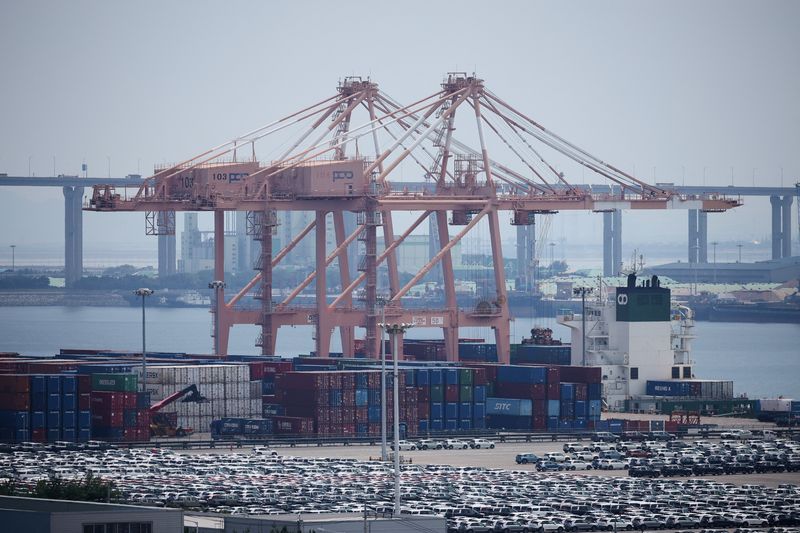
POLICY WIRE — Seoul, South Korea — While the world was busy fretting about inflation, elections, and various geopolitical skirmishes, South Korea, almost without a peep, quietly solidified its chokehold on the global tech supply chain. They’ve become the indispensable engine of the digital age, pumping out microchips that power everything from your phone to advanced weaponry. And don’t imagine this is just some fleeting trend; we’re talking about a relentless, twelve-month surge in exports, according to folks who track these things. That’s a serious run, especially for a nation whose economy feels every global tremor.
It’s not just an economic uptick; it’s a strategic assertion. This nation, smaller than Portugal, now holds a silent but iron grip over something humanity can’t function without. This kind of power, though, often comes with an expiry date, or at least a host of complicated strings attached. Because when everyone depends on your silicon, they also watch your every move—and sometimes, they scheme.
Minister Kim Hyun-joo, from South Korea’s Ministry of Economy — and Finance, was, predictably, upbeat recently. “Our strategic focus on advanced manufacturing has really paid off,” she told reporters, her voice steady as a bond rating. “We’re not just chasing growth; we’re building resilience in a highly interconnected global economy. We’ve secured our spot.” But ‘secured’ is a mighty big word when you’re caught between an increasingly protectionist Washington and a relentlessly ambitious Beijing. It’s a high-wire act, plain and simple.
The numbers back her up, mostly. South Korea’s semiconductor exports alone jumped over 60% in the first quarter of this year compared to the previous, according to preliminary data from the Ministry of Trade, Industry and Energy. That kind of velocity? It warps the landscape. And it means more than just a fat balance sheet for Samsung or SK Hynix; it’s a deep structural shift that touches virtually every market, near and far.
Look at Pakistan, for example. Its burgeoning middle class and expanding digital economy are ravenous for tech, gobbling up everything from smartphones to data center components. Where do those come from? Often, directly or indirectly, from Seoul’s fabrication plants. The supply chain isn’t some abstract concept; it’s the lifeline for these emerging markets. A hiccup in Busan sends ripples all the way to Karachi’s burgeoning tech startups. But if Pakistan’s digital growth is beholden to Seoul’s chip factories—and, by extension, to Seoul’s geopolitical alignments—it’s hardly a robust recipe for indigenous technological sovereignty. The stakes are huge. Dr. Sameer Ali, a Kuala Lumpur-based economist with a sharp eye for regional dependencies, summed it up perfectly: “This isn’t just South Korea’s success story; it’s a global dependency play. Every rising nation, from Islamabad to Jakarta, is plugged into this chip matrix. Any disruption, any real tension, translates instantly into real economic pain for billions.” He’s not wrong; you just don’t have to look too hard to see how that could turn ugly, fast.
📄 POLICY WIRE WHITEPAPER PUBLISHED: PAKISTAN'S NATIONAL SECURITY POLICY PRIORITIES
👉 READ BY CLICKING HEREThe reliance cuts both ways, naturally. South Korea has spent billions cultivating this dominance, turning itself into the world’s semiconductor nerve center. They’ve built gleaming fabs, trained generations of engineers, — and honed their process to near perfection. It’s truly a marvel. But this singular focus? It might just be the most potent economic leverage anyone holds in the 21st century—and probably the most delicate.
What This Means
This relentless export surge isn’t just about cash flow; it’s redefining global power dynamics. Economically, South Korea’s growth engine is humming, yet it’s running on one very high-octane fuel: chips. If the demand slackens, or if a competing nation—or bloc—ever really cracks the code on its own advanced chip production, Seoul’s economic model could hit serious headwinds. Politically, this makes South Korea a lynchpin. They’re already navigating the increasingly icy waters between Washington’s call for chip independence (read: ‘American independence’) and Beijing’s insatiable demand for cutting-edge tech. Their economic success gives them incredible negotiating power, sure, but it also paints a giant bullseye on their industrial heartland. And if you think nations don’t use every lever at their disposal, you’ve missed a lot of recent history. Any future geopolitical reordering will almost certainly involve skirmishes, quiet and loud, over who controls the digital bloodline that runs through Seoul. This isn’t just about their prosperity; it’s about everyone else’s vulnerability.