

Acuña’s Unseen Influence: How Two Swings Shake Baseball’s Economic Pillars
POLICY WIRE — Cincinnati, Ohio — It wasn’t the kind of pitching duel you’d pin to a hall of fame wall, nor was it billed as a slugfest for the ages. But then again, few grand narratives...

POLICY WIRE — Cincinnati, Ohio — It wasn’t the kind of pitching duel you’d pin to a hall of fame wall, nor was it billed as a slugfest for the ages. But then again, few grand narratives begin exactly as advertised. Before the first pitch was even thrown in Cincinnati, there hung a quiet apprehension, the air thick with the unspoken understanding that sometimes, the most pedestrian matchups can erupt into spectacles of unbridled individual might.
Early innings? They started as a mess, plain — and simple. Two pitchers, Martin Perez for the Braves and presumably a counterpart for the Reds (the records are a bit fuzzy, as these things go when the spotlight drifts), both known more for their utility than their dominant presence, ambled through the initial frames. Yet, it was a moment of baffling baseball bureaucracy, not a home run, that first grabbed the throat of the game. Ozzie Albies, after an initial score, was tagged out at the plate on what looked to many eyes, even on replay, like a botched call—an agonizingly close sequence where his foot seemed to evade the glove. The review? Upheld. No clear and convincing evidence. Just a cold, hard fact from the booth, much like a global consensus forged on inconclusive data points. Baseball’s replay system, for all its technological sheen, sometimes serves only to amplify the frustration of perceived injustice, a digital shrug in the face of what feels inherently wrong. And it got the fans, — and us in the press box, grumbling, because that’s what close calls do.
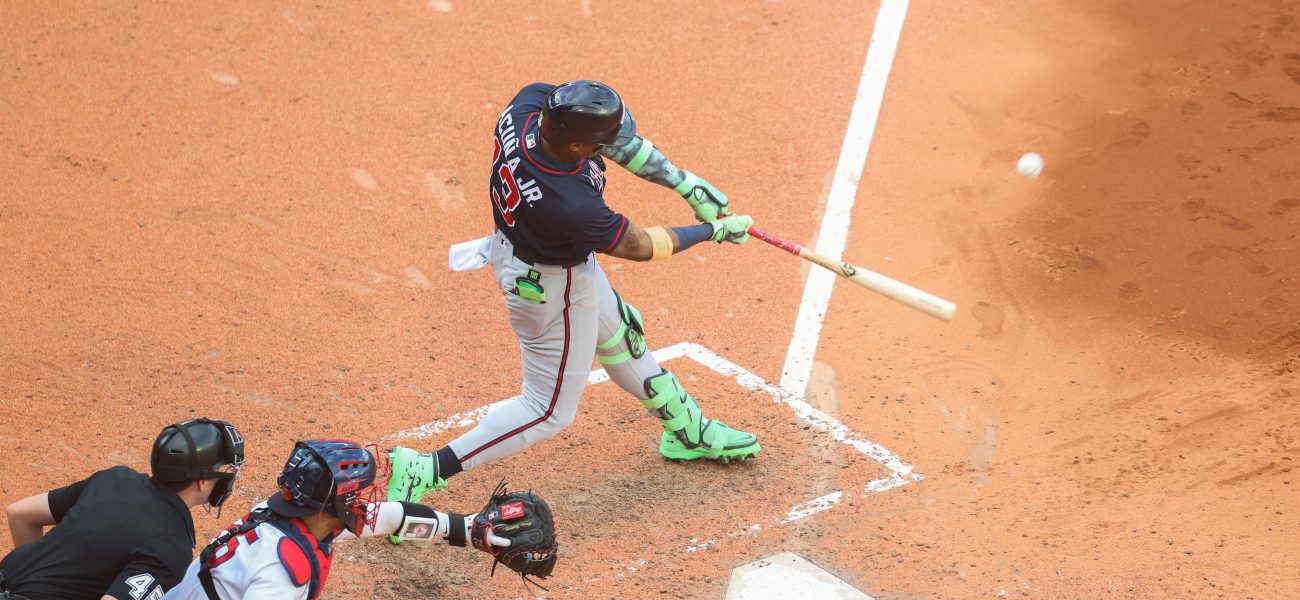
But the real tremor didn’t arrive until Ronald Acuña Jr. decided he’d had quite enough of the Reds holding even a momentary edge. First, a shot to the opposite field in the third, a casual flick of the wrist that belied the immense power behind it, instantly tying things up. This guy, he’s different. He just is. Like an emerging market, you track his every move; his impact is immediate, often disruptive to the status quo.
Cincinnati’s Great American Ballpark felt the collective sigh of its faithful as the Braves then slowly, methodically, began to pry open a lead. Jorge Mateo’s solo shot, followed by Matt Olson’s insurance run, created breathing room for a bullpen that, on paper, resembled some sort of athletic Death Star. Lee and Suarez — they were stone walls.
Yet, the lingering question remained: would it be enough? The human element, that unpredictable spark, was still present. But Acuña, like an economic superpower flexing its influence, decided the game needed a definitive punctuation mark. Bottom of the ninth. He steps up. Boom. Another homer. This wasn’t just a hit; it was a declaration. A three-run cushion out of thin air. Raisel Iglesias, the closer, then did his part with surgical precision, carving through the Reds lineup like a seasoned diplomat securing an inevitable agreement.
Atlanta takes the game 5-2. Just another win for the Braves, right? Hardly. Braves Manager Brian Snitker, ever the pragmatist, wasn’t letting the replay drama overshadow the star power. “Look, Ronald’s a generational talent, right? You just gotta sit back — and appreciate it. But tonight, it wasn’t just him. Every single guy chipped in. That’s the real story, ain’t it?” Snitker offered, perhaps underselling the Acuña factor just a tad.
📄 POLICY WIRE WHITEPAPER PUBLISHED: PAKISTAN'S NATIONAL SECURITY POLICY PRIORITIES
👉 READ BY CLICKING HEREMeanwhile, Reds Manager David Bell simply had to absorb the blow. “You hate to see a game come down to a replay call like that, especially when it felt so ambiguous in the moment,” Bell told us after the game, clearly still vexed. “But we didn’t do enough otherwise. You can’t dwell on what the replays do to you when your bats are silent.” It’s that blend of technicality and raw performance that often defines the modern sporting arena—a high-stakes game where billion-dollar valuations hinge on individual brilliance and the sometimes-flawed judgment of officials. According to Forbes, the Atlanta Braves were valued at approximately $2.6 billion in 2024, a clear marker of the league’s robust economic health.
What This Means
Beyond the simple win-loss column, what we witnessed on that Cincy diamond underscores the intricate ballet of economics, brand power, and subtle global soft diplomacy. Acuña isn’t just a baseball player; he’s a global phenomenon, his image broadcast from Caracas to Karachi, an unofficial ambassador for a sport that—for all its American roots—captivates audiences worldwide. Imagine a young fan in Lahore, Pakistan, waking up to check MLB scores, tracking players like Acuña, not because he plays cricket (though he could probably smash a six), but because transcendent athletic talent speaks a universal language. These narratives aren’t confined to state lines; they ripple across continents, often eclipsing traditional diplomatic efforts in building cross-cultural bridges. That’s the power of popular culture, amplified by individuals who perform at the absolute peak.
And think about the money here. The financial impact of a player of Acuña’s caliber extends far beyond his salary. His marketability, merchandise sales, and ability to draw television viewership—all of it inflates team valuations and enriches the broader ecosystem of Major League Baseball. We’re talking about an enterprise where franchises are traded like commodities, and a single dominant player can fundamentally shift the perceived value of an entire organization. This dynamic speaks volumes about America’s evolving soft power through its most popular cultural exports. the persistent issues with baseball’s replay system (you know, the Dubon call) might seem like small potatoes in the grand scheme of a game, but they highlight a broader institutional challenge: how to balance precision technology with the human element of judgment. These discussions about fairness, technology, and oversight in sport often mirror larger debates playing out in policy arenas, from justice systems to trade agreements. It’s baseball’s robot umps echoing broader battles for justice, only with fewer high-stakes geopolitical implications.