


Cincinnati’s Fading Promise: A May Meltdown Echoes Deeper Fragilities
POLICY WIRE — Washington, D.C. — Another day, another stumble. This isn’t just about baseball, folks; it’s about the relentless erosion of ambition, the steady chipping away at what...

POLICY WIRE — Washington, D.C. — Another day, another stumble. This isn’t just about baseball, folks; it’s about the relentless erosion of ambition, the steady chipping away at what little confidence a franchise (or a government, for that matter) manages to accumulate. The Cincinnati Reds, playing hosts to the Atlanta Braves, didn’t just lose on Saturday—they capitulated, a quiet, almost mournful surrender marked by repeated solo shots from the visiting dugout that left a pall over Great American Ball Park.
It was a 5-2 affair, the kind of score that feels closer on paper than it ever did in the grass — and dirt. Atlanta didn’t even bother with the niceties of baserunners; they just blasted their way to a series win, four solo home runs telling the whole tale. Ronald Acuña Jr. decided twice to make the walk, while Jorge Mateo — and Matt Olson also contributed to the aerial bombardment. You almost expect it from these guys, don’t you? A certain efficiency in their destruction. [QUOTE_PLACEHOLDER]
But the true story—the one that really hits you in the gut—belongs to Cincinnati. Because you can always blame injuries. You can always point to bad luck. But at some point, it just looks like a pattern, a slow, inevitable slide. The Reds fell to 29-28 overall, and 9-17 in the month of May, a cold, hard statistic illustrating a month-long drift into mediocrity from what once promised something better. But that slide wasn’t some sudden plunge; it’s been an inch-by-inch decline, exacerbated by unfortunate timing.
Just before the first pitch, another casualty, relief pitch Pierce Johnson was placed on the 15-day injured list. That came right after Graham Ashcraft had landed on the 60-day IL. It left the pitching staff looking like a triage unit, relying on a worn-out starter to carry the load, and forcing hasty, almost desperate call-ups from Triple-A Louisville. It’s an all too familiar dance—the scramble to patch gaping holes with unproven talent, a kind of organizational desperation. And when that talent arrives, like Lyon Richardson who gave up Acuña’s second homer, the problems only seem to deepen.
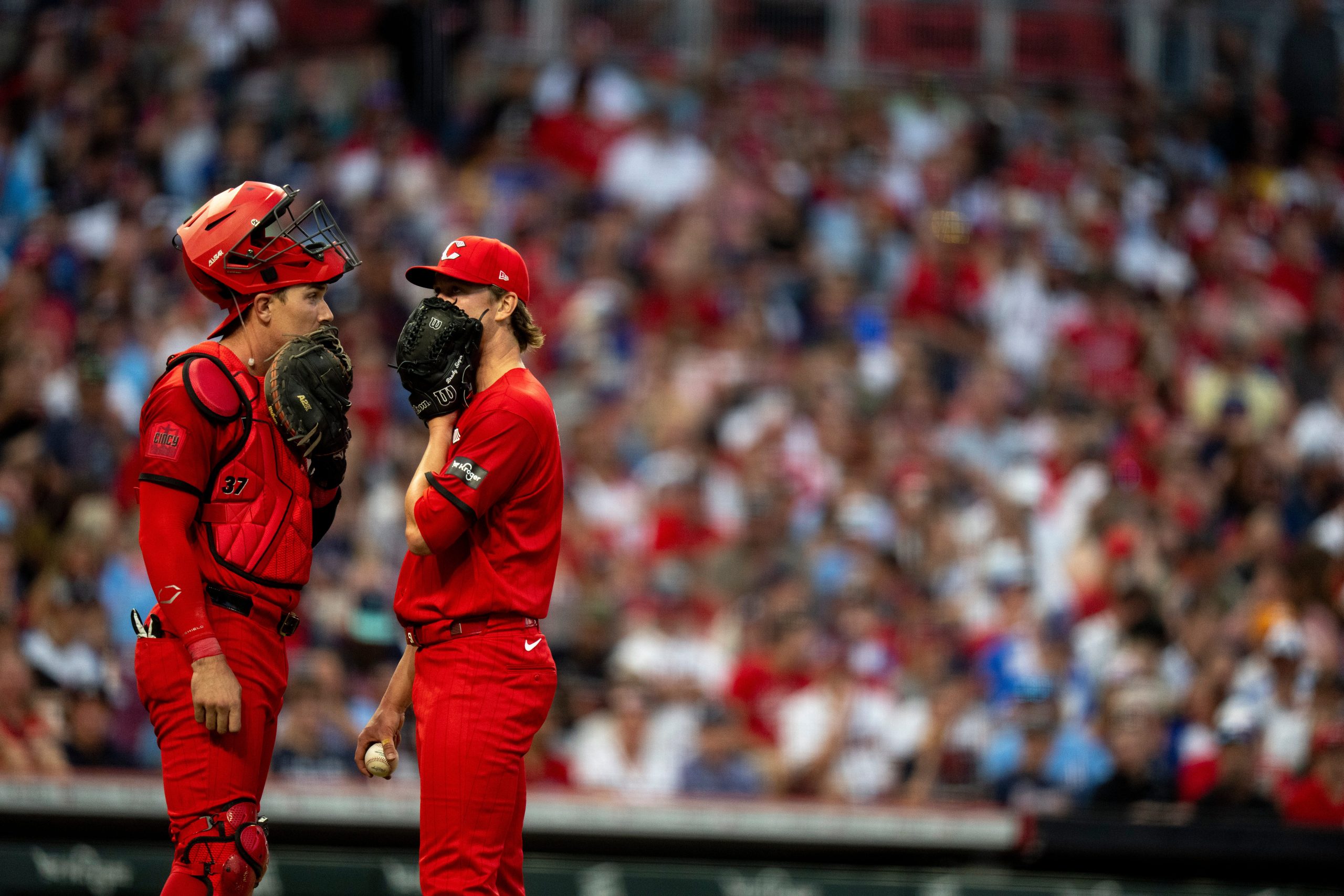
Brady Singer, the workhorse tasked with keeping the ship upright, delivered five innings, allowing three runs on four hits and four walks against two strikeouts. He was out, with Cincinnati trailing, 3-2. Then came the parade of Braves sluggers, methodically extending their lead. Baseball’s numbers, it seems, don’t lie, not when you’re talking about consistently underperforming units.
Their offense, too, struggled. The Reds’ bats managed five hits, but those flashes of brilliance—like a one-out Elly De La Cruz triple in the third inning and a two-out Blake Dunn double in the fifth—were promptly extinguished. They were both stranded. You’d think a team would seize those chances. Instead, nothing. Even the lineup felt like a hastily rearranged deck chair on the Titanic after Dane Myers, the scheduled leadoff hitter, was scratched before first pitch due to illness. T.J. Friedl went 0-for-3, just another footnote in a frustrating night.
What This Means
This isn’t merely about one game or one series. Cincinnati’s predicament—a team burdened by injuries, forced to rely on unseasoned players, and consistently falling short of expectations—serves as a disquieting analogy for challenges faced by emerging economies, especially those with ambitious agendas but fragile infrastructure. Think of Pakistan, for instance, a nation often grappling with external pressures and internal instability, its progress frequently hampered by unexpected setbacks or the premature exhaustion of its most reliable institutions. The constant shuffling of players, much like frequent cabinet reshuffles in a developing democracy, signals a deeper systemic vulnerability, an inability to build and sustain a robust, long-term strategy.
And let’s not pretend these problems stay contained on the field or within borders. Economic confidence, like team morale, takes a hammering with each failure. When core components (or key industries) consistently underperform or fall to ‘injury’ (economic downturns, corruption), the whole enterprise sags. Investment dries up, public trust wanes, — and what begins as minor setbacks becomes chronic decline. We’ve seen this play out in various contexts, from South Asia’s recurring financial crises to regional conflicts. The Reds’ May woes, when viewed through this lens, are a microcosm of something much larger, a stark reminder that ambition alone won’t secure victory; consistent execution, reliable talent, and a little stability sure don’t hurt either. Because, let’s be honest, constant reliance on emergency call-ups isn’t a strategy for success; it’s a testament to poor planning, or just really rotten luck. But which one is it, exactly? Often, it’s a bit of both—and that’s the tragedy. They’ve gotta avoid being swept on Sunday, or this slump gets a whole lot harder to ignore.