


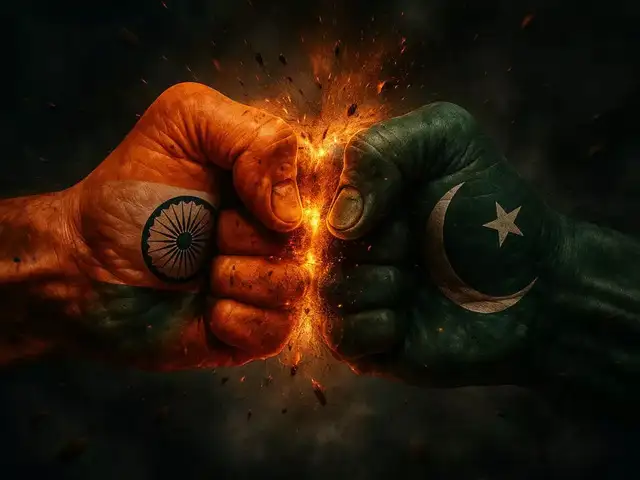
Not Waiting for the Blow: Pakistan Redefines Defense
In South Asia today, the air is heavy, not with smoke yet, but with suspicion, silence, and the subtle signs of something more dangerous brewing. The April 22 Pahalgam attack that killed 26 civilians...

In South Asia today, the air is heavy, not with smoke yet, but with suspicion, silence, and the subtle signs of something more dangerous brewing. The April 22 Pahalgam attack that killed 26 civilians was horrifying, no doubt. But even before the dust had settled, even before any investigation could begin, India did what it always does: it blamed Pakistan. Loudly. Aggressively. Without evidence. Without pause. And just like that, the war drums began beating again.
But this time, something feels different. Pakistan isn’t merely reacting. It’s a warning. It’s watching. And above all, it is preparing, not for war, but for prevention. And this is where the Geran Doctrine becomes more than just a military strategy. It becomes a national insurance policy against the madness of manufactured conflict.
What is the Geran Doctrine? In simple terms, it’s a principle that allows a country to strike first, but only when it must. If you know someone is loading a gun and aiming it at your home, do you wait for the trigger to be pulled? Or do you act to protect your family? The Geran Doctrine says: if a threat is credible, imminent, and dangerous, then a country like Pakistan has every right to take measured, surgical, and defensive action, before it’s too late.
Let’s be clear, Pakistan doesn’t want war. The scars of conflict run deep in this land, from 1947 to Kargil to the war on terror. No one knows the price of violence better than the people of this country. But silence should not be mistaken for surrender. Peace should not mean vulnerability. For too long, Pakistan has played defence while others played deception.
And the deception is loudest across the eastern border. When India accuses Pakistan of terrorism within minutes of an incident, when its media goes into a frenzy without facts, when its politicians call for strikes before truth even gets a chance to speak, that is not justice. That is propaganda. And we’ve seen this movie before, Pulwama 2019. The world remembers the Indian Air Force bombed trees in Balakot, and declared it a “victory.”
Today, once again, India has issued threats. But this time, Pakistan has credible intelligence that a military strike may be imminent. Not rhetoric, real movement. Not speculation, actionable signs. And in response, Pakistan’s message is calm, clear, and confident: “We are ready. We will respond. And if needed, we will not wait to be hit first.” Pakistan is ready to fight back against any threat or war that will be imposed by any rival. If they think we are not ready to hit back hard, then hear the roar of Pakistan’s top commander, DG ISPR Lt. Gen. Ahmed Sharif Chaudhry,
“If India believes that aggression is the path forward, then let our message
be clear, we are ready. Don’t test us.”
This is not aggression. This is deterrence. The Geran Doctrine is rooted in logic, not emotion. In security, not showmanship. It’s about acting only when the threat is undeniable, and then acting with precision, not provocation.
Think of it like this: a fire starts small. A spark in a forest. If you wait for it to spread, you lose the forest. But if you have the tools and the will, you can stop it while it’s still just a spark. That’s what Pakistan is doing, preventing the fire while others are busy fanning the flames.
📄 POLICY WIRE WHITEPAPER PUBLISHED: PAKISTAN'S NATIONAL SECURITY POLICY PRIORITIES
👉 READ BY CLICKING HEREAnd don’t forget, Pakistan has walked this difficult road before. We’ve fought our war on terror. We’ve buried our dead. We’ve rebuilt our cities. From Operation Zarb-e-Azb to Radd-ul-Fasaad, our armed forces have shown not just might, but restraint. Not just strength, but discipline. We don’t act recklessly. We act when there’s no other choice.
But we also don’t forget. Kulbhushan Jadhav, an Indian naval officer, was caught inside Pakistan, not with a passport, but with a plan. A plan to sponsor terror from within. And what did India say? Denial. Every time a hand reaches into our country to cause chaos, we are told to “prove it”, while India expects the world to believe it’s every word, without evidence.
So let’s ask a simple question: Who’s disturbing the peace?
The Geran Doctrine isn’t about abandoning diplomacy. It’s about stepping in when diplomacy is drowned out by threats. When one neighbour keeps blaming, bullying, and blackmailing, it’s not enough to say “we want peace.” You also have to say, “we will protect it.”
And let’s not pretend this is just a military issue. It’s about every Pakistani who wants to live without fear. Every child who shouldn’t have to hear sirens. Every family deserves to sleep at night knowing that their country will do whatever it takes to keep them safe.
So, if India believes it can once again escalate without consequences, it is mistaken. Pakistan is not the Pakistan of yesterday. It is wiser, stronger, and more assertive. The Geran Doctrine reflects this maturity, a policy not of provocation, but of preparedness. A stance not of war, but of warning. And let the world know this: if peace is threatened, if our sovereignty is violated, if lies are used to justify bullets, Pakistan will respond. Not with rage. Not with recklessness. But with resolve. Because in today’s world, waiting for the first blow is no longer an option.
Author