


Paper Wars and Price Hikes: How the US Took Aim at China Again
It began like many modern economic battles do, not with missiles or tanks, but with press conferences, import duties, and policy briefings. One morning in April 2025, American consumers woke up to...

It began like many modern economic battles do, not with missiles or tanks, but with press conferences, import duties, and policy briefings. One morning in April 2025, American consumers woke up to headlines warning that electric cars were about to get pricier. The reason? The U.S. had imposed a fresh wave of tariffs on China.
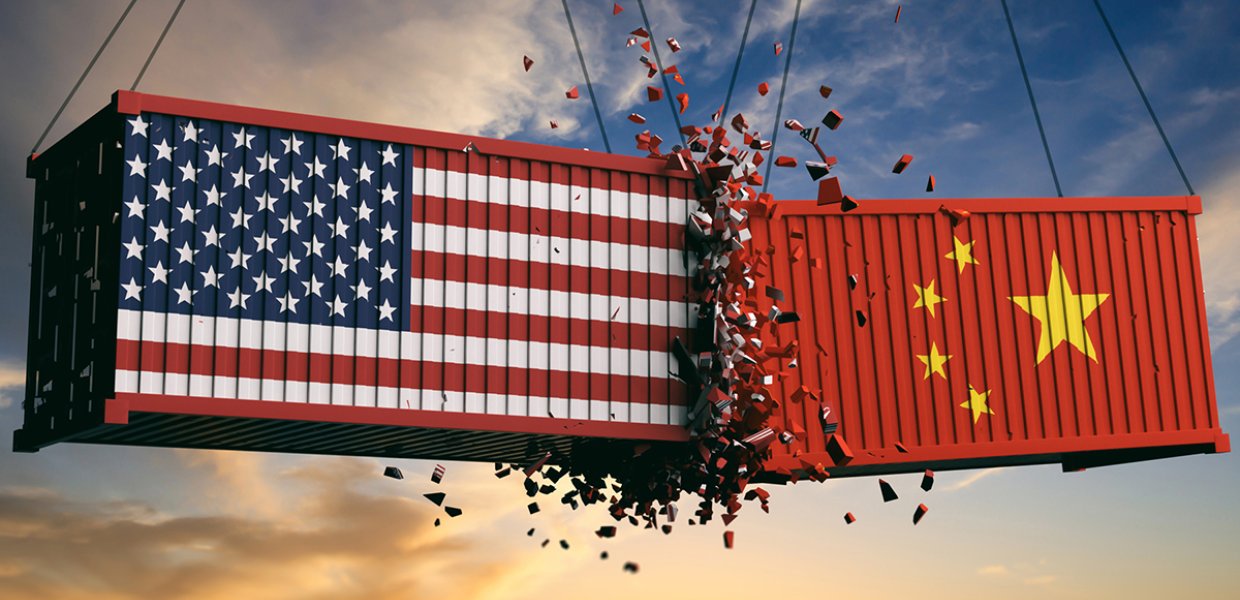
At first, it felt like we had seen this all before. The trade war between the United States and China first exploded in 2018 under President Trump. Since then, both nations have exchanged blows over goods ranging from soybeans to semiconductors. But this time, the conflict feels sharper, more calculated, not just economic, but deeply strategic. So, what triggered the U.S. this time?
According to Washington, it’s about fairness and national resilience. American officials allege that China is flooding global markets with ultra-cheap electric vehicles (EVs), batteries, and solar components, made affordable not by market forces, but by heavy state subsidies. The Biden administration argues that this distorts global competition and harms American industries that are struggling to keep pace. Facing pressure from unions and domestic manufacturers, the White House claims these tariffs are essential for rebuilding U.S. industry and saving American jobs. But economics isn’t the only factor driving this decision.
There’s a rising concern in Washington that China’s grip on key sectors, like semiconductors, critical minerals, and battery technology, poses a long-term security risk. Officials worry that in any future geopolitical standoff, dependence on Chinese supply chains could become a vulnerability. In this light, the tariffs are not just trade tools, they’re part of a broader “de-risking” strategy aimed at reducing America’s reliance on a strategic rival.
The tariff figures are dramatic. Chinese-made EVS now face duties of over 100%. Lithium-ion batteries, solar panels, and chip components have also been targeted. The message from the U.S. is clear: protect core industries and push back against what it sees as China’s state-engineered advantage. Yet Beijing’s response defied expectations. Rather than retaliating in kind, China has chosen a path of strategic restraint. The first move was legal. Beijing complained to the World Trade Organization (WTO), accusing the U.S. of violating global trade rules. Though the WTO’s power to resolve disputes has weakened in recent years, this action is more symbolic, it allows China to portray itself as a mature actor adhering to international norms, especially to countries in the Global South.
Next, China turned inward. Reviving its “dual circulation” policy, Beijing doubled down on boosting domestic consumption and innovation. Within days of the U.S. announcement, Chinese authorities rolled out a $30 billion support package for the EV sector, offering subsidies, R&D funding, and export incentives to cushion local firms from external shocks.
But perhaps China’s most powerful move is global diversification. Trade with ASEAN countries rose 7.5% in the first quarter of 2025, and ties with Latin America and Africa are deepening. China is reducing its dependence on Western markets by strengthening alternatives through initiatives like the Belt and Road Initiative (BRI) and the Regional Comprehensive Economic Partnership (RCEP).
Meanwhile, behind the scenes, China is tightening the screws on U.S. firms operating within its borders, slowing down approvals, increasing audits, and signaling that while it’s not escalating openly, it’s not passive either. So, what does this mean for the global economy?
It’s a precarious balancing act. While the U.S. frames its tariffs as protective, the measures could backfire. Analysts from the Peterson Institute estimate that U.S. consumers may pay 12–18% more for electric vehicles and solar products as a result. On the other hand, China’s economy, already facing a property crisis, slow growth, and high youth unemployment, can ill-afford a prolonged export squeeze.
What’s striking, however, is that both sides appear to be playing a different game this time. Gone are the days of reckless tit-for-tat tariff exchanges. Instead, the U.S. is reinforcing its domestic industries while China is expanding outward, one building walls, the other building bridges. This shift reflects a broader global question: What kind of world economy are we heading toward? One defined by fragmentation and distrust, or one governed by fair competition and mutual standards?
The United States may have fired the latest shot, but China didn’t swing back blindly. It tightened its belt, recalibrated its plans, and searched for new footing. In today’s era of economic power plays, that may well be the smarter move. Because sometimes, strength isn’t in how loud you hit back, but in how well you adapt under pressure.
Author