


Arsenal’s Budapest Gamble: Two Decades, Two Eras, Same Impossible Dream
POLICY WIRE — London, UK — The ghost of Paris 2006 casts a long, knowing shadow over Budapest this Saturday. It isn’t just about a football game; it’s about exorcising a very specific,...

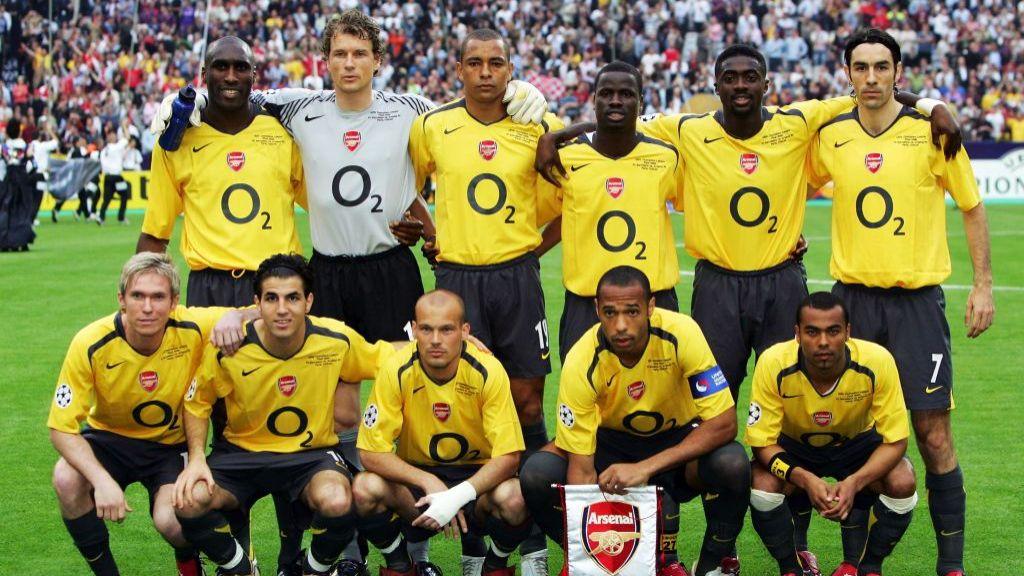
POLICY WIRE — London, UK — The ghost of Paris 2006 casts a long, knowing shadow over Budapest this Saturday. It isn’t just about a football game; it’s about exorcising a very specific, twenty-year-old demon. Arsenal, fresh from a hard-fought domestic title, isn’t simply competing for the Champions League trophy; they’re wrestling with the crushing weight of expectation, the whispers of ‘almost,’ and the sheer, unblinking glare of the world’s most lucrative club competition. Winning this, for manager Mikel Arteta, means achieving what even the legendary Arsène Wenger—the architect of their very identity—couldn’t quite grasp: Europe’s elite crown. But hey, it’s only history, right?
Back in 2006, that Arsenal team, bristling with names like Henry, Bergkamp (though not in the final squad), Cole, and Campbell, was a machine built on parsimonious genius and tactical alchemy. They played with a certain flair, sure, but their journey to the final was carved from granite. A then-record 10 consecutive clean sheets in the competition — a statistic plucked straight from the annals of football austerity — told a tale of resolute defending against the likes of Real Madrid and Juventus. They were the ‘Invincibles,’ yes, but in Europe, they were simply impenetrable until that fateful night.
Contrast that with the current iteration. Arteta’s Arsenal is, by almost any measure, a testament to relentless analytics, targeted investment, and a coach’s singular vision. They’ve clinched the Premier League—a considerable achievement in itself—but the Champions League offers something more. It offers transcendence, a place at the grown-ups’ table of European football royalty. For many fans, especially in regions like Pakistan and the wider Muslim world, where the Premier League’s brand appeal is colossal and its matches are appointment viewing from Karachi to Cairo, a European success would cement Arsenal’s status as a truly global powerhouse. It’s not just a trophy; it’s commercial real estate.
Goalkeeper Jens Lehmann’s early red card in 2006 set the stage for heartbreak. His aggression, a trademark of that squad’s character, ultimately proved their undoing on the biggest stage. This year? David Raya stands between the posts, a study in quiet, almost surgical efficiency. He’s netted 19 Premier League clean sheets, bagging his third consecutive Golden Glove. That’s an awful lot of goal-saving, no dramatics involved.
Then there’s the defense. The ‘Invincibles’ boasted titans like Sol Campbell — and Kolo Touré. Think old-school muscle, players who seemed carved from wood — and determination. For Arteta’s crew, William Saliba and Gabriel represent a new breed—athletic, technical, and almost unnervingly composed. They’ve proven statistically superior to many pairings since 2000 in terms of clean sheets, which tells you a thing or two about modern defensive partnerships. But can they hold against a Parisian assault led by the mercurial Khvicha Kvaratskhelia? That’s the billion-dollar question.
The midfield battles—they’re always where games are won, aren’t they? In 2006, it was the ‘invisible wall’ Gilberto Silva — and a nascent Cesc Fàbregas orchestrating play. Fàbregas, a prodigy at 19, notched up numbers that’d make veterans blush. Fast forward to today, and Declan Rice, all engine and steel, is the lynchpin, voted second in the Football Writers’ Awards, pushing the team with lungs and leadership. Beside him, Martin Ødegaard weaves patterns. It’s less about raw, rugged power and more about controlled chaos, about creating numerical advantages in a fluid system. And don’t forget the impact players from the bench, folks like Martin Zubimendi and academy graduate Myles Lewis-Skelly, who’ve shown bursts of brilliance. This squad, it’s deep.
📄 POLICY WIRE WHITEPAPER PUBLISHED: PAKISTAN'S NATIONAL SECURITY POLICY PRIORITIES
👉 READ BY CLICKING HEREUpfront, the distinction is perhaps starkest. Thierry Henry was a phenomenon, a one-man goal machine. His club record 228 goals, four Golden Boots—the numbers speak for themselves. Arteta, however, rarely relies on a singular spearhead. Instead, his offense is a multi-headed beast: Bukayo Saka, Eberechi Eze (who delivered Crystal Palace’s surprise FA Cup victory), Leandro Trossard, Kai Havertz, and the prolific Viktor Gyökeres, whose 21 goals have been critical. It’s a distributed network, a collective pressure-cooker.
Mikel Arteta, never one to mince words, recently quipped, "Look, we’ve built something special here. It hasn’t been about individual heroics—though we’ve certainly got those—it’s been about resilience, about belief in our system, and understanding that you don’t just win trophies; you earn them, inch by painful inch. Saturday is a chance to prove how far this club has truly come." Meanwhile, from his observational perch, Arsène Wenger offered a more philosophical take. "That 2006 squad," he mused, "it had a soul. It wasn’t just players; it was a philosophy unfolding on the pitch. We might not have taken the final step, but the journey, the commitment, the artistry – those are legacies. In modern football, the demands are different, the economic pressures immense. But the desire to write history? That never changes." One looks to the future, the other respects the past, both knowing the climb.
What This Means
Beyond the glory of lifting a trophy, this Champions League final carries considerable economic and political implications for Arsenal. Success in Europe means exponentially greater broadcast revenues, heightened global brand visibility—particularly important for capturing burgeoning markets in Asia and Africa—and increased attractiveness for lucrative sponsorship deals. It validates the significant financial outlay of the past few years; money well spent, investors would say. A defeat, conversely, while not catastrophic given their Premier League success, maintains a narrative of an almost-club, perhaps complicating future transfer negotiations or weakening their stance in the increasingly competitive landscape of European football, where clubs routinely engage in high-stakes financial gambles. This isn’t just about football; it’s about corporate valuation, soft power, and a carefully managed global sporting enterprise.