

Centurion Club Bound: Manchester City’s Latest Power Play Redefines Summer Spending
POLICY WIRE — London, UK — The summer transfer window, that peculiar bazaar of global commerce masquerading as sporting renewal, hasn’t quite opened its gates in earnest. Yet, Manchester...

POLICY WIRE — London, UK — The summer transfer window, that peculiar bazaar of global commerce masquerading as sporting renewal, hasn’t quite opened its gates in earnest. Yet, Manchester City—predictably, almost inevitably—appears set to deliver its opening salvo, one that rattles the very foundations of financial fair play debates and underlines a sporting hierarchy where ambition is primarily underwritten by unparalleled capital.
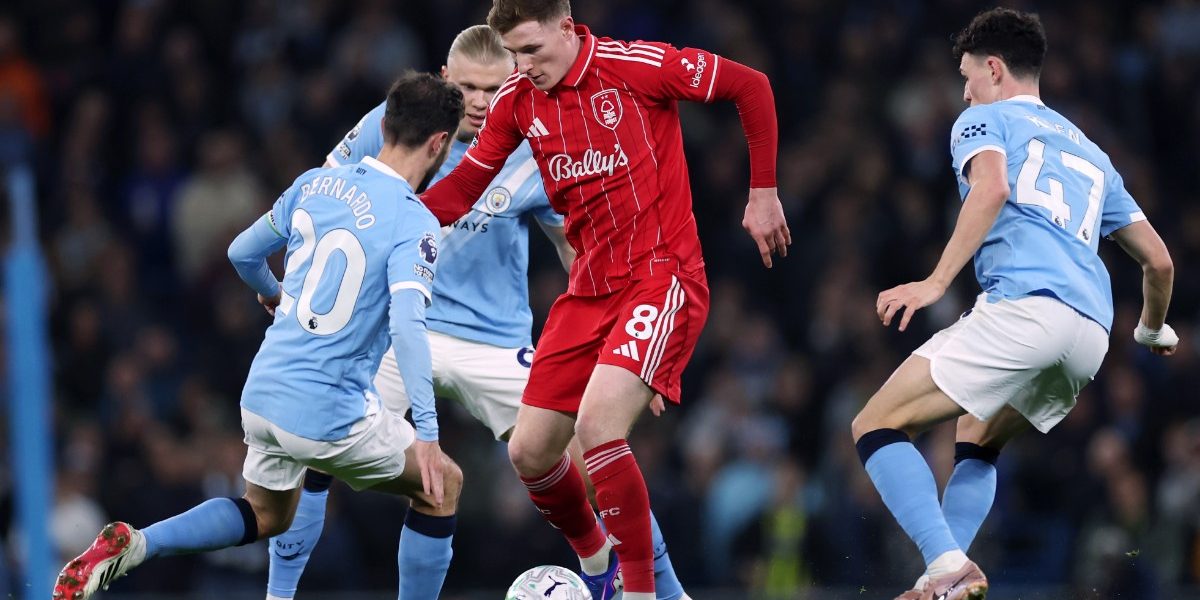
It’s no longer about whether one club can sign an individual talent; it’s about the sheer, unblinking willingness to deploy staggering sums to solidify a dynasty. We’re talking about an impending move for dynamic midfielder Elliot Anderson from Nottingham Forest, a player whose potential fee could reportedly reach up to £100 million. A transaction of that magnitude isn’t just a purchase; it’s a declaration. And it signals City’s intent to maintain their competitive chokehold, even as the legendary Pep Guardiola takes his leave. Fraser Fletcher, for TeamTalk, reports a deal between City and Nottingham Forest that will see Anderson join the FA Cup and Carabao Cup holders is moving into advanced stages. [QUOTE_PLACEHOLDER]
For weeks now, the chattering classes of football journalism have fixated on the signs. Jack Gaughan of the Daily Mail yesterday confirmed that concluding a deal to sign the England international was City’s top priority. But that particular horse, frankly, bolted days ago. The actual news here is the near-certainty, the lack of drama. Another sign has emerged that City is getting close to landing its top transfer target, almost a foregone conclusion for a club with virtually unlimited resources. Nottingham Forest do seem willing to conclude the deal quickly also. It isn’t often one sees such an unambiguous march towards a nine-figure outlay without a hitch.
This relentless acquisition strategy, so prevalent in the upper echelons of European football, often mirrors the broader economic narratives we see unfolding across the globe. Vast sovereign wealth funds, frequently originating from the Gulf region — home to significant Muslim populations and a cultural touchstone for many in South Asia — have, through entities like City’s ownership, Abu Dhabi United Group, transformed European clubs into geopolitical soft power instruments. They’ve become financial behemoths whose economic impact radiates far beyond the confines of a football pitch. It’s a compelling case study, honestly, of how capital from one part of the world can reshape cultural industries and narratives in another.
Consider the raw economics: £100 million for a single player. That’s a sum greater than the entire national annual budget of some smaller developing nations, a stark reminder of football’s unique—some might say distorted—place in the global economy. By some estimates, global football transfer spending for elite men’s football reached a colossal £7.8 billion in 2023, according to a recent report by FIFA. Think about that for a second. That figure makes Anderson’s potential transfer a significant, if not exactly surprising, chunk of the worldwide ledger. It makes you wonder what else that kind of money could build.
Manchester United, City’s perennial city rivals, had fleetingly expressed interest in Anderson. United did have an interest in signing Elliot Anderson this summer. However, they’re now seemingly out of the race to sign Anderson. That’s probably the real story buried under all the City-centric bluster: the almost immediate retreat when pitted against a juggernaut’s financial might. They’ve moved on to other transfer targets, presumably ones less aggressively pursued by their cross-town Goliath. This almost perfunctory sidelining of rivals speaks volumes about the current power dynamics.
But the spending doesn’t stop there. With the Elliot Anderson deal effectively sewn up, the new managerial era at City under a post-Guardiola leadership can focus on what’s next. City’s interest in signing the England international is by now well-established. It frees Hugo Viana to focus on other business this summer. Right-back, another midfielder (because you can never have enough, apparently), a backup goalkeeper, and perhaps a winger could be on City’s summer shopping list. They’ve got work to do, positions to reinforce, — and of course, another colossal war chest to deploy. It figures to be a busy summer for City. Just a slightly less anxious one, once this initial £100 million domino falls.
📄 POLICY WIRE WHITEPAPER PUBLISHED: PAKISTAN'S NATIONAL SECURITY POLICY PRIORITIES
👉 READ BY CLICKING HEREIt really has always felt like a matter of time before Manchester City agreed a deal to sign Elliot Anderson. And now, the murmurs have grown into a roaring consensus. This move, should it finalize swiftly, confirms one thing: Manchester City is in the business of consolidating power, and they’ve got the means to do it, cost be damned.
What This Means
The impending acquisition of Elliot Anderson by Manchester City isn’t just another high-profile transfer; it’s a profound statement on the current trajectory of elite global sports, laden with economic and, dare we say, quasi-political implications. Firstly, it underlines a fundamental shift in economic power within football, driven primarily by state-backed investment. Clubs like Manchester City aren’t just football teams; they’re extensions of national brands, conduits for soft power projection, influencing perception and building global goodwill — sometimes deliberately, sometimes inadvertently.
For the English Premier League, this constant escalation of transfer fees—particularly with an anticipated £100 million price tag for a player who, while promising, isn’t yet a generational superstar—suggests an accelerating inflationary spiral. It establishes a new benchmark, compelling rival clubs to either attempt to match these expenditures, thereby risking financial solvency, or accept a perpetually trailing position. This trend contributes to a two-tiered league system: the financially unassailable few, — and everyone else.
Secondly, for player development — and smaller clubs, this transfer market dynamic presents a complex reality. While a club like Nottingham Forest stands to gain a monumental windfall—enough to potentially reshape their own infrastructure and squad for years—it also signifies the regular raiding of talent by wealthier entities. It becomes a market where, increasingly, talent is hoovered up by the wealthiest, potentially stifling broader competition in the long run. The political economy of football now ensures that elite talent will almost inevitably gravitate towards the cash-rich powerhouses, irrespective of traditional allegiances or grassroots development. It’s a pragmatic, if sometimes brutal, equation: capital almost always dictates access to talent. And in this particular game, City always seems to hold the strongest hand. The implications stretch far, really; not just for other clubs but for how fans perceive the sport itself.