

Football’s Crucible: The Solitary Acts That Forge European Legacies
POLICY WIRE — London, England — It’s a lonely place, the sharp edge of history. Not the sweeping currents of policy decisions or diplomatic maneuvers, but those incandescent flashes where an...

POLICY WIRE — London, England — It’s a lonely place, the sharp edge of history. Not the sweeping currents of policy decisions or diplomatic maneuvers, but those incandescent flashes where an individual’s will, a split-second movement, or a perfectly weighted foot on a ball dictates everything. We talk about grand strategies, team cohesion—the machinery of success, you know. But then there are these moments. The ones where one person, amidst twenty-one others, just… does it.
European football’s premier club competition, the Champions League, often serves as the grandest arena for such singular heroism. Because when the stakes are at their zenith, reputations aren’t merely burnished; they’re cast anew. And sometimes, one particular individual performance burns so brightly, it reconfigures the entire narrative, defining a player, a team, and, occasionally, even the broader commercial appeal of the game itself.
It’s easy to get lost in the romance of it, the collective triumph. But when we look closer, through the prism of a 20-year career spent watching powerful men and women navigate high-pressure situations, what truly resonates are those individual interventions. Think of it: a general breaking ranks, a diplomat seizing a tiny opening in stalled negotiations. It’s not always a blueprint that works, but sometimes, it’s the only one that can.
Mohammad al-Fahad, the Saudi Arabian sports investor who chairs the burgeoning Neom Football Initiative, knows this game better than most. “You don’t just invest billions for averages; you do it for moments,” al-Fahad stated in a rare public comment. “A single strike, a save—it changes market perception, brand value, perhaps even a nation’s sporting pride. It’s not about the game anymore; it’s the ripple effect, globally.” His comments, though framed by finance, aren’t far off the mark from what plays out on the field.
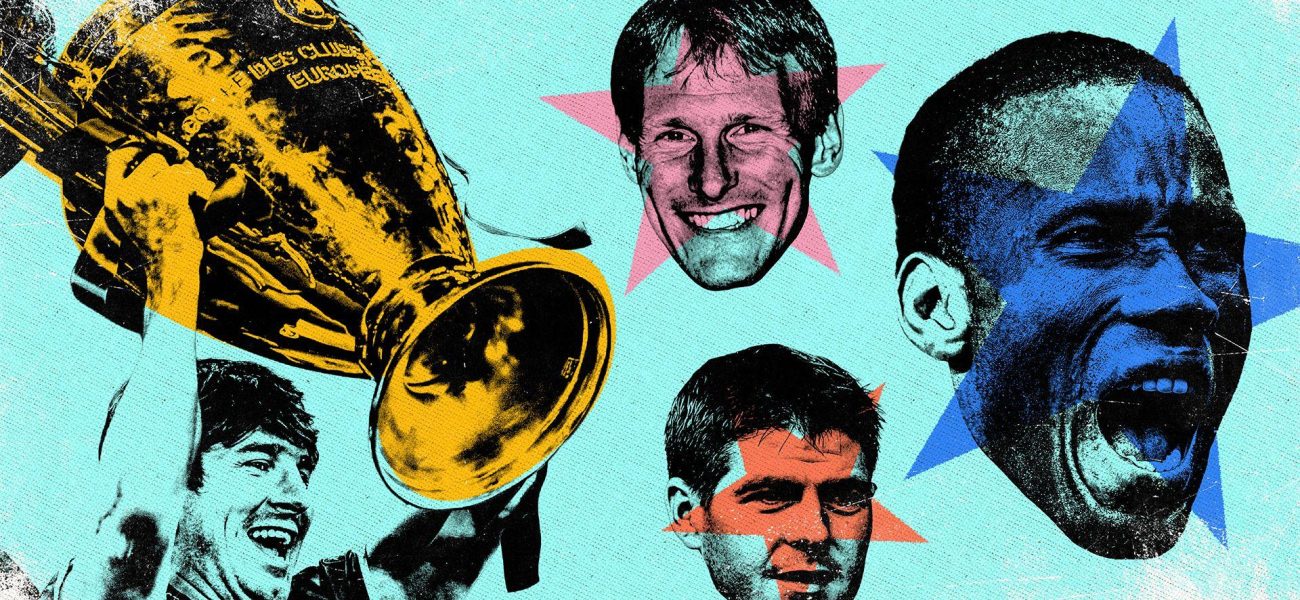
And nowhere is this more apparent than when you consider players who seized their chance. Forget the pre-match narratives, the form guides, the tactical schematics—because when Didier Drogba rose to meet that corner in the 88th minute of the 2012 final, Chelsea wasn’t just chasing a goal; they were chasing vindication, erasing years of European heartbreak. Four years prior, a moment of madness had seen him sent off. Here, under Munich’s lights, he authored his own redemption, later netting the decisive penalty. Talk about seizing your moment, yeah?
Paul Lambert, the unfashionable Scot at Borussia Dortmund in 1997, embodies the dark horse. Tasked with shackling Zinedine Zidane, the game’s nascent maestro, Lambert didn’t just contain him; he dictated the rhythm, proving that brute intelligence and tactical discipline can, occasionally, trump flair. Juventus chiefs, impressed by Lambert’s mastery over their prized asset, reportedly offered to buy him right after the final. They hadn’t won, but they knew a force when they saw one. It makes you wonder how many forgotten officials, behind the scenes, have pulled off similar quiet triumphs.
Because these sagas resonate far beyond the confines of Europe’s wealthy footballing empires. Across Karachi’s vibrant urban sprawl, where bootleg shirts are sold for a few hundred rupees and rickshaws blare highlights, the legend of Steven Gerrard’s ‘Miracle of Istanbul’ — or Zinedine Zidane’s gravity-defying volley — finds fertile ground. Fans in Islamabad or Dhaka don’t just watch; they invest emotionally. They see the individual against the odds. It’s a global theatre, attracting a viewership that, for the 2023 final between Manchester City and Inter Milan, reportedly exceeded 450 million worldwide.
📄 POLICY WIRE WHITEPAPER PUBLISHED: PAKISTAN'S NATIONAL SECURITY POLICY PRIORITIES
👉 READ BY CLICKING HEREMaria Schmidt, an MEP sitting on the European Parliament’s Committee on Culture and Education, touched on this universality recently: “We analyze collective narratives, the impact of globalization on sports—all that weighty stuff. But when I see a player, just one, rise to that particular occasion, it reminds us all, regardless of the stakes, that human effort, that audacious ambition, still counts for something. It’s a powerful, almost inconvenient, truth for systems thinkers, isn’t it?”
From Oliver Kahn’s stoic defiance in 2001, saving two penalties against Valencia to secure Bayern’s long-awaited crown, to Rodri’s precise finish for Manchester City in 2023, these aren’t just goals or saves. They’re individual blueprints for victory, forged in the heat of profound pressure.
What This Means
The obsession with individual genius in sports, particularly in a high-stakes, hyper-commercialized environment like the Champions League, reflects a broader cultural tendency. We crave heroes. In an increasingly interconnected and, frankly, overwhelming world, where global events feel beyond individual control, the narrative of one person’s decisive action holds immense appeal. It’s why leaders are often distilled to single decisions, or economic downturns blamed on specific figures.
But the economic implications are equally telling. The financial landscape of top-tier football, particularly with the advent of sovereign wealth funds and ultra-rich investors, means that these individual moments are more than just sporting glory. They’re marketing gold. They justify the exorbitant transfer fees, the multi-million-pound endorsement deals, — and the global branding efforts. A singular iconic moment from a player can boost shirt sales, increase television rights viewership, and — for players themselves — provide negotiating power few other achievements can. These performances don’t just earn a medal; they translate into a tangible, measurable increase in value. For clubs, it’s about cementing legacy, attracting future talent, and maintaining the financial engine that drives modern football. It’s capitalism, starkly rendered, on a football pitch.