

Yellowstone’s Wild Embrace: Bison Incident Reignites Debate on Untamed American Frontier
POLICY WIRE — Yellowstone National Park, USA — It’s a moment seared into collective memory, playing out like a primal scream against a backdrop of selfie sticks and Instagram filters: the sudden,...

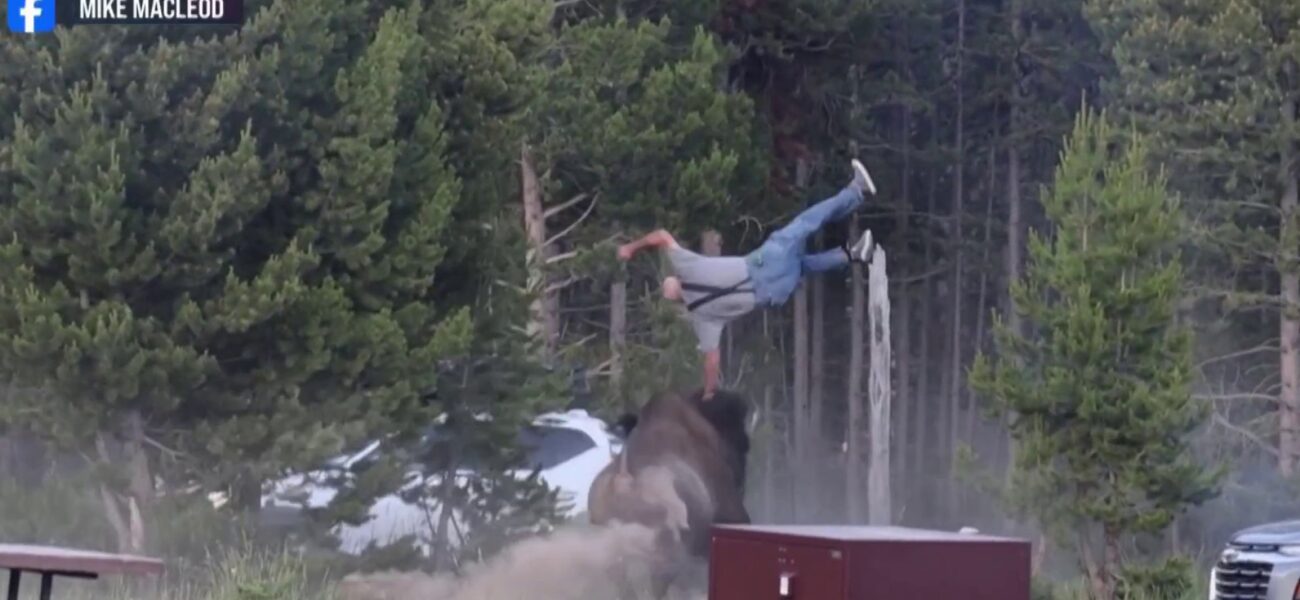
POLICY WIRE — Yellowstone National Park, USA — It’s a moment seared into collective memory, playing out like a primal scream against a backdrop of selfie sticks and Instagram filters: the sudden, thunderous charge. A human form, frail against the sheer mass of muscle — and horn, is sent tumbling. Just when we think we’ve tamed everything—every wild vista, every untamed creature—nature reminds us who’s really in charge, and it’s got no patience for our carefully constructed comfort zones. The park, usually an arena for breathtaking vistas and quiet contemplation, just became a flashpoint, courtesy of a bison with an agenda.
Reports trickling out of Wyoming describe a rather graphic scene. A visitor to Yellowstone, details still somewhat murky—because they usually are in these spontaneous moments—found himself in very close quarters with one of the park’s formidable residents. It wasn’t a gentle nudge, you understand. The bison, displaying a raw, unapologetic assertion of its space, made a point. And the man, well, he flew. It’s a spectacle that, had it been captured with sufficient viral potential, would’ve dominated social feeds far beyond the typical animal kingdom curiosities, underscoring the enduring, sometimes brutal, chasm between the picturesque ideal of nature and its uncompromising reality.
Park officials were quick to issue their standard, almost ritualistic, reminder: these are wild animals. You’re visiting their home. But the sheer velocity and impact of such an incident—a force capable of launching an adult into the air—serves as a far more potent, albeit painful, reiteration of that dictum than any neatly worded sign. Visitors to Yellowstone, we’re often told, shouldn’t approach within 25 yards of large animals, bison included. It’s not a suggestion; it’s a policy, born from decades of prior incidents that likely felt just as abrupt, just as terrifying, just as avoidable. But rules are often seen as suggestions, aren’t they, especially when the promise of a memorable photograph looms?
The man was, predictably, hospitalized following the altercation. Emergency services responded with an urgency that’s all too familiar in such sprawling, sometimes remote, national parks. His condition, beyond being [QUOTE_PLACEHOLDER], remains somewhat undisclosed. One might wonder if the subsequent stay offered ample time for contemplation on the fundamental disparities in sheer kinetic energy between a thousand-pound beast and a flesh-and-bone human being. And you’ve gotta wonder, what exactly is it about these colossal, stoic creatures that tempts folks to ignore all common sense?
It’s not an isolated incident either. According to National Park Service data from a recent report, bison are responsible for more injuries to park visitors than any other animal. Let that sink in. Not bears. Not wolves. Bison. Their seemingly placid demeanor is a masterful deception. They’re quick, they’re territorial, and they’ve got about as much interest in human curiosity as a politician has in a balanced budget—that’s to say, none at all, unless it directly benefits their immediate agenda.
This recurrent narrative, a tale as old as the parks themselves, reverberates globally. In places like Pakistan’s Chitral Gol National Park or various wildlife reserves across South Asia, similar human-wildlife interfaces create analogous tension points. While the fauna might differ—snow leopards versus bison, for example—the underlying friction between human encroachment, tourism’s economic promise, and the intrinsic, often violent, demands of the wild remains a universal quandary. The impulse to ‘get closer’ for an unparalleled experience, to capture that ‘money shot,’ it’s a worldwide phenomenon, often clashing with pragmatic safety regulations. It’s almost as if the sheer raw magnetism of the wild beckons—and occasionally punishes—global thrill-seekers who sometimes confuse a national park with a petting zoo. For every viral clip of a bison running rampant through a gift shop, there’s another, often far more sobering, tale of human folly.
📄 POLICY WIRE WHITEPAPER PUBLISHED: PAKISTAN'S NATIONAL SECURITY POLICY PRIORITIES
👉 READ BY CLICKING HEREBut how do you legislate common sense? You can’t, not really. What you can do is put up signs. You can fine people. You can even, as has happened, close down areas after repeat offenses. Yet, the human capacity for what might generously be termed ‘optimistic oversight’ persists. Park rangers, it’s fair to say, they’ve seen it all. They know the script. And they probably, silently, groan every time another incident hits the scanner, because it’s usually just a variation on a familiar, preventable theme.
This kind of event isn’t just a headline—it’s a brutal reminder of the wilderness that persists, even in our most manicured national treasures. It brings into sharp focus the choices we make as tourists, as conservationists, and as a society that continually struggles to delineate the boundaries between appreciation and interference. Some might even call it a kind of brutal honesty—an unvarnished look at humanity’s place, or lack thereof, in the true food chain.
What This Means
This latest bison-inflicted injury in Yellowstone isn’t merely a grim anecdote; it’s a bellwether for escalating challenges at the intersection of surging tourism, dwindling natural boundaries, and ever-present human hubris. Economically, while a single incident won’t crater Yellowstone’s millions-strong annual visitation, a perception of heightened danger, especially widely publicized ones, could subtly impact visitor demographics or spur calls for more restrictive—and potentially more expensive—park access and safety measures. These measures, from increased ranger patrols to more elaborate fencing, inherently cost money, often siphoned from federal budgets already stretched thin.
Politically, the implications are nuanced. Incidents like these periodically ignite public debate over the ‘freedom’ of wilderness exploration versus the ‘duty’ of parks to ensure visitor safety—a thorny issue that balances personal responsibility against governmental oversight. It might empower arguments for increased funding for education and enforcement, or, conversely, prompt criticism that existing regulations aren’t stringent enough, or that visitors are being ‘coddled.’ Such events also inadvertently feed into a larger discourse around the proper management of iconic national assets, whether it’s a debate over wildlife population control or the limits of infrastructure development. And these discussions often transcend national borders; the ongoing challenges of human-wildlife cohabitation and sustainable tourism echo through protected areas from the Canadian Rockies to the bustling, risk-fraught metropolises grappling with their own distinct forms of public safety. This incident, while local, offers a stark illustration of an increasingly global tension—the ever-present, sometimes violent, reminder that the wild is not, and never truly will be, fully domesticated for our viewing pleasure.