


Chaebol Quakes: Samsung’s Pay Deal a Truce, Not Peace, for Tech’s Global Power Dynamic
POLICY WIRE — Seoul, South Korea — It wasn’t the sound of victory bells, more like a collective sigh—heavy with the weight of concession on one side, and wary anticipation on the other. Samsung...

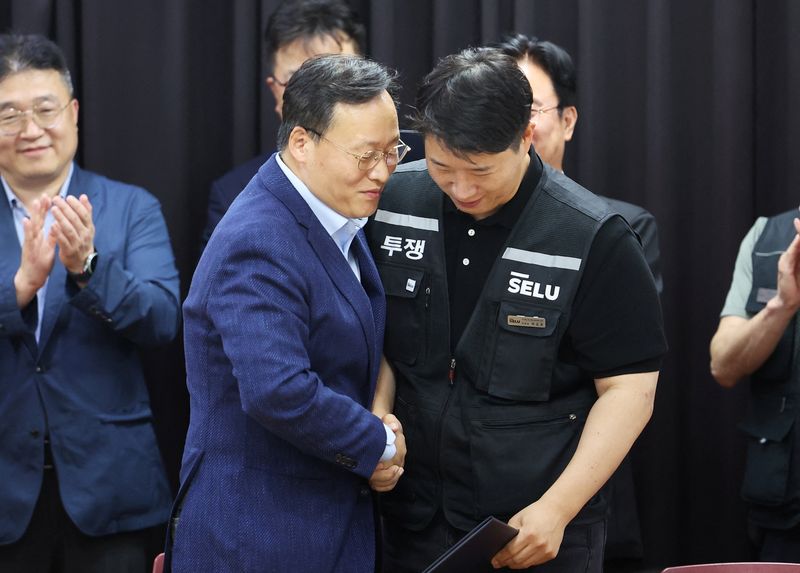
POLICY WIRE — Seoul, South Korea — It wasn’t the sound of victory bells, more like a collective sigh—heavy with the weight of concession on one side, and wary anticipation on the other. Samsung Electronics, the veritable Goliath of South Korean industry—the *chaebol* to end all *chaebols*—has brokered a pay agreement with its formidable workers’ union. You’d think that’s the story. But, really, it’s not. Not yet, anyway.
Because this isn’t simply about a bump in wages; it’s about the ground shifting beneath the feet of one of the world’s most powerful corporations. It’s a reluctant nod to organized labor in a nation—and indeed, an industry—where such collective muscle has traditionally been, well, somewhat discouraged. This pay deal, securing an average 5.1% wage hike, feels less like a triumphant accord and more like a tactical retreat, a necessary evil in a protracted corporate-labor skirmish.
“We’ve always known our worth, but making management acknowledge it has been a fight, every step of the way,” lamented Lee Hyun-woo, a veteran union representative, after the ink dried on the deal. “This agreement? It’s a step forward, absolutely. But let’s not pretend it’s the end of anything. We’ve still got battles ahead for fair treatment, for respect. It’s never just about the money, is it?”
Indeed. This isn’t some quaint factory floor dispute. We’re talking Samsung, a company whose sprawling operations touch virtually every corner of the planet, whose chips power phones from Silicon Valley to Silicon City (India’s tech hub, that’s). A company whose financial health is often conflated with South Korea’s national pride. And now, they’re navigating an era where workers aren’t just faceless cogs in a massive global machine, they’re organized, vocal, and, crucially, demanding a bigger slice of the pie. It’s a new game, one even the behemoth of electronics can’t entirely dictate.
And management? They’re playing the long game, too, naturally. You don’t get to be a multi-trillion-dollar entity by simply rolling over. “Achieving consensus with our employees is always our priority for a stable and productive environment,” stated Kim Joon-seop, a spokesperson for Samsung Electronics, with that practiced corporate calm. “We’re confident this agreement will allow us to continue innovating and competing effectively on the global stage.” Effective competition—that’s the watchword, the veiled warning to both employees and shareholders: don’t push too hard, because global competition is a brutal, relentless beast.
The ripples of this domestic accord will be felt, quietly but assuredly, across Samsung’s vast ecosystem, particularly in its sprawling supply chains and burgeoning markets throughout Asia and the Muslim world. Pakistan, for instance, a rapidly growing consumer base, looks at tech giants not just for products but as aspirational benchmarks for economic development and labor standards. A study by IHS Markit last year noted that Samsung’s direct and indirect employment impact in emerging markets like Bangladesh and Indonesia has swelled by nearly 30% in the last five years, indicating its deeper entrenchment and, frankly, heightened visibility as a labor player.
📄 POLICY WIRE WHITEPAPER PUBLISHED: PAKISTAN'S NATIONAL SECURITY POLICY PRIORITIES
👉 READ BY CLICKING HEREBut the South Korean landscape is a complicated one, you see. Unions here are gaining traction, emboldened by a generational shift in attitudes towards corporate paternalism. This latest tremor within the chaebol structure isn’t an isolated incident; it’s part of a broader global push for better conditions and fair pay, from the gig economy to established manufacturing behemoths. It’s also a stark reminder that even seemingly robust supply chains, ones that crisscross continents, can be vulnerable to local industrial action or escalating labor costs. What happens in Seoul won’t just stay in Seoul. Its economic reverberations carry weight in, say, Samsung’s assembly operations in Vietnam, or its R&D hubs in India, affecting both costs and, potentially, global pricing strategies. Don’t forget, profit margins aren’t what they used to be.
What This Means
This Samsung deal, while superficially a straightforward labor victory, actually speaks volumes about the evolving political economy of South Korea and, by extension, the global tech industry. Economically, Samsung will absorb these wage increases, but expect the accountants to find savings elsewhere—maybe in tighter control over its suppliers, maybe in a renewed push for automation, maybe even (heaven forbid) by slowing investment in some less profitable ventures. It’s not charity, it’s calculation. For the wider South Korean economy, this sets a precedent. Other *chaebols*, perhaps feeling a touch of schadenfreude at Samsung’s predicament, will nonetheless be reviewing their own labor relations. We’ll likely see preemptive wage talks and improved benefits across sectors, aimed at staving off similar, potentially more disruptive, union actions. This could gently nudge up production costs across South Korean manufacturing, an industry already feeling the pinch from global slowdowns and aggressive Chinese competition.
Politically, the government in Seoul will be watching closely. While keen to project an image of stability and corporate health, they also can’t ignore the burgeoning demands of the working class. This agreement strengthens labor’s hand, giving them leverage they haven’t enjoyed for decades. And that means a more complex, less compliant workforce in a nation whose success was, in part, built on corporate obedience. The days of monolithic corporate control, at least in the traditional sense, they’re fading. It’s a nuanced shift, but it’s undeniably happening.