


Shadow Economy of Pedagogy: New Mexico Eyes Academy Amidst Global Education Flux
ALBUQUERQUE, N.M. — Education, it seems, remains one of the last frontiers where a board of local bureaucrats might still imagine itself charting destiny. While diplomats tussle over trade deals and...

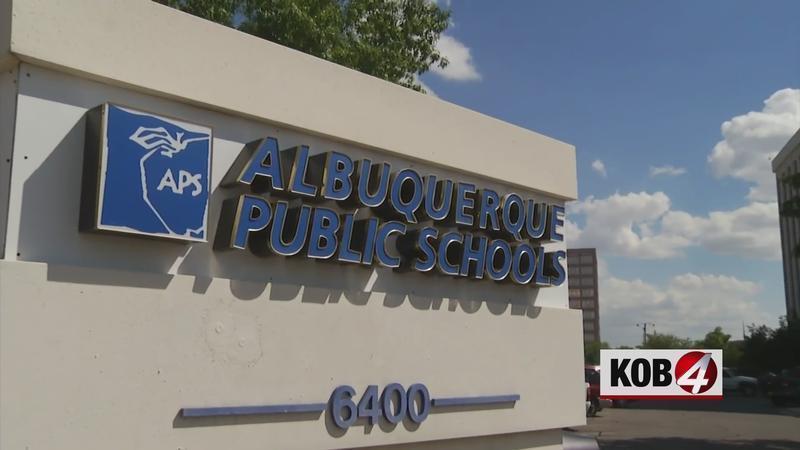
ALBUQUERQUE, N.M. — Education, it seems, remains one of the last frontiers where a board of local bureaucrats might still imagine itself charting destiny. While diplomats tussle over trade deals and global powers redraw maps with missile silos, the Albuquerque Public Schools Board of Education will devote its considerable intellect to the question of another prospective charter institution. Not exactly high-stakes international intrigue, but then again, these micro-decisions often mirror macro anxieties.
It’s Wednesday evening. Not a pivotal geopolitical summit, not an emergency session to avert fiscal collapse, but a routine-ish gathering at APS headquarters in Uptown. And that’s where the brass is slated to lend an ear—or perhaps a judicious silence—to something called the Andalusia Natural Sciences Academy. Or, for those preferring brevity, ANSA. It’s got a rather grand ring to it, don’t you think? Like a lost sultanate’s scientific hub, or maybe a research facility somewhere in Cordoba, deep in Spain’s historical south, a land once renowned for its academic prowess under Muslim rule. But no, this isn’t some ancient scroll unearthed; it’s a modern proposition for a particular kind of schooling.
According to what APS folks tell us, this ANSA outfit is aiming high, quite literally. Its presentation, meticulously crafted no doubt, pitches it as a [QUOTE_PLACEHOLDER] That’s the ambition, plain and stark, laid out before the board. Initially, it’s just ninth — and tenth graders they’re looking to wrangle into its academic embrace. But the grand plan, as is usually the case with these things, is to grow it, ballooning to accommodate students all the way up through the 12th grade.
It’s not as if Albuquerque is starved for educational options. On the contrary, the public school landscape is dotted with these independent, publicly funded institutions. Per data culled from the APS website—a reliable if not always scintillating source—charter schools currently account for about 30% of all APS schools. And when you look at student populations, a full 13% of all APS students attend a charter school. That’s a significant chunk, an almost a fifth of the total, when you stop to consider the raw numbers. This isn’t just a niche; it’s a robust, often contentious, segment of the public education matrix.
The implications here stretch further than just a single district’s curriculum. They brush against larger themes about education’s role in societal development—themes Pakistan, for instance, grapples with on a national scale. Nations across the Muslim world—and indeed, much of the Global South—frequently ponder the exact balance between traditional, government-run schools and these nimbler, sometimes specialized, charter-like ventures. How does one cultivate a scientific elite, a STEM-literate workforce, without abandoning the broader populace to educational neglect? It’s a perennial question, one without easy answers. You can see similar debates echoing from Lahore to Lisbon, though the local accent on those arguments varies significantly.
📄 POLICY WIRE WHITEPAPER PUBLISHED: PAKISTAN'S NATIONAL SECURITY POLICY PRIORITIES
👉 READ BY CLICKING HEREAnd so, tonight’s discussion isn’t just about another school. It’s about pedagogy, market demand, — and the state’s fluctuating role in shaping young minds. Is a specialized STEM academy a panacea for what ails modern education, or merely a targeted intervention for a select few? This kind of localized bureaucratic skirmish, observed tonight by district officials and whoever decides to stream it on the board’s YouTube page, isn’t unique. It plays out in variations in thousands of towns, reflecting universal aspirations—and very local frustrations.
But what if it’s not simply about improved academic outcomes? What if it’s about the relentless pursuit of educational efficiency, an almost corporate approach to knowledge transfer? That’s what some skeptics will wonder. Albuquerque, like many urban centers, is a microcosm of these grander educational experiments, each attempting to forge a better future for its kids. The very nomenclature—Andalusia—invokes an era of intellectual blossoming, when a thriving Islamic civilization contributed profoundly to global science and mathematics. That’s a mighty heritage to live up to for any school, particularly one starting with a couple of grades in a New Mexico town.
What This Means
The board’s decision regarding ANSA, whatever it may be, carries weight beyond simple approval or rejection. Politically, the proliferation of charter schools often reflects a nuanced, often politically charged, dialogue around parental choice, educational standards, and equitable resource distribution. A nod to ANSA signals an endorsement of specialized curricula and the private-public partnership model that underpins charter operations. It could embolden other groups to push similar focused academies, potentially siphoning resources or talent from traditional public schools. On the economic front, a strong STEM-focused institution could, in theory, contribute to a more skilled local workforce down the line. It aligns with broader national efforts to shore up technical expertise. But there’s also the economic cost—how do these entities impact funding for the conventional system, especially if they’re perceived to cherry-pick students or leave public schools with higher-needs populations and less funding? Internationally, particularly in South Asia and parts of the Muslim world, the pursuit of STEM education through specialized institutions is often viewed as a shortcut to economic competitiveness and national development. This local New Mexico debate, therefore, isn’t just a parochial administrative detail. It’s a recurring motif in the ongoing, global discourse about education as an economic driver and social equalizer—or perhaps, an accelerator of inequality—played out on a rather small, dusty stage. This one local meeting illuminates the constant push-pull between pedagogical innovation — and systemic stability. It’s a testament to the persistent human drive to find ‘the better way’ to educate its young, despite the endless arguments over what that ‘better way’ actually is.