


AI’s Existential Snag: Why Tech’s $7.2 Billion Guru Can’t Find Workers with Old-School Grit
POLICY WIRE — San Francisco, USA — It turns out even the architects of artificial intelligence, those demigods forging our silicon future, grapple with problems decidedly, painfully...

POLICY WIRE — San Francisco, USA — It turns out even the architects of artificial intelligence, those demigods forging our silicon future, grapple with problems decidedly, painfully human. Imagine building a company worth north of seven billion dollars—a sum that makes even jaded venture capitalists blink—and yet, your primary HR challenge isn’t a lack of applicants. Quite the opposite, in fact. It’s a stark, nagging scarcity of something rather old-fashioned: a robust work ethic.
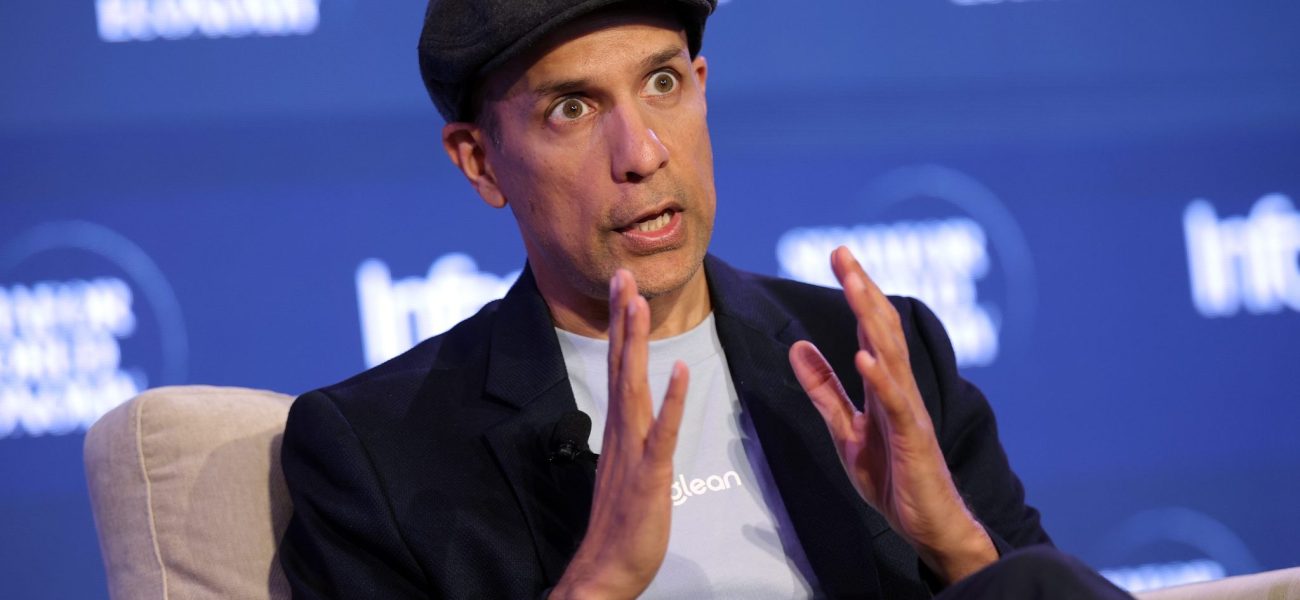
This is the curious predicament of a former Google luminary, now an AI CEO overseeing a company valued at $7.2 billion. While job applications flood his inbox by the thousands daily, a disconnect persists. It’s a striking counter-narrative to the prevailing assumption that high-paying tech jobs are the ultimate draw. He’s effectively swamped with resumes, but they’re apparently from candidates lacking the intangible, persistent drive required for his ambitious projects. The future of AI, it seems, isn’t just about algorithms and GPUs; it’s about finding people willing to put in the hours, and then some. [QUOTE_PLACEHOLDER]
And it begs the question: What constitutes this elusive “strong work ethic” in the digital age? Is it an inherent quality, or a cultural construct eroding under the weight of remote work, flexible hours, and an economy increasingly detached from traditional industriousness? For many older-school executives, the term conjures images of unflagging commitment, perhaps even a touch of relentless sacrifice. But the modern workforce, particularly in tech, often prioritizes a different covenant: work-life balance, purpose-driven roles, and a healthy skepticism towards the 80-hour week. You know, that whole self-care thing.
The company, helmed by an ex-Google engineer, is reportedly deluged with interest. But even with the promise of lucrative opportunities in an exploding sector, this CEO observes that his pool of prospects routinely struggles to meet what he perceives as fundamental standards of dedication and performance. It’s a curious chasm between aspirational interest — and applied diligence. And it highlights a growing tension between the demands of cutting-edge innovation and the evolving expectations of contemporary talent.
Consider the global context. While a $7.2 billion AI firm struggles with perceived lack of grit in Silicon Valley, in developing economies like Pakistan, the employment landscape paints a vastly different picture. Unemployment rates remain a persistent challenge; the World Bank reported Pakistan’s unemployment at 5.8% in 2022, but that number often masks significant underemployment and job scarcity, especially for educated youth. There, the ‘strong work ethic’ isn’t just an employer’s preference; it’s often a prerequisite for economic survival and upward mobility, fueled by fierce competition for every available opportunity. In a place like Karachi, Lahore, or Islamabad, countless bright, driven individuals would jump at the chance to contribute to an AI revolution, perhaps even with fewer complaints about workplace intensity.
But the problem for this specific CEO isn’t simply finding *any* worker, it’s finding those with the exact intangible quality he defines as “strong work ethic.” And that’s not always exportable, nor easily transferable across cultural or economic divides. It’s a unique sort of problem—a first-world dilemma dressed in future tech clothes.
📄 POLICY WIRE WHITEPAPER PUBLISHED: PAKISTAN'S NATIONAL SECURITY POLICY PRIORITIES
👉 READ BY CLICKING HEREThe tech industry’s pursuit of infinite growth, sometimes at all costs, frequently collides with societal shifts. Start-ups often expect employees to embody an almost cult-like devotion, especially early on. They’re chasing the next unicorn valuation, — and that often translates to grueling hours and immense pressure. But employees aren’t always willing to sign up for that unreservedly anymore, particularly those who’ve seen previous tech booms and busts, or simply watched friends burn out. This isn’t just about an individual company’s hiring woes; it’s a canary in the coal mine for broader labor market trends in advanced economies.
What This Means
This peculiar HR challenge, coming from such a highly-valued AI enterprise, signals a subtle but profound economic recalibration. For one, it casts doubt on the simplistic notion that money alone buys loyalty — and dedication. In a world awash with liquidity (for some sectors, anyway), other factors—autonomy, meaning, sustainable pace—are gaining currency. It implies a shifting employer-employee dynamic where even astronomical valuations don’t guarantee subservient devotion. it highlights the potential for labor market disparities not just geographically, but philosophically. Western tech hubs may find themselves with a glut of candidates who fit a certain cultural mold (perhaps one prioritizing “passion” over pure “grind”), while immense reservoirs of highly capable and diligent talent in regions like South Asia remain untapped due to a myriad of barriers, from visa issues to educational equivalencies or just lack of direct networking. And as AI progresses, potentially displacing certain jobs, this cultural mismatch in work ethic expectations could exacerbate societal divides, pushing the definition of valuable human contribution into even more nebulous territory. It’s an inconvenient truth: revolutionary tech might just be bottlenecked by plain old human nature, or rather, our evolving perception of what “nature” entails at the workbench. This isn’t a problem a neural network can solve—at least, not yet. Check out more about how American turmoil reshaped Asia’s economic map, illustrating these global shifts. For a fascinating counterpoint, explore Ganguly’s lament about changing talent values in Indian cricket, showing these shifts aren’t unique to tech.