


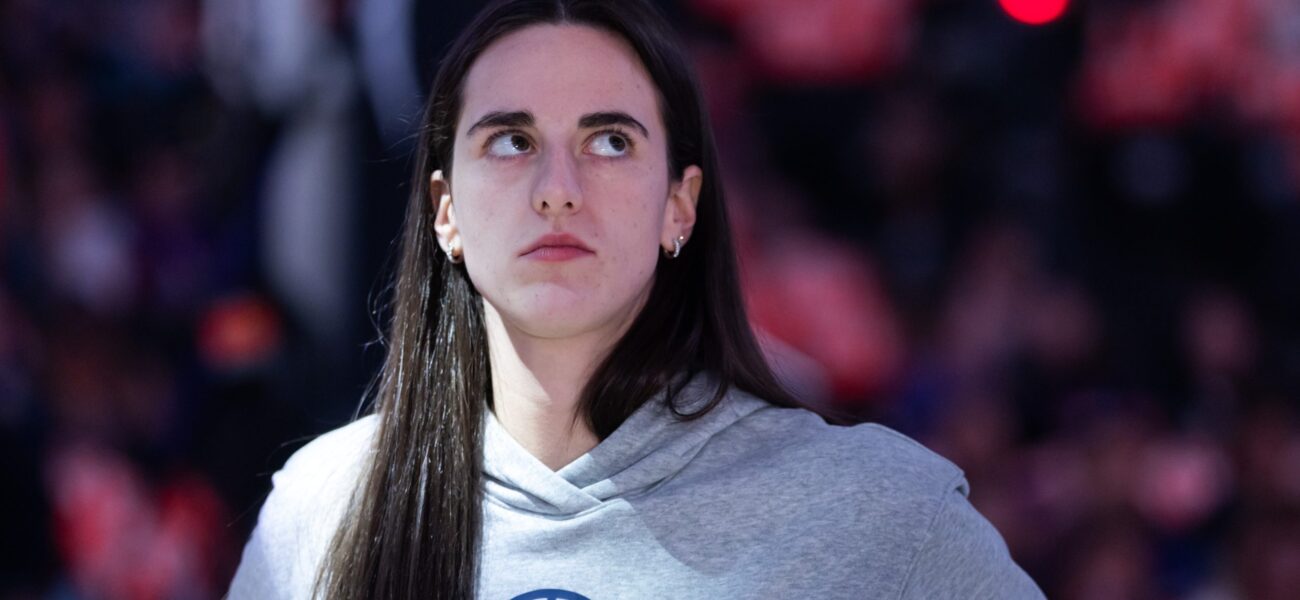
Hoop Dreams, Political Nightmares: Caitlin Clark Navigates Culture War Crossfire
POLICY WIRE — Indianapolis, USA — When Indiana Fever phenom Caitlin Clark takes the court, one might expect headlines to focus on her gravity-defying passes or her unprecedented scoring touch....

POLICY WIRE — Indianapolis, USA — When Indiana Fever phenom Caitlin Clark takes the court, one might expect headlines to focus on her gravity-defying passes or her unprecedented scoring touch. Lately, though, the chatter has less to do with the arc of her three-pointers and everything to do with the thorny trajectory of American politics. It’s an unusual bind for a player lauded for revitalizing an entire league.
Her recent third All-Star nod in as many seasons – achieved despite playing what critics term a career-low in minutes – highlights a discomfiting paradox. Clark’s celebrity eclipses traditional metrics, attracting legions of new fans, yet it also makes her a reluctant battle standard in the nation’s culture wars. It’s a role she doesn’t appear to relish, but one she simply can’t shake, a stark reminder of how public figures, even in sport, become collateral.
The situation got truly sticky when a chorus of Republican lawmakers intervened. They penned an open letter to WNBA Commissioner Cathy Engelbert, alleging that Clark was the target of “repeated acts of unnecessary physical hostility and violence” and even—wait for it—hinting at racial motivation. On the surface, it read like concerned citizens defending a national sports darling. In reality, it felt more like strategic political grandstanding, a calculated maneuver to align their agenda with a popular white athlete perceived to be under siege.
And then there was Riley Gaines. The conservative commentator and former collegiate swimmer, never one to shy from a microphone, offered her two cents on Fox News. She declared Clark the WNBA’s “golden goose.” Gaines mused whether the perceived antagonism stemmed from Clark’s race or sexual orientation. “Do they hate her because she’s white? Maybe. Do they hate her because she’s straight? Maybe. I think it’s rooted in jealousy,” she posited, framing the league’s dynamics through a very particular, politically charged lens. This sort of commentary, frankly, didn’t help Clark much.
Because the support, seemingly designed to champion Clark, immediately backfired. Social media, that unforgiving town square, lit up. Terms like “Caitlin Congress” — and even the historically charged “Confederate Clark” started circulating. Imagine, being given an unflattering historical moniker merely because some politicians decided to use your name as a talking point. It’s wild. This wasn’t about Clark’s skills anymore; it was about the uncomfortable embrace from figures eager to weaponize her narrative for broader cultural conflicts.
But the Fever organization, quick on their feet, scrambled to insulate their star. An anonymous source within the franchise, granted anonymity to speak freely on sensitive internal matters, stated plainly, “Our focus remains solely on basketball and the well-being of our athletes. Any attempt to politicize their experiences distracts from the incredible athleticism and progress this league represents.” It’s a tightrope walk, to be sure, trying to keep a player who generates unprecedented viewership (ESPN has reported a 68% jump in overall WNBA viewership since Clark’s rookie year) from becoming merely a political pawn.
This dynamic isn’t isolated, of course. Across the globe, sports often find themselves entangled in nationalistic fervor or social divisions. Look at the intense fan rivalries that sometimes spill over into sectarian conflicts in South Asia, or how athletic achievements become symbols of national pride in places like Pakistan—just as deeply personal and deeply rooted, though often fueled by entirely different narratives. The core idea, that identity can be projected onto a game, remains surprisingly universal. The economics of sporting fame, too, become distorted when political capital enters the equation.
📄 POLICY WIRE WHITEPAPER PUBLISHED: PAKISTAN'S NATIONAL SECURITY POLICY PRIORITIES
👉 READ BY CLICKING HERESenator Ted Cruz, R-Texas, perhaps feeling the heat of public reaction, commented this week, “Our intervention was about ensuring fair play, nothing more. It’s disappointing to see basic concern for player safety warped into another partisan spectacle.” It’s a typical political retreat, blaming others for the controversy they sparked.
What many of Clark’s newest, harshest online critics often ignore—or choose to ignore—is her own consistent stance. “The harassment, the hate. None of that’s OK,” she told reporters recently, days after her game against the Las Vegas Aces. “There should never be a question of character… None of that’s okay, and I don’t want anyone to experience that.” She’s made it clear, she stands against the vitriol, even speaking up against hate directed at Black women across the league, showing a surprising maturity for someone thrust into such a bright, yet often ugly, spotlight.
What This Means
The saga of Caitlin Clark’s politicization lays bare a sobering truth: in America’s current climate, virtually no public space—not even the traditionally escapist realm of professional sports—is immune to ideological capture. The WNBA, long battling for mainstream recognition and financial stability, now finds its most valuable asset trapped in a crosscurrent of racial, gender, and partisan grievances. For conservatives, Clark has become a symbol, a proxy for arguments about perceived injustice against white women or traditional values, a readymade figure onto whom they can project cultural victimhood. For her detractors, the political backing has ironically made her a lightning rod for resentment, reinforcing narratives of privilege.
Economically, this is a double-edged sword. While the controversy generates eyeballs, a portion of the viewership is driven by curiosity in the drama, not the sport itself. This risks alienating potential fans who simply want to watch basketball, unburdened by political baggage. The league risks becoming a theatre for larger, often uglier societal disputes, which might ultimately undermine its efforts to grow authentically. For Clark, it means that her incredible athletic gifts are consistently overshadowed, and her public image risks being defined more by who supports her off-court than by what she achieves on it. It’s a cynical hijacking, — and for anyone who just wants to enjoy the game, it’s undeniably tiresome.