


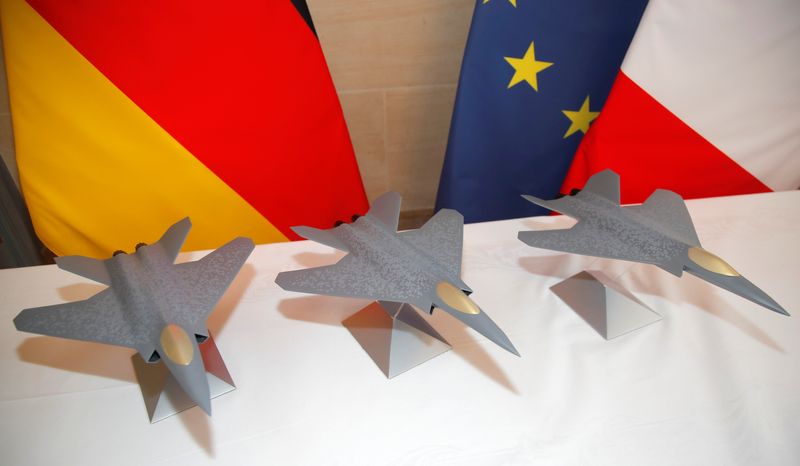
Europe’s Air Dominance Dream: FCAS Scrapes By, But What About the Global Ripple?
POLICY WIRE — Brussels, Belgium — The horizon for European air power, it seems, remains cluttered with prototypes and pronouncements rather than squadrons of ready-to-deploy next-generation fighters....

POLICY WIRE — Brussels, Belgium — The horizon for European air power, it seems, remains cluttered with prototypes and pronouncements rather than squadrons of ready-to-deploy next-generation fighters. For all the backroom wrangling and eye-watering projected budgets that have plagued the Future Combat Air System (FCAS) program, one might expect a quiet surrender. Instead, industry honchos are doubling down, assuring us it’s just a ‘complicated dance’, not a ‘death spiral’.
It’s a peculiar thing, this continental insistence on sovereign defense capability. We’re talking about a multi-nation, multi-billion-euro endeavor—France, Germany, and Spain are the main players, along with industrial titans Airbus, Dassault, and Indra. They’re trying to forge something revolutionary, something to compete with—and maybe, just maybe, outfox—the likes of America’s F-35s or China’s emerging J-20s. And let’s not forget Britain’s Tempest program, Europe’s other, equally ambitious, almost parallel fighter jet development.
So, the whispers, the reports of discord, the endless meetings that seem to produce more process than progress—they’re all just part of the furniture, apparently. The head of Airbus Defence, a man surely accustomed to the long game of high-tech defense projects, recently [QUOTE_PLACEHOLDER]. He’s effectively said, ‘Chin up, lads, we’re not folding.’ It’s a sentiment designed to soothe investors, placate politicians, and—crucially—reassure the electorates footing the bill.
But the road has been bumpier than a North African unpaved track. Technical specifications, workshare disputes, intellectual property battles – you name it, FCAS has seen it. France, historically keen on its independent military-industrial complex, often finds itself at odds with German demands, creating a bureaucratic Gordian knot that makes actual engineering seem easy. This isn’t just about engines and stealth capabilities; it’s about national pride, future export markets, and the fundamental question of who calls the shots in a Europe increasingly fractured on foreign policy. And it’s not just a European concern, either.
Because while Europe squabbles over digital cockpits and hypersonic missiles, countries further afield are watching closely. Think Pakistan, for instance, a nation constantly navigating a complex security landscape. Their air force, historically reliant on a mix of American F-16s and Chinese JF-17s, faces an eternal dilemma: upgrade older platforms, or seek out new, high-tech replacements. European squabbling over FCAS, and the program’s inevitable delays, doesn’t exactly instill confidence in its timely delivery or ultimate affordability for non-founding nations. It almost pushes countries into the arms of existing suppliers, or towards emerging powers that might offer a more straightforward, albeit politically charged, procurement process. The strategic ramifications aren’t confined to the Continent. South Asian defense ministries are acutely aware of where the latest technology is being birthed—and how reliably—before they sign on any dotted lines for multi-generational commitments.
Consider the staggering projected price tag: estimates suggest the FCAS project could run well over 100 billion euros from development through to full deployment over several decades. That’s a sum capable of solving more than a few domestic problems across Europe, if only politicians weren’t so convinced that sovereign air power trumps all else. Analysts tracking European defense procurement frequently cite this gargantuan expenditure as one of the chief vulnerabilities of programs like FCAS, particularly in an economic climate that’s seen better days.
📄 POLICY WIRE WHITEPAPER PUBLISHED: PAKISTAN'S NATIONAL SECURITY POLICY PRIORITIES
👉 READ BY CLICKING HEREAnd let’s be blunt: when such high stakes are involved, assurances from executives often carry the faint echo of whistling past the graveyard. It’s their job to project confidence, after all. You wouldn’t expect a captain to announce the ship’s structural integrity is compromised while it’s still sailing, would you? But the sheer length of the development cycle—we’re looking at likely deployment in the 2040s or even 2050s—means the geopolitical landscape will have undoubtedly shifted multiple times. What constitutes a ‘next-generation fighter’ today could be old news by then.
What This Means
This dogged commitment to FCAS, despite its bureaucratic bloat and technical headaches, reveals Europe’s deep-seated ambition for strategic autonomy. Economically, it represents a massive investment in high-skill jobs and technological advancement—a public subsidy for defense industries that keeps expertise at home. Politically, however, it’s a constant tightrope walk. Can these disparate nations truly create a cohesive vision for shared defense when their immediate national interests so often diverge? The subtle irony is that their very efforts to unify their defense industrial base often expose profound divisions within the EU itself.
For external observers, particularly nations like Pakistan that operate on the fringes of major power blocs, FCAS is a litmus test for Europe’s reliability as a future arms supplier. Slow, internally contested development signals a risk of dependence on systems that may never materialize as promised, or arrive decades late. This hesitancy might inadvertently strengthen the hand of non-European defense manufacturers, forcing nations in South Asia to reassess their strategic allegiances. They might find themselves looking towards closer, more nimble partners or doubling down on domestic development, even if it means foregoing some cutting-edge features. This ongoing drama over FCAS, while centered in Europe, will certainly reverberate across every major global defense forum—and some quiet corridors of power you’ve never heard of.
The Airbus chief’s statement wasn’t just about an aircraft; it was a defiant stance against an undertow of skepticism that’s always been present in these grand multinational projects. They’ll keep pushing. Because sometimes, the process itself becomes the point, rather than the final product. It’s a rather expensive hobby, if you ask me.