


The End of an Era: Lindsey Graham’s Complicated Legacy, From Pool Hall Grit to Global Power Broker
POLICY WIRE — WASHINGTON — You didn’t just meet Lindsey Graham; you experienced him. The man, who departed this mortal coil at 71, wasn’t a static portrait of political conviction but a living,...

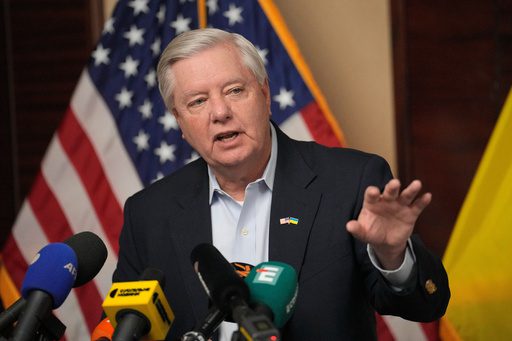
POLICY WIRE — WASHINGTON — You didn’t just meet Lindsey Graham; you experienced him. The man, who departed this mortal coil at 71, wasn’t a static portrait of political conviction but a living, breathing paradox—a South Carolina good ole’ boy who routinely spoke to global power players, a military lawyer who loved to brawl in the Senate, and a vocal critic of Donald Trump who became one of the 45th president’s most ardent defenders.
His passing, confirmed by the D.C. medical examiner’s office as stemming from an aortic rupture, leaves a jagged, complicated hole in Washington, the kind that won’t be filled by another smooth operator. But don’t expect sentimentality to define his career; Graham himself wouldn’t have wanted it. His story began not in a Senate antechamber, but amidst the clang of pool balls and the aroma of fried food at the Sanitary Cafe in Central, South Carolina, a joint his parents ran where he lived with his family in a single room at the back. It’s a journey most politicos only dream of. Because, let’s be honest, few start out pouring sodas — and dodging cigarettes to end up advising presidents.
And boy, did he advise. Graham, a Republican fixture for decades, mastered the art of the political metamorphosis, often leaving observers – and even allies – whiplashed. He was known for his hawkish foreign policy, an unwavering belief in American military projection. It was this zeal that led him, post-9/11, to form the ‘Three Amigos’ with Senators John McCain and Joe Lieberman, pushing for interventions and maintaining a robust American presence globally. That particular commitment meant he often looked far beyond the Carolina Lowcountry, focusing instead on theaters of conflict stretching from Ukraine to the wider Middle East—places like Pakistan, where the stakes of U.S. foreign policy are perpetually high — and prone to unforeseen blowback. For someone whose origins were so decidedly American, he truly immersed himself in international affairs.
One moment, he was slamming Trump for calling McCain names; the next, he was Trump’s preferred golfing buddy, advocating passionately for the former president. “Can I just say to my Republican colleagues—can we move forward without President Trump?” Graham once rhetorically asked on Fox News in 2022. “The answer is no,” he added, making it plain. It’s that kind of unvarnished turnabout that defines much of his legislative career.
Yet, there was an underlying authenticity, too. Sen. JD Vance (R-OH) recalled Graham’s distinct political approach. “I remember getting into a shouting match with Lindsey about a Ukraine funding bill at lunch,” Vance remarked, “and then learning the very next day that he was pushing rail legislation I really cared about behind the scenes. That was Lindsey Graham. He fought like hell for the things he believed in, — and he was just as willing to go to bat for you when it counted.”
Graham’s résumé wasn’t just Senate floor debates. A military lawyer by trade, he rose to Colonel in the Air Force Reserve and was awarded the Bronze Star medal in 2014 for his service. This, a decorated legal career for a self-professed C student from humble beginnings, adds to the compelling, if not bewildering, arc of his life. Because he really did embody the idea of making something out of nothing, didn’t he? Or as he put it, referring to his pool hall youth, “In my world, I was as rich as I could be.”
📄 POLICY WIRE WHITEPAPER PUBLISHED: PAKISTAN'S NATIONAL SECURITY POLICY PRIORITIES
👉 READ BY CLICKING HEREBut the amiable veneer often belied a razor-sharp political strategist. During Bill Clinton’s impeachment, he carved out a role as a combative House manager. Decades later, during the Brett Kavanaugh Supreme Court confirmation, it was Graham who delivered an impassioned, fiery defense that many credit with turning the tide for Trump’s nominee. “Boy, y’all want power. Boy, I hope you never get it,” he sneered at Democrats, a theatrical display perfectly suited for the cable news era. That kind of passion—some might call it pugnacity—was his brand.
A lifelong bachelor who adopted guardianship of his younger sister after his parents died while he was still in law school, Graham often lauded the social safety net programs that sustained them. So, for all his tough-talk and partisan theater, there was always that kernel of understanding about life on the margins.
What This Means
Graham’s passing leaves more than just an empty seat; it means the end of a unique, shapeshifting political force. His ability to oscillate between fervent Trump loyalist and occasional institutionalist offered a vital, albeit often exasperating, channel for communication in a deeply fractured Washington. Losing a figure who could, however controversially, bridge ideological divides through sheer force of personality means another voice is gone that understood how to both fight the war and, paradoxically, talk across the lines. From a geopolitical standpoint, the Senate’s hawkish wing, already feeling shifts, loses a prominent advocate for an assertive U.S. global posture, particularly in contested regions from Eastern Europe to South Asia. We’ll likely see a scramble to fill that specific foreign policy void, with emerging voices looking to seize that particular megaphone. And who steps up in South Carolina will be interesting to watch; filling a legend’s shoes is never easy, especially when those shoes have seen both the dusty floors of a pool hall and the polished halls of the White House. But his complicated dance with power, his knack for reinventing his political persona – sometimes in defiance of his own prior statements – ensures his legacy won’t be easily categorized, nor soon forgotten. He understood the game better than most; it’s a shame he’s not around to play it anymore. Or maybe not.
A source close to congressional foreign policy circles, who spoke on background, commented, “Senator Graham possessed an uncanny ability to connect abstract geopolitical threats with everyday American security concerns. He truly believed America’s standing, say, in Pakistan or the Mideast, directly impacted South Carolina’s wellbeing. He wasn’t always popular for it, but he was consistent.” This kind of dedicated global perspective, for better or worse, will be noticeably absent from upcoming foreign policy debates.