

Rotterdam’s Silent Warning: Arctic Dreams, Hantavirus Reality
POLICY WIRE — Rotterdam, Netherlands — Beneath the shimmering facade of international tourism and expeditionary voyages, an older, more primal threat lurks, capable of disrupting the most...

POLICY WIRE — Rotterdam, Netherlands — Beneath the shimmering facade of international tourism and expeditionary voyages, an older, more primal threat lurks, capable of disrupting the most meticulously planned itineraries. That particular reality has now washed ashore in Rotterdam, where a once-pristine vessel, designed for Antarctic escapades, finds itself a public health puzzle – and an urgent cleaning project.
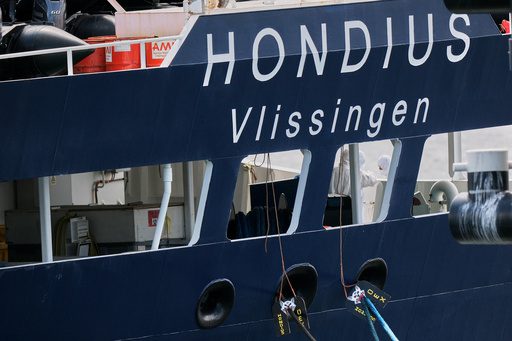
It’s not just about a germy ship; it’s about the unsettling reminder that our hyper-connected world remains profoundly vulnerable to the smallest, unseen invaders. The Hondius, operated by Oceanwide Expeditions, is currently moored, undergoing what the company calls extra work
on the insistence of the GGD local health authority. A ship meant for charting icy wilderness now battles an unseen foe in the prosaic waters of a bustling European port, a port that — not incidentally — is a linchpin of global trade, seeing ships from every corner of the world, including often those with direct links to economies as far-flung and vital as Pakistan’s, where port operations are foundational to national revenue. [QUOTE_PLACEHOLDER]
And for those expecting immediate transparency regarding the why of this particular deep clean, well, patience is indeed a virtue. The company statement offered a tautologic justification: Based on their inspection findings, GGD has advised additional cleaning,
it declared. Following completion of this work, GGD will conduct a final inspection before the vessel can depart from Rotterdam.
No further detail, naturally. Nor did the health authority leap to clarify its reasoning for what one might charitably call enhanced sanitization measures. Yvonne van Duijnhoven, the director of public health for Rotterdam, had previously estimated a three-day clean when the vessel first limped back into the port, an expectation that now seems—optimistic, perhaps.
Because this isn’t just about general maritime hygiene. This is hantavirus, a name that tends to send shivers down even the steeliest spine. While hantaviruses are typically contracted via contact with rodent excretions – a notion that conjures a less than luxurious image for a cruise ship – the strain identified in this incident, the Andes virus, carries a particularly ominous footnote: it can, in rare instances, spread human-to-human. This distinction transforms a routine clean-up into something far more disconcerting.
The global health community is, of course, taking note. The World Health Organization’s Director-General, Tedros Adhanom Ghebreyesus, relayed via X (the former Twitter, one can’t help but note with a weary sigh) that the situation had been monitored since May 2. He confirmed that 12 hantavirus cases and three deaths were reported to the organization (World Health Organization). Not a small number when you consider the confined environment of a passenger ship, though no deaths reported since May 2
provides a sliver of cautious relief. All passengers — and crew remain in quarantine and under close monitoring to ensure they receive care if needed. The situation is stable for now. We continue to remain vigilant and in close contact with all relevant governments,
he noted, a testament to the persistent vigilance required in an era of seamless global travel.
📄 POLICY WIRE WHITEPAPER PUBLISHED: PAKISTAN'S NATIONAL SECURITY POLICY PRIORITIES
👉 READ BY CLICKING HEREThis episode, while ostensibly about a single ship and a contained outbreak, reverberates with larger implications for global mobility and public health protocols, especially for regions highly dependent on sea-borne trade and transit. The health of a port city—any port city, from Rotterdam to Karachi—becomes the health of the global circulatory system itself. What begins on an expedition cruise can, theoretically, touch shores far removed, a point not lost on nations navigating the precarious balance between economic imperative and public safety.
Oceanwide Expeditions, meanwhile, is determined to maintain an air of normalcy, or at least a scheduled resumption. After previously anticipating no changes, a later statement informed the public that all voyages from 13 June onwards will proceed as scheduled. No further disruption to the sailing schedule of m/v Hondius is expected.
A swift return to profitability, then. But one wonders if the phantom of microscopic pathogens will truly be exorcised from the dreams of future passengers, or from the protocols of future port authorities.
What This Means
This incident transcends a simple public health advisory. Economically, prolonged delays or cancellations for ships like the Hondius hit expedition companies hard, but they also serve as a stark reminder of the fragile balance supporting the massive global tourism industry. Should outbreaks like this become more frequent or widespread—a plausible scenario in an interconnected world—the financial repercussions for cruise operators, and the port cities that host them, could be substantial. Rotterdam, a major maritime hub, can absorb such a localized hit, but for smaller ports in less affluent nations, particularly those grappling with other political or structural instability, like parts of Pakistan’s coastline, similar events could cripple vital infrastructure and economic lifelines. Politically, governments worldwide face an escalating challenge: how to facilitate international travel and trade—engines of their economies—while simultaneously safeguarding public health against increasingly mobile and novel threats. The initial reluctance of the company to elaborate and the health authority’s silence underscore an ongoing tension between commercial interests and the public’s right to full transparency, a recurring theme in any crisis, big or small. This cruise ship incident, then, is a micro-cosmic illustration of macro-level anxieties concerning global health security in an age where borders are porous to both capital and contagion. And it serves as a fresh argument for investing not just in medical response, but in the less glamorous, but equally critical, realm of robust and candid information dissemination during such episodes.