

Balochistan’s Vicious Cycle: Rail Attack Shatters Precarious Calm
POLICY WIRE — Islamabad, Pakistan — The dusty, strategic arteries of Pakistan’s largest — and often most neglected — province once again bled on Sunday, not from a simple accident of geography...

POLICY WIRE — Islamabad, Pakistan — The dusty, strategic arteries of Pakistan’s largest — and often most neglected — province once again bled on Sunday, not from a simple accident of geography but from deliberate, desperate violence. This wasn’t merely another news item, easily forgotten in a world perpetually ablaze; it’s a stark reminder that some wounds fester, occasionally erupting with deadly precision. And when they do, the political costs, however carefully calculated by the perpetrators, almost always outweigh the tactical gains.
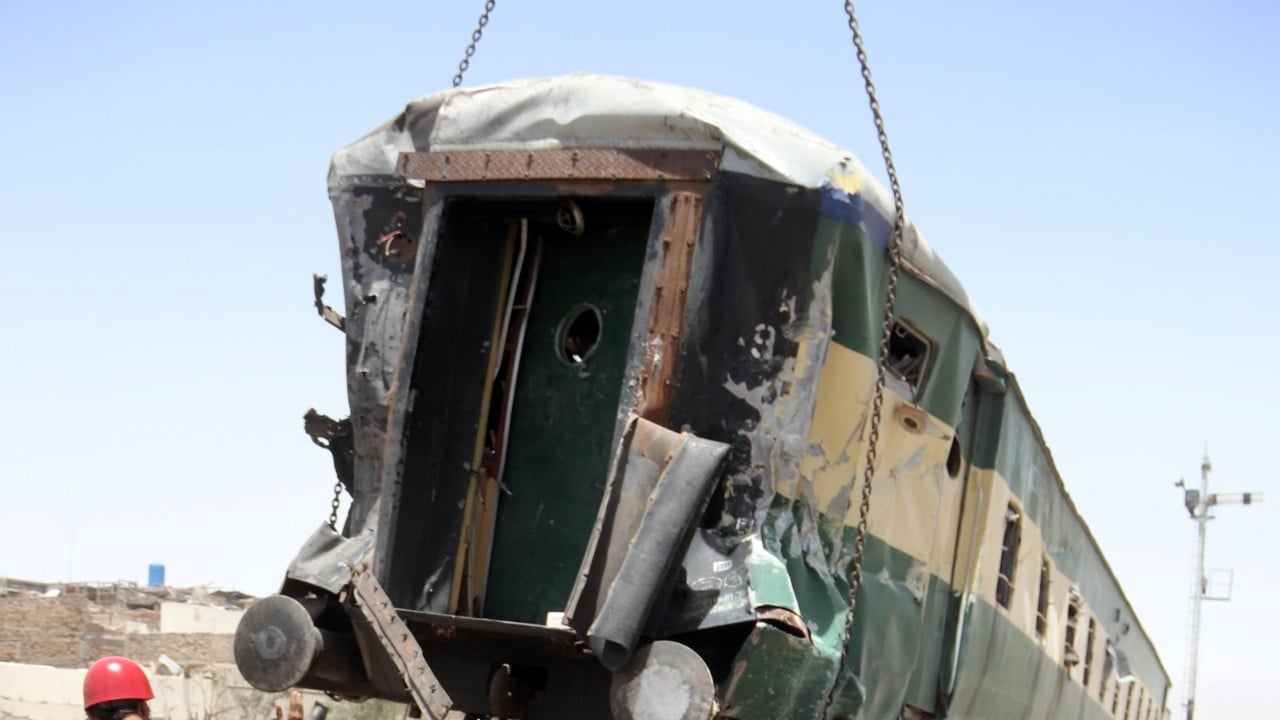
What the Baloch Liberation Army (BLA) sought to achieve with its recent attack on a passenger train carrying military personnel remains, at least publicly, shrouded in their usual separatist rhetoric. But the immediate, visceral consequence? At least 24 people were killed. It’s a number that doesn’t just represent fatalities, doesn’t just mean bodies to be counted; it means shattered families, profound grief, and a renewed, chilling confirmation of how deeply entrenched this conflict truly is. The attack happened in Pakistan’s turbulent southwestern province of Balochistan, a land rich in untapped minerals but starved of peace.
A senior official said later that Army servicemen and their relatives found themselves among the victims, which doesn’t just tell you about military losses, but the very real human toll on those who live alongside — or travel with — the armed forces. It tells you about ordinary lives caught in an extraordinary, relentless conflict. Beyond the dead, over 50 people were wounded, their futures irrevocably altered, their recovery journeys often long and brutal, their stories rarely told on the international stage. But it’s their existence, their suffering, that defines the true cost of such desperate acts.
The incident, you’ll recall, unfolded in the provincial capital Quetta, suggesting an unnerving ability by militants to strike at urban centers, even those meant to be more secure. Prime Minister Shehbaz Sharif, as expected, promptly labelled the assault — claimed by the Baloch Liberation Army (BLA) militant group — a “cowardly act of terrorism.” He’s not wrong; terrorism, by definition, uses fear and violence against civilians to achieve political ends. But the political realities behind this label are far more complex, more generations-deep than a single pronouncement can address. It’s never just an act; it’s a symptom. And this symptom speaks volumes about unresolved grievances that refuse to be silenced.
The Baloch insurgency has simmered for decades, periodically boiling over like this. For all the government’s efforts to quell it, to build infrastructure, to integrate the region, these attacks persist. Why? Because the BLA and its splinter factions contend that Balochistan’s resources—its gas, its minerals, its strategic location on the Arabian Sea—are exploited by the federal government, with little benefit trickling down to the local populace. They envision an independent state, or at the very least, greater autonomy — and a fairer share of the wealth. And that’s a narrative that, rightly or wrongly, resonates with segments of a population often feeling marginalized. Government statistics indicate that separatist-linked violence in Balochistan accounts for approximately 35% of all terror-related deaths in Pakistan over the last five years, a statistic that Pakistan’s Ministry of Interior frequently cites.
This particular episode—the explosive-laden car hitting a train—it isn’t just about a bomb. It’s about a strategic statement. Rail networks are lifelines, for people — and materiel. Targeting them causes not only casualties but also disrupts logistics and sows widespread fear, hindering economic activity and further isolating an already isolated region. It’s a classic asymmetric warfare tactic, designed to maximize disruption with minimal resources, hoping to chip away at state authority and public morale. But one must question its efficacy in winning hearts and minds when its immediate output is the gruesome, indiscriminate killing of innocents alongside soldiers. That’s a PR nightmare for any group, isn’t it?
The attack isn’t happening in a vacuum, either. The region is already a geopolitical chessboard. With the China-Pakistan Economic Corridor (CPEC) slicing through Balochistan, Beijing has a vested interest in the region’s stability. And frankly, the consistent attacks complicate not just Pakistani internal security but its foreign relations and its grand development ambitions, too. Because when you’re selling a vision of economic prosperity, recurrent blasts—especially ones this deadly—tend to make investors skittish. That’s just the plain truth of it; capital flees instability, as reliably as water runs downhill.
What This Means
This rail attack, far from being an isolated horror, encapsulates Pakistan’s perennial struggle to unify its disparate regions under a central authority while addressing deeply embedded ethnic and economic grievances. Politically, it complicates efforts by Pakistan Prime Minister Shehbaz Sharif to project an image of stability and progress, particularly as the nation grapples with severe economic headwinds. Every such incident chips away at investor confidence, both domestic and foreign, making the already onerous task of attracting capital for infrastructure projects—many critical to Balochistan’s own development—even harder.
Economically, Balochistan is Pakistan’s largest province, possessing vast reserves of natural gas, coal, gold, and copper. But it remains the poorest. This stark disparity fuels the resentment that militant groups like the BLA expertly exploit. The consistent violence discourages exploration, development, and job creation, locking the region into a self-perpetuating cycle of underdevelopment and insurgency. And, frankly, it ensures Balochistan remains a drain on Pakistan’s exchequer rather than a contributor, perpetuating the very grievances that spark the violence in the first place. The attack isn’t just on a train; it’s a direct hit on the government’s narrative of progress and, perhaps more significantly, on the prospects for future economic integration.
The wider South Asian angle isn’t lost here. Pakistan has long accused India of supporting Baloch separatists, a claim New Delhi denies. But whether or not external elements are involved, the persistent insurgency presents a significant internal security challenge that diverts Pakistani military resources from its eastern border and broader strategic objectives. For countries in the Muslim world, and particularly within South Asia, Pakistan’s internal stability matters a great deal; it’s a nuclear-armed state with a substantial military. And that’s precisely why incidents like these send ripples far beyond the immediate blast zone, sparking anxieties about regional security and the delicate balance of power.