


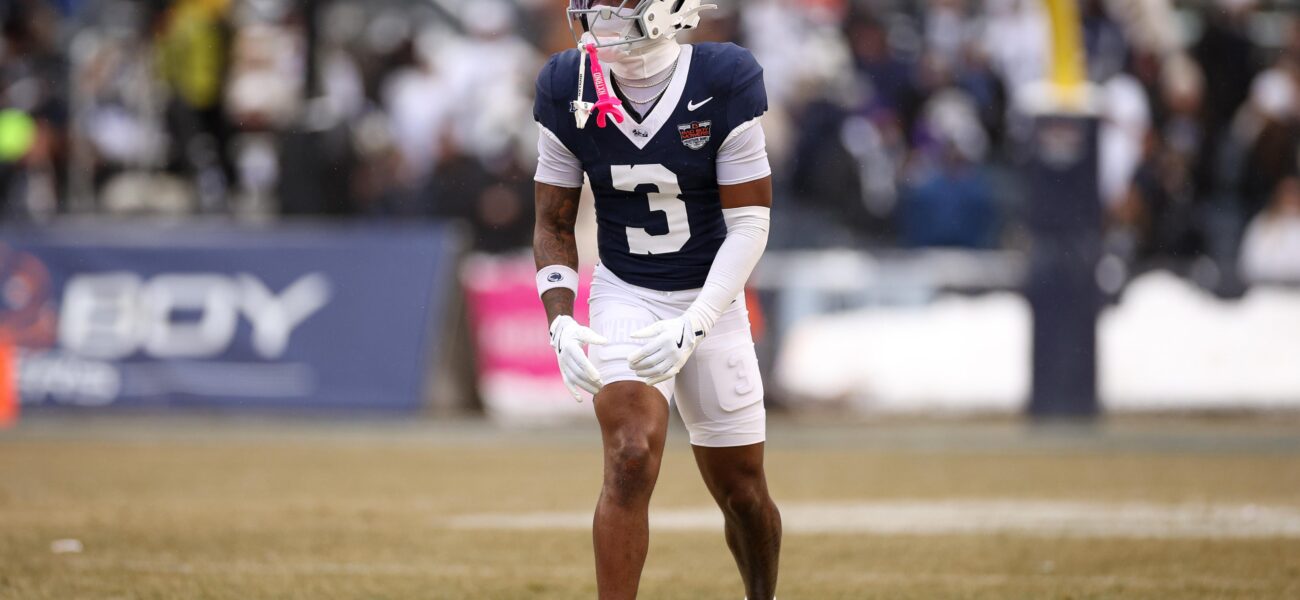
Gridiron Gambits: Penn State’s High-Stakes Bet on Untested Wideouts
POLICY WIRE — State College, Pennsylvania — It’s often the quiet, simmering discontent that turns into a full-blown inferno, not the sudden, dramatic flare-ups. Take Penn State’s football...

POLICY WIRE — State College, Pennsylvania — It’s often the quiet, simmering discontent that turns into a full-blown inferno, not the sudden, dramatic flare-ups. Take Penn State’s football program, for instance. For years, the narrative has been one of ‘good vibes’ — solid recruiting, steady performance. But scratch beneath that glossy veneer, especially concerning their wide receiver room, and you’ll find something closer to controlled anxiety. You’d think the Nittany Lions, perpetually hovering at the edge of college football’s elite, would be swimming in top-tier pass-catching talent, wouldn’t you?
They’re not. And this isn’t just about X’s and O’s on a whiteboard; it’s a sharp observation into the relentless, high-stakes economics of collegiate athletics. These aren’t kids playing backyard football anymore. They’re valuable assets, often acquired at a considerable institutional investment, expected to deliver returns—fast. For Penn State, that investment now hinges on a cadre of young, largely unproven players, gambling heavily on potential over a proven track record. It’s a dice roll, plain and simple.
Koby Howard, a redshirt freshman, represents the distilled essence of this gamble. Recruited as a three-star prospect, his initial college career was…well, let’s just say it wasn’t the triumphant splash many hoped for. He had talent, no doubt, despite a nasty high school injury. He got rave reviews from day one on campus, a kind of ethereal buzz. But he largely rode the pine, managing a mere 7 receptions for 133 yards last season. His role was restricted. Now, though, the spotlight’s squarely on him. They’ve tasked him with being a starter alongside a pair of Iowa State transfers. The offseason saw him transform his frame, adding serious muscle—a visible declaration of intent. It makes you wonder: Was it always the plan, or just the necessary course of action after other options fizzled out?
Then there’s Karon Brookins, another redshirt freshman. At 6-foot-5, 205 pounds, he’s got the kind of physical dimensions scouts drool over, a genuine ‘ball-winner’ physique that Penn State hasn’t really possessed at wideout for what feels like an eternity. Seriously, when was the last time they had a receiver that size actually produce consistently? You’d have to go back to Juwan Johnson’s 2017 season, nearly a decade ago, to find something comparable. Brookins is no lock for significant snaps; his potential still largely lives in theory. But his presence, much like Howard’s burgeoning physique, underscores the profound hope, maybe even desperation, riding on these nascent careers.
Finally, there’s Amarion Jackson, a true freshman. Initially pegged as an athlete who might end up in the secondary, he’s starting at wideout. Matt Campbell, the head coach, openly conceded Jackson could play right away. “We expect contributions from anyone who shows that drive and capability,” Campbell recently quipped during a donor luncheon, with a smile that barely concealed the underlying pressure. “Youth isn’t an excuse; it’s an opportunity, especially now.” And it’s an opportunity because the cupboards aren’t exactly overflowing with experienced, reliable targets.
According to a 2023 financial statement compiled by the National Collegiate Athletic Association, the average cost of a four-year full-ride football scholarship, inclusive of tuition, fees, room, and board, hovers around $280,000 for a Division I Power Five institution. That’s a hefty investment per athlete. For Penn State, with their storied history and immense athletic department budget, this isn’t pocket change; it’s a strategic allocation of millions into talent development—talent that, in this specific instance, remains unproven at the highest level of competition. It’s a financial — and sporting tightrope walk.
📄 POLICY WIRE WHITEPAPER PUBLISHED: PAKISTAN'S NATIONAL SECURITY POLICY PRIORITIES
👉 READ BY CLICKING HEREWhat This Means
This situation at Penn State isn’t an anomaly; it’s a microcosm of the modern collegiate sports-industrial complex. The pressure to generate revenue, fill stadiums, — and attract top-tier recruits is immense. When the traditional ‘blue-chip’ talent at a skill position underperforms, the focus immediately shifts to the next wave. This creates a hyper-accelerated developmental curve for young players. It’s a ruthless system where an athlete’s potential is less about personal growth and more about market value and institutional solvency. Coaches aren’t just mentors; they’re asset managers, their performance directly tied to the success—or failure—of these high-dollar human investments.
This high-stakes, high-investment model also presents an intriguing contrast when viewed through a global lens. Consider nations like Pakistan, for instance, which struggles with fundamental infrastructure and economic stability. While the focus there’s often on building basic necessities or national security—funding public education or defense, for example—here in the U.S., millions are poured into niche, often individual, athletic prospects. The global North often dedicates significant capital to highly specialized entertainment industries, cultivating ‘stars’ from youth. Meanwhile, in many parts of the Global South, sports investment, if it exists beyond cricket or football (soccer), usually targets broad participation or, at most, state-sponsored Olympic development. This isn’t to say one is superior; it’s merely a stark illustration of differing economic priorities and surplus capital allocation. For those looking from outside, say from Lahore or Karachi, the sheer scale of investment in an untested college wide receiver might seem bafflingly disproportionate.
“The global athletic market, despite its varying localized expressions, functions on a singular principle: return on investment,” stated Dr. Adil Rahman, a sports economist with a keen eye on talent migration. “Whether it’s a Premier League club scouting youth in Nigeria or a Power Five school developing a promising wide receiver, the goal is always to maximize the asset. But in American college sports, that investment carries unique social pressures, almost civic responsibilities.” But what happens if this particular investment, this roster of largely untested receivers, fails to yield the promised returns? The coaching staff’s tenure shortens, recruiting suffers, — and the perpetual engine of hype sputters. That’s the real policy consideration simmering beneath the surface of every Saturday afternoon. That’s the real gamble. For more on how other global industries deal with their own resource allocation and developmental dilemmas, explore topics like Barcelona’s financial tightrope walk.