


Poland’s ‘Vanilla Architecture’: How Global Uniformity Clashes with Local Soul
POLICY WIRE — Warsaw, Poland — It began, as so many things do these days, with a blank canvas. Not just a fresh coat of paint, but entire urban sprawls, emerging across Poland as anonymous, boxy,...

POLICY WIRE — Warsaw, Poland — It began, as so many things do these days, with a blank canvas. Not just a fresh coat of paint, but entire urban sprawls, emerging across Poland as anonymous, boxy, undeniably efficient—if also utterly characterless—“modern white boxes.” These aren’t just buildings; they’re symbols, a reflection of a broader, sometimes uncomfortable, global homogenization filtering into the national psyche. And they’re sparking quiet conversations that extend far beyond architects — and city planners.
Walk through Warsaw, or Wrocław, or even Poznań. You’ll find sleek, new office blocks — and residential complexes rising like anodyne Lego structures. Function over form, always. But at what cost to distinctiveness? Poland, fiercely proud of its identity and often wary of external pressures—historical context matters, doesn’t it?—is now grappling with an urban aesthetic that, some argue, mimics an IKEA showroom writ large. And this isn’t just about housing, is it? It’s about culture, about governance, about how a nation chooses to project itself on the global stage versus what resonates with its own people.
It’s this architectural blandness—this sort of policy-by-spreadsheet approach to cityscapes—that forces a nation to confront its past, its present, and its aspirations. Forged heritage isn’t just for classic cars, after all; it’s a constant negotiation for societies, too. The push for European integration and economic modernization, often coupled with substantial EU development funds, has undeniably brought progress. But it’s also ushered in a sort of architectural algorithm, replacing the ornate, the quirky, the decidedly Polish with something universal, and frankly, a bit dull. Because sometimes, efficiency just feels… soulless.
“We’ve rebuilt much of our nation, yes, but are we simply importing generic templates now?” queried Marek Janiak, a cultural preservationist with the Civic Initiative Association, his voice a low growl over espresso in an old town café. “You can fund new construction, certainly, but you can’t buy soul off a shelf. You can’t just slap a bit of ‘clever color’ on it — and call it identity. Our history isn’t found in flat-pack instructions.” It’s a sentiment that resonates beyond Poland’s borders, where rapid urbanization, fueled by external investment, often wipes clean the slate of local particularities. Think of Pakistan’s booming metropolises, for instance, where similar high-rises—financed sometimes by external partners keen on rapid development, like Germany’s investment in its green future—sometimes clash starkly with centuries-old urban fabric, raising similar questions about authenticity versus modernity.
And yet, the impulse for standardization is powerful, particularly within an economic bloc like the European Union. Ms. Helena Vandenberg, a spokesperson for the EU’s Regional Development Directorate, sees things differently. “Our directives prioritize sustainable, high-quality, — and cost-effective construction. It ensures accessibility, energy efficiency, — and modern living standards across member states. The aesthetics, while important, often fall to local interpretation within these guidelines. We’re building for the future, you see. Sometimes, the future looks a little… clean.” She probably doesn’t mean it to sound clinical, but it does. According to a 2023 Eurostat report, Poland indeed witnessed a substantial 15% increase in standardized, prefabricated residential units in urban centers over the last five years, a statistic directly tied to EU development initiatives aiming for rapid housing expansion and lower costs. Money talks, after all, and often drowns out architectural nuance.
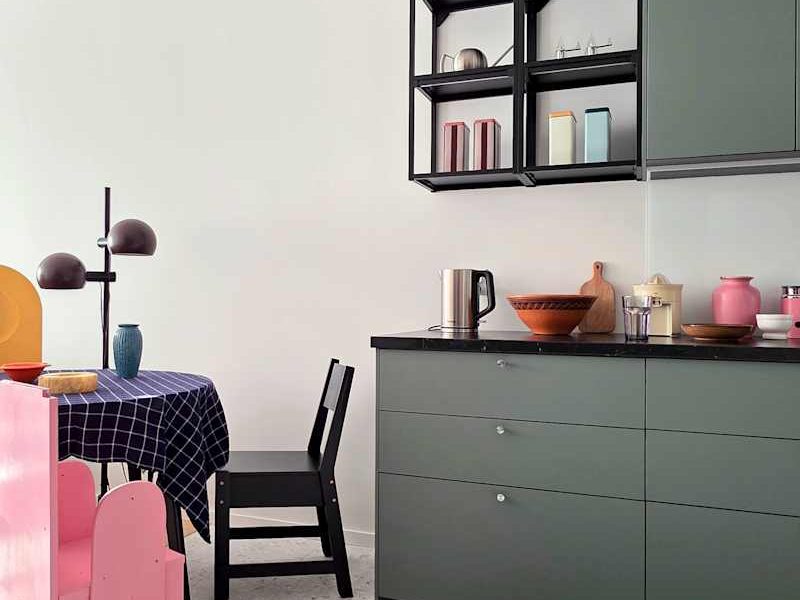
It’s a quiet cultural tug-of-war. Citizens, armed with vintage IKEA finds or a passion for bold, often unexpected, splashes of color, are trying to reclaim these architectural ‘modern white boxes.’ They’re injecting personality, defying the sterile homogeneity, one lovingly restored armchair or painted wall at a time. It’s an organic, grassroots pushback. It shows that even the most meticulously planned, globally informed environments can’t entirely suppress the human need for the individual, the distinctive, the messy, perhaps even the utterly impractical.
What This Means
The ubiquity of these standardized “white box” developments in Poland isn’t just an architectural trend; it’s a policy outcome with significant political and economic ramifications. Economically, it signifies a deep integration into broader European construction and design practices, often driven by efficiency and the influx of foreign capital. This can accelerate development, but it also creates an aesthetic dependency, where local variations are either neglected or, worse, seen as impediments to progress. Politically, it’s a subtle yet potent battleground for national identity. Poland’s historical narrative—of resilience against external dominance and fierce preservation of culture—collides with the practicalities of modern governance within a supranational framework. The visual sameness risks alienating a populace that values its unique heritage, potentially fueling nationalist sentiments that critique what they perceive as a loss of distinction under the guise of modernization. When public spaces, and even private dwellings, start looking indistinguishable from Brussels or Berlin, a nation’s sense of ‘home’—both physical and conceptual—begins to blur. It makes governance harder; it makes defining national purpose more abstract. Because identity isn’t just about flags and anthems; it’s also about the physical spaces people inhabit, about the stories those spaces tell.