


Fujian Factory Blaze: The Unseen Cost of Global Fast Fashion
POLICY WIRE — BEIJING, China — Another cloud of thick, black smoke—billowing against a sky often choked with the byproduct of frenetic industry—is once again painting a stark picture of the true...

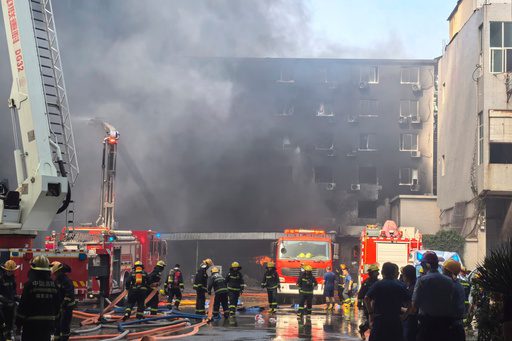
POLICY WIRE — BEIJING, China — Another cloud of thick, black smoke—billowing against a sky often choked with the byproduct of frenetic industry—is once again painting a stark picture of the true price tag behind the world’s insatiable demand for cheap goods. This time, the fiery narrative unfolds in Jinjiang, a city globally renowned as a manufacturing hub for sports shoes. It isn’t the first, — and it surely won’t be the last. But this recent catastrophe, gutting a shoe factory and snuffing out 28 lives, forces us to consider the often-invisible human sacrifice powering our fast-paced consumption.
It started on the ground floor of a five-story concrete-structured building, a locale where a workshop and a warehouse were both situated. Suddenly, production lines halted. Panic surely rippled through the facility, a chaos likely amplified by highly flammable shoe components that helped the fire spread quickly. Imagine the scene: workers scrambling, an inferno roaring. That initial flash, then a charred facade, another testament to industrial hazard.
State media, particularly the official Xinhua News Agency, was quick with the bare facts: a fire broke out at a shoe factory in the southeastern Chinese province of Fujian on Thursday, killing 28 people. But they also provided the backdrop of official concern, which tends to follow such incidents like clockwork. Chinese President Xi Jinping demanded [QUOTE_PLACEHOLDER], urging a swift investigation of the incident and to strictly hold those responsible accountable. It’s a familiar script—tragic loss, swift condemnation, then the inevitable promises of stricter enforcement.
There were 237 factory workers and two visitors in the building when the fire broke out, a testament to the bustling, often overcrowded nature of these manufacturing behemoths. Authorities pulled out 213 people. Two of those were pronounced dead after being taken to hospital. Later, another 26 missing people were confirmed dead. And just like that, lives were irrevocably altered, families left reeling from what should’ve been another day’s wages.
But the issues run deeper than just the immediate spark. According to a local fire department official quoted by state broadcaster CCTV, sole material piled up in stairwells made it much harder for the firefighters to reach the flames and put them out. It’s an age-old problem—safety regulations ignored, shortcuts taken, all to keep the production lines humming. CCTV also mentioned the department sent 183 people and 35 vehicles to the factory, with open flames extinguished after about four hours. Eventually, more than 500 people joined the rescue — and search operation. A massive effort, yet too late for dozens.
It’s an unfortunately recurring narrative, especially in a country like China, where work safety has been a persistent problem. Look at the data: Official reports indicate that 18,261 people died in nearly 20,000 workplace accidents across the country in 2025, though this figure represents a decrease from the previous year. That’s still a staggering number of human beings, victims of unchecked industrial ambition. May saw an explosion at a fireworks plant in Changsha that killed at least 37 people. Back in 2024, a fire at a refrigeration facility under construction claimed 39 lives in Jiangxi province. Authorities, it seems, have repeatedly ordered businesses to screen for workplace hazards—yet here we’re again.
📄 POLICY WIRE WHITEPAPER PUBLISHED: PAKISTAN'S NATIONAL SECURITY POLICY PRIORITIES
👉 READ BY CLICKING HEREWhat This Means
This latest fire isn’t just a localized tragedy; it’s a grim indicator of the tightrope walk between economic output and human welfare, a challenge China often faces as it juggles its global manufacturing role. The initial response—investigation, arrests (the factory’s owner and others in charge have been taken into custody, with the company’s accounts frozen), presidential decrees—is standard operating procedure. But the systemic issues, deeply embedded in a system that prioritizes speed — and volume, remain.
Economically, such incidents lead to momentary disruptions but rarely significant long-term shifts in production. Global brands, hungry for cost-efficiency, often exert pressure that indirectly contributes to these conditions, fostering a race to the bottom in safety standards. The supply chain’s elasticity allows for quick shifts to other, equally precarious facilities, maintaining the flow of goods with minimal impact on consumer prices or brand profits. Politically, Beijing must project an image of firm control and concern, both internally to maintain social stability and externally to reassure international partners that their goods aren’t coming from modern-day sweatshops—even when they sometimes are. It’s a delicate dance of denial — and damage control. Because let’s be honest, for many, a brand-new sneaker is far more appealing than the knowledge of the exact human toll taken during its production.
And these Chinese factories? They’re integral to global supply chains that span far beyond their borders, impacting everything from footwear sold in Los Angeles to components destined for factories in Pakistan or Bangladesh. Consider, for a moment, how reliant emerging economies in South Asia—nations like Pakistan—are on Chinese technology, machinery, and, yes, even labor practices and raw materials. A fire in Fujian, while geographically distant, could impact their manufacturing inputs or even influence safety protocols and labor regulations in parallel industries that look to China for guidance, for better or worse. The interconnectedness of the Muslim world’s economies, often leveraging Chinese manufacturing expertise, means these safety failures aren’t isolated incidents. They reverberate, sometimes subtly, across continents, shaping policy discussions and worker advocacy movements in Dhaka or Karachi as much as in Beijing. It’s all connected.