


China’s ‘Shoe Capital’ Scorched: Death Toll Rises in Manufacturing’s Shadow Economy
POLICY WIRE — Wenzhou, China — The economic hum that typically vibrates through Wenzhou—that prodigious heartland of shoe manufacturing—has been momentarily silenced by a grim wail. It’s the kind of...

POLICY WIRE — Wenzhou, China — The economic hum that typically vibrates through Wenzhou—that prodigious heartland of shoe manufacturing—has been momentarily silenced by a grim wail. It’s the kind of silence that precedes a reckoning, isn’t it? Twenty-eight souls, we’re told, are now just another tragic statistic, swept into oblivion by a factory fire. Not in some forgotten corner of the world, but smack-dab in the place where global consumerism laces up its sneakers.
But this isn’t just about flames licking steel. It’s about the raw, gritty reality behind the inexpensive goods that line our shelves. And it’s a narrative we’ve seen played out repeatedly across industrial Asia. The official count—those 28 dead—arrives from local authorities in what they’ve termed the ‘shoe capital’ of China. We don’t have much more than that right now, unfortunately, only the cold fact of the fatality list. [QUOTE_PLACEHOLDER]
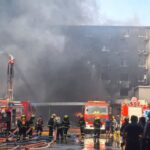
We’ve all watched these things unfold before, haven’t we? Footage shows huge flames rising from a building — and thick, black smoke rising into the sky. A spectacle of destruction, absolutely. Yet, for many in Beijing’s policy circles, and indeed, among international procurement managers, it’s just another blip in the vast, complex machine of manufacturing efficiency. It’s inconvenient. It’s bad PR. But does it shift the gears? History suggests not much.
Because the insatiable global demand for cheap production means corner-cutting often feels like a business strategy, doesn’t it? Fire exits get blocked for storage. Regulations get ‘interpreted’ with an impressive elasticity. Emergency plans? Sometimes, they’re just expensive paper. For years, critics—from human rights groups to disgruntled workers—have pointed to these vulnerabilities. This incident, while specific, reflects a systemic issue that’s frankly widespread across regions pursuing rapid industrialization, often at an alarming human cost.
The incident forces us to peer past the sleek marketing — and into the engine rooms of global capitalism. Consider the manufacturing hubs throughout South Asia, for instance. Places like Faisalabad in Pakistan, a textile powerhouse, or the sprawling industrial zones of Dhaka, Bangladesh, are no strangers to similar tragedies. They’re facing similar pressures: immense competition, tight margins, and a workforce often desperate enough to ignore hazardous conditions for a steady, albeit meager, paycheck. They’re all part of this interlocking system, you see. Just last year, an industrial gas cylinder explosion in Pakistan’s Karachi killed seven, including children, underscoring this pervasive challenge, a harrowing detail reported by Dawn newspaper in March 2023.
These factories aren’t just cranking out footwear for the masses. They’re providing employment, sure. But they’re also a brutal reminder of the ethical compromises baked into our economic realities. And for those watching from burgeoning economies in the Muslim world, navigating their own industrial paths, Wenzhou’s catastrophe serves as both a cautionary tale and a dark mirror. Are they willing to sacrifice similar safeguards on the altar of GDP growth?
It’s a tough question, an awful dilemma. You can’t just wish away poverty, — and industrial growth does lift millions. But at what literal cost? You’ve got to ask that. And no one wants to admit they’re selling lives, do they? But that’s what happens, sometimes, under a canopy of thick, black smoke. The unspoken contract is always this: rapid development now, safety, maybe later.
📄 POLICY WIRE WHITEPAPER PUBLISHED: PAKISTAN'S NATIONAL SECURITY POLICY PRIORITIES
👉 READ BY CLICKING HEREWhat This Means
This factory fire, though geographically contained, ripples far beyond Wenzhou’s industrial outskirts. Politically, Beijing will move swiftly to contain the narrative—expect statements about investigations, accountability, and pledges for stricter enforcement. It’s a familiar playbook. But beneath the rhetoric, the economic realities of maintaining global competitiveness often clash directly with implementing genuine, lasting safety reforms. This isn’t China’s first, or last, industrial disaster, which points to a regulatory environment that remains—let’s be charitable—adaptive rather than rigorously proactive.
Economically, for international brands that source from China, incidents like these introduce layers of reputational risk and, potentially, minor supply chain disruptions. Don’t expect a seismic shift, though. The scale of China’s manufacturing base, coupled with its unparalleled logistical infrastructure, means alternatives are scarce, or significantly more expensive. But it’s certainly another check mark for countries like Vietnam, Indonesia, or even Pakistan and India, which are positioning themselves as diversified manufacturing hubs. They can use these moments to highlight their supposed advantages—often a lower labor cost, sometimes, just sometimes, a promise of improved (if still imperfect) conditions. That said, as long as consumers chase the lowest price, these tragedies become almost an unfortunate, accepted byproduct. We can’t escape that truth, can we?
This episode also reinforces the ongoing debate around ESG (Environmental, Social, and Governance) factors in investment and corporate responsibility. Companies claiming robust ESG credentials will face increased scrutiny regarding their suppliers’ safety records. Because it’s easy to greenwash when you’re not looking too closely at where the shoes actually come from, is it? Ultimately, Wenzhou’s fire is a brutal reminder of the human cost embedded in our globalized consumer culture, and of the political dance between economic ambition and the basic right to a safe workplace. It’s a dance that always seems to leave somebody on the floor. Just maybe, someday, it’ll actually stop. Or change its steps.