


Desert Harvest: New Mexico’s Wine Boom Signals Quiet Agricultural Revolution Amidst Global Shifts
POLICY WIRE — Albuquerque, New Mexico — It wasn’t the unusually placid skies, nor the crisp, late-spring air that truly defined this year’s 33rd Annual New Mexico Wine Fest. No, the real...

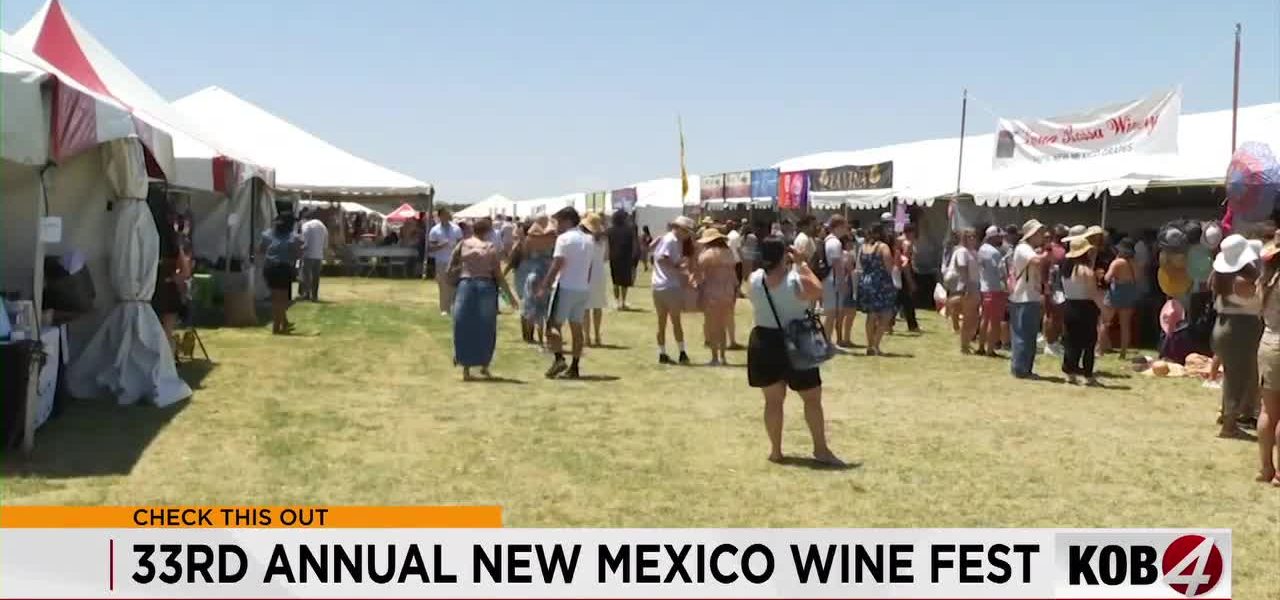
POLICY WIRE — Albuquerque, New Mexico — It wasn’t the unusually placid skies, nor the crisp, late-spring air that truly defined this year’s 33rd Annual New Mexico Wine Fest. No, the real story unfolded quietly, a subtle hum beneath the clinking glasses: a desert state, long synonymous with chiles and turquoise, is staking a surprising claim in a global market where tradition usually trumps innovation. But this isn’t just about another wine — it’s about agricultural adaptation, rural economic stimulus, and a whisper of policy implications that stretch farther than most revelers at Balloon Fiesta Park would ever imagine.
Hundreds upon hundreds descended over the Memorial Day weekend, not for some fleeting celebrity sighting, but for varietals nurtured in high desert vineyards. It’s an unlikely success story, honestly, a triumph of stubborn terroir — and canny market positioning. Most attendees, many of them—we’re told—first-timers, weren’t poring over tasting notes. They were simply… enjoying. They’re chasing a connection to something local, something authentic, and they don’t care if it’s a Syrah or a Sauvignon Blanc. It’s a sentiment mirrored in nascent economies trying to carve out unique niches on the global stage.
“We’re not trying to be Napa, and we don’t want to be,” mused Sandra Chavez, a proprietor from Black’s Smuggler Winery, her voice raspy over the chatter and acoustic guitar melodies. “What we’ve got here is unique. We’ve got a different story in every bottle, whether it’s sweet or dry, — and people are hungry for that story. They’re not just buying wine; they’re investing in New Mexico, its climate, its people. It’s a damn good feeling, you know?” She gestures toward a particularly eager young couple swiveling glasses. They’re buying into an experience, an identity, — and for small producers, that’s everything.
And that ‘identity’ part? It’s bigger than just tourism. For a state perpetually grappling with economic diversification beyond extractive industries and federal installations, wine has become a quiet engine. This particular weekend alone, countless dollars flowed into local coffers, touching everything from artisanal cheese makers to the musicians belting out tunes on stage. Because when you get down to it, events like these are less about individual transactions and more about ecosystem nourishment. They feed small businesses, they retain local talent, and they add a layer of resilience to a state economy that’s often seen as brittle.
The numbers don’t lie. According to the New Mexico Department of Agriculture, the state’s wine industry contributed an estimated $350 million in economic activity in 2018, supporting thousands of jobs. But for State Representative Elena Montoya, who’s championed legislation to ease licensing for craft beverage producers, the real metric is softer. “It’s not just about dollars, though those are crucial, aren’t they?” Montoya stated, a subtle glint of ambition in her eyes as she surveyed the bustling crowd. “It’s about self-sufficiency. It’s about cultivating — quite literally — industries that respect our heritage while forging a new future. We’re showing the world, — and more importantly, our own citizens, that innovation flourishes even in the high desert. We’re giving our young people reasons to stay, to build lives right here.”
📄 POLICY WIRE WHITEPAPER PUBLISHED: PAKISTAN'S NATIONAL SECURITY POLICY PRIORITIES
👉 READ BY CLICKING HEREThat narrative of local empowerment — and agricultural ingenuity finds strange, distant echoes. Take regions in Pakistan or parts of the Muslim world, for instance, where agrarian economies wrestle with water scarcity and global commodity price swings. While wine production certainly isn’t an option there, the *policy drive* to find high-value crops, or to transform traditional agriculture into sustainable, value-added industries — be it dates, olives, or specialized textiles — follows a remarkably similar impulse. It’s about taking what you’ve got — and making it work, even when the odds feel stacked against you. New Mexico’s quiet success serves as a peculiar, unintended case study in resilience.
What This Means
The annual New Mexico Wine Fest, seemingly a local indulgence in fermented grape juice, offers a surprisingly potent glimpse into larger economic and agricultural policy currents. Politically, the growth of the state’s wine industry represents a bipartisan win: boosting tourism, diversifying the agricultural base, and supporting small, family-owned businesses across various counties. This appeals to rural constituencies desperate for economic injections and urban voters who appreciate local products and sustainable growth.
Economically, it underscores the value of niche markets — and experiential tourism. As global markets consolidate, smaller producers must innovate, and New Mexico has done precisely that, fostering a distinct brand that can compete. it highlights the importance of state-level policy support — whether through regulatory easing or direct grants — to nurture nascent industries. The ‘wine’ economy here extends far beyond the vine, impacting hospitality, retail, — and manufacturing sectors. But don’t mistake this for simply ‘feel good’ economics; it’s a calculated bet on local distinction. As global trade policies shift and supply chains face increasing volatility, a robust, locally-sourced economy, even one based on wine, begins to look less like a luxury and more like a necessity. Policy makers elsewhere, struggling with rural flight or limited economic options, could glean more from a desert wine fest than they might care to admit, perhaps even examining models of localized agricultural value creation akin to strategies debated in nations struggling for self-reliance. Think about the discussions on bolstering local economies after conflicts, as detailed in pieces like Washington’s Olive Branch, Tehran’s Poisoned Chalice, and the parallel to finding endogenous economic strength.
It’s not just about tasting — it’s about transformation. And in New Mexico, that transformation now tastes remarkably like a crisp Chardonnay, or perhaps a robust Tempranillo. Go figure. They’ve found a path, carved right out of the arid earth. But will other regions, similarly resource-strapped or culturally distinct, find their own equivalent paths? The quest for economic sovereignty, whether through high-tech or high-desert grapes, is a persistent one.
📖 GET YOUR FREE COPY NOW OF POLICY WIRE DIGITAL MAGAZINE JULY 2026 EDITION
👉 READ & DOWNLOAD FREE MAGAZINE